
Lawnmower Blenny (Salarias fasciatus)
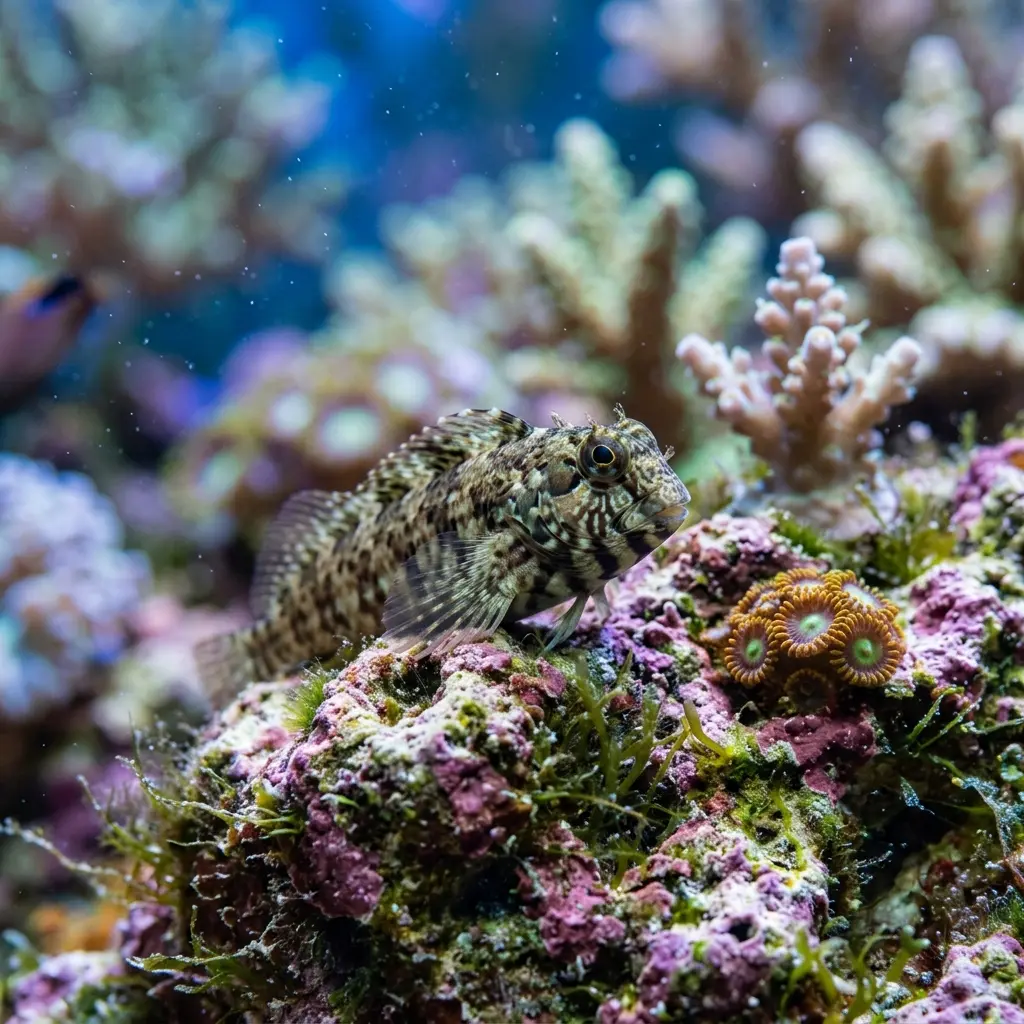
Quick Answer
Lawnmower Blenny (Salarias fasciatus) is a herbivorous marine fish native to the Indo-Pacific reef flats. It requires a minimum 30-gallon (114 L) established marine aquarium with abundant live rock (1.5 lbs/gallon), specific gravity 1.023-1.025, pH 8.1-8.4, and temperature 72-82 degrees Fahrenheit (22-28 degrees Celsius). This bottom-dwelling detritivore controls algae but requires continuous supplemental feeding with nori and spirulina to prevent starvation. Only one blenny per tank; a secure lid is mandatory.
Quick Facts
| Scientific Name | Salarias fasciatus |
|---|---|
| Common Names | Lawnmower Blenny |
| Family | Blenniidae (Combtooth Blennies) |
| Genus | Salarias |
| Type | Saltwater |
| Temperament | peaceful |
| Care Difficulty | intermediate |
| Lifespan | 4 years |
| Maximum Size | Up to 5.5 in (14 cm) |
| Diet | Herbivore / Detritivore |
| Temperature | 72–82°F (22–28°C) |
| pH | 8.1–8.4 |
| Hardness | 8–12 dGH |
| Minimum Size | 30 gallons |
Key Takeaways
- Adults reach 4-5.5 inches (10-14 cm) and require 55+ gallons (208+ L) for long-term health.
- Strict herbivore requiring continuous algae supply and daily supplemental nori/spirulina feeding.
- Tank must be minimum 6 months old with 1.5+ lbs live rock per gallon before introduction.
- Only one blenny per tank; aggressively territorial toward similar-looking fish including other blennies and gobies.
- Mandatory secure lid required; notorious jumper that will escape open-top tanks.
- Generally reef safe when well-fed but may nip corals and clam mantles if starved.
- Tolerates copper treatment but hyposalinity is contraindicated.
- First commercial captive breeding achieved in 2023 by The Biota Group.
Overview
Species Overview
The Lawnmower Blenny (Salarias fasciatus), also known as the Jewelled Rockskipper, Algae Blenny, or Banded Blenny, is one of the most recognizable and utilitarian fish in the marine aquarium trade. Native to the shallow reef flats and lagoons of the Indo-Pacific, from East Africa and the Red Sea to Micronesia and the Great Barrier Reef, this species has earned its common name through an insatiable appetite for filamentous algae, diatoms, and biofilm. Despite its comical appearance — characterized by a blunt head, oversized lips, perched eyes ringed with cirri, and a perpetually curious expression — the Lawnmower Blenny is a serious grazer that can make the difference between a nuisance algae outbreak and a pristine reef display.
Natural History and Conservation
Wild populations inhabit intertidal reef flats, shallow lagoons, and algae-rich rubble patches at depths of 0-8 meters (0-26 feet). They are found solitary in weedy areas on rocks and coral outcrops, using their comb-like dentition to scrape microalgae, detritus, and diatoms from hard substrates. The IUCN lists S. fasciatus as Least Concern due to its wide distribution, though localized collection pressure exists. Historically, captive breeding was considered impossible in home aquaria. However, in 2023, The Biota Group achieved the first commercial captive breeding breakthrough, offering aquacultured specimens to the hobby and reducing pressure on wild stocks.
Why This Species Is Misunderstood
The Lawnmower Blenny is marketed universally as an algae-cleaning solution, which creates a dangerous misconception. Hobbyists purchase this fish expecting it to survive on whatever algae grows in the tank. When the algae runs out — or in new tanks where biofilm has not established — the fish slowly starves over weeks or months. This is not a hardy beginner fish in the traditional sense; it is an intermediate species because it demands an established, mature aquarium with continuous food production or diligent supplemental feeding. You must treat this fish as a specialized herbivore, not a maintenance tool.
Key Identification Features
- Maximum total length: 4-5.5 inches (10-14 cm); some specimens reach 6 inches (15 cm)
- Olive to brown base coloration with dark vertical bars and numerous small white spots
- Iridescent blue spots with dark outlines along the rear portion of the body
- Large, fleshy lips adapted for scraping algae from rock surfaces
- Cirri (fleshy appendages) on the head, particularly above the eyes
- Single continuous dorsal fin with no notch; dorsal and anal fins connected to caudal fin by a skin membrane
- Males have elongated anterior rays on the anal fin, visible during spawning displays
- Color changes with mood and environment — can darken, lighten, or intensify bars within seconds
Diet
Dietary Requirements and Feeding Protocol
Feeding Biology
The Lawnmower Blenny is a continuous grazer with a high-throughput digestive system adapted to process large volumes of low-nutrient algae and detritus. Its comb-like teeth are designed for scraping, not tearing. In nature, it consumes filamentous green algae, diatoms, cyanobacteria, detritus, and incidental micro-crustaceans. Despite being labeled an herbivore, scientific analysis reveals that plant material constitutes only about 15% of its natural diet; the remainder is detritus, biofilm, and microorganisms. In captivity, you must replicate this grazing behavior through both natural tank production and supplemental feeding.
Nutritional Targets
- Algae and plant matter: 75-85% (nori, spirulina, kelp, marine vegetables)
- Detritus and biofilm: 10-15% (naturally produced in mature tanks)
- Protein: 5-10% from incidental micro-crustaceans and prepared foods
- Fiber: High; essential for digestive transit in herbivorous fish
- Vitamins: Vitamin C, iodine, and beta-carotene for immune and thyroid function
Recommended Foods
Rotate between these options to ensure nutritional completeness:
- Dried nori sheets (raw, unseasoned) clipped to the aquarium glass or rock — the dietary staple
- Spirulina-enriched herbivore pellets and flakes offered daily
- Algae-based frozen foods (spirulina brine shrimp, algae cubes)
- Fresh marine vegetables (blanched kale, spinach, zucchini) offered weekly
- Chaetomorpha or Caulerpa from a refugium — the ideal natural supplement
Feeding Schedule
In tanks with established algae growth, offer supplemental nori once daily. In tanks without sufficient natural algae, feed nori or algae pellets 2-3 times daily. The fish should have a rounded, full belly — not concave. A sunken belly is the first sign of starvation and requires immediate intervention with increased feeding frequency. Remove uneaten fresh vegetables after 4 hours to prevent nutrient spikes.
Critical Dietary Warnings
- Do not rely on tank algae alone — most systems cannot produce enough to sustain an adult
- Avoid meaty foods (brine shrimp, mysis) as dietary staples; excess protein causes hepatic lipidosis in herbivores
- Never feed terrestrial greens (lettuce, cucumber) as primary foods; they lack marine-specific fatty acids
- Old or dried-out nori loses nutritional value; store in airtight containers and replace every 3 months
- Competition from other herbivores (tangs, rabbitfish) can starve a blenny; feed herbivores first or target-feed
Health
Health Management and Disease Protocols
Immunological Profile
Lawnmower Blennies are generally hardy fish with robust immune systems adapted to the variable conditions of intertidal reef flats. However, their specialized diet and territorial stress make them susceptible to specific health issues that standard marine fish guides often overlook. The vast majority of health problems in this species stem from one root cause: starvation due to inadequate food supply.
Medication Sensitivity and Protocol
This species tolerates standard marine medication protocols well but has specific sensitivities:
- Copper: Tolerates therapeutic copper (0.15-0.2 mg/L Cupramine) for ich and velvet treatment. Test daily with a copper test kit.
- Hyposalinity: Not recommended. Blennies are osmoregulatory stressors at salinities below 1.015 SG. Use tank transfer or copper instead for ich.
- Formalin: Use at half-dose only; full-strength formalin causes gill irritation in bottom-dwelling species.
- Praziquantel: Safe for internal parasite treatment and deworming at standard doses.
- Chloroquine Phosphate: Safe and preferred for quarantine prophylaxis at 15 mg/L for 14 days.
- Freshwater Dips: Provide temporary relief for marine velvet but are not a cure. Limit to 3-5 minutes.
Quarantine Protocol
Quarantine all new specimens for 4-6 weeks in a cycled hospital tank containing live rock rubble for grazing and a PVC cave. Treat prophylactically with chloroquine phosphate (15 mg/L) for 14 days to eliminate cryptic parasites. Observe for feeding response, body condition, and signs of ich or velvet. Do not introduce to the display tank until the fish is eating aggressively from a nori clip and displays a rounded belly for 7 consecutive days.
Starvation and Emaciation
The single most common cause of death in Lawnmower Blennies. This species requires continuous grazing on algae and biofilm. In tanks with insufficient natural food production, the fish slowly wastes away despite appearing to accept prepared foods.
- Sunken belly and concave lateral profile; faded or washed-out coloration; decreased grazing activity; lethargy and increased hiding; loss of interest in supplemental foods in advanced stages; stringy white feces.
Inadequate algae growth in new or heavily skimmed tanks; competition from other herbivores (tangs, rabbitfish); failure to provide daily supplemental nori and algae foods; over-reliance on the tank to feed the fish.
Ensure the tank is minimum 6 months old with 1.5+ lbs live rock per gallon before introduction. Supplement daily with dried nori on a clip, spirulina pellets, and algae-based frozen foods. Grow Chaetomorpha in a refugium to provide continuous natural food. Target-feed if competition exists. If a sunken belly is observed, increase feeding frequency to 3 times daily and offer garlic-enhanced foods to stimulate appetite.
Marine Ich (Cryptocaryon irritans)
Caused by the ciliated protozoan Cryptocaryon irritans. Common in newly imported wild specimens and stressed fish. Can be fatal if untreated, though blennies tolerate standard treatments better than delicate species.
- White salt-grain spots on body and fins; flashing against rock and substrate; rapid gill movement; rubbing against sand or decor; decreased appetite; cloudy eyes in advanced cases.
Introduction via new livestock without quarantine; temperature fluctuations weakening immune response; stress from territorial disputes or inadequate hiding places.
Mandatory 4-6 week quarantine for all new fish. Treat with copper (Cupramine at 0.15-0.2 mg/L) for 30 days minimum or use the tank transfer method (transferring fish to a clean tank every 72 hours for 12+ days). Maintain stable temperature and salinity. Do not use hyposalinity for blennies. Remove all invertebrates before copper treatment.
Marine Velvet (Amyloodinium ocellatum)
Caused by the dinoflagellate Amyloodinium ocellatum. Far more deadly than ich and the leading cause of marine tank wipe-outs. Attacks gills first, making early diagnosis difficult.
- Fine gold, rust, or tan-colored dust on skin visible under angled light; rapid breathing and gill flaring; scratching against rocks; lethargy; clamped fins; loss of appetite; fish staying near water flow sources (powerheads, overflows) to maximize oxygen extraction.
Introduction via new fish; stress from poor water quality; low-level copper masking the infection in supplier systems; temperature instability.
Strict quarantine with chloroquine phosphate prophylaxis (15 mg/L for 14 days). At first sign, treat immediately with copper at therapeutic levels or chloroquine phosphate. Freshwater dips provide temporary relief but are not curative. Increase aeration and surface agitation. Marine velvet kills within 48-72 hours of visible symptom onset; early detection is critical.
Abrasion Wounds and Chin Ulcers
Physical injuries sustained from constant grazing on rough rock surfaces and sand. The blenny’s scraping feeding style wears down chin tissue, creating open wounds susceptible to bacterial infection.
- Raw, red, or white patches on the chin and lower lip; difficulty grazing; decreased appetite; localized swelling; secondary bacterial fuzz on wound site.
Rough, sharp live rock with calcium skeletons or barnacles; excessive grazing on abrasive surfaces; fighting with tank mates causing facial injuries.
Select smooth, well-worn live rock or sand down sharp edges on new rock before introduction. Maintain pristine water quality with zero ammonia and nitrite to prevent secondary infection. If wounds develop, perform daily 10% water changes and dose the tank with Kanamycin (Kanaplex) if bacterial infection sets in. Feed soft, easily consumed foods (soaked pellets, softened nori) until healing occurs.
Bacterial Fin and Tail Rot
Bacterial erosion of fin tissue caused by Vibrio or Aeromonas species. Usually secondary to physical damage, poor water quality, or parasitic infestation compromising the epithelial barrier.
- Ragged, fraying fin edges with white, red, or black margins; receding fin tissue; inflammation at the fin base; difficulty maintaining position in water flow.
Physical damage from territorial disputes or rough rock; ammonia or nitrite spikes; chronic nitrate levels above 20 ppm; secondary bacterial invasion through compromised tissue from ich or velvet.
Fix water quality immediately — test ammonia, nitrite, and nitrate. Remove aggressive tank mates and sharp decor. Perform daily 15% water changes for 5-7 days. Treat with Kanaplex (kanamycin sulfate) or Furan-2 if infection progresses into the fin base. Ensure the fish receives vitamin-rich foods to support tissue regeneration.
Breeding
Breeding and Reproduction
Reproductive Biology
Salarias fasciatus is an oviparous demersal spawner with distinct pairing behavior. Males establish territories in crevices, empty shells, or under rock overhangs, clear a spawning site by scraping away algae, and display to females by erecting their dorsal fin and performing rapid lateral vibrating dances. Females deposit 500-2,000 adhesive eggs onto the substrate via a filamentous, adhesive pedestal. The male fertilizes the eggs immediately and assumes sole parental care, guarding and fanning the clutch for 5-7 days until hatching.
The 2023 Captive Breeding Breakthrough
For decades, captive breeding was considered unachievable for home hobbyists, and all trade specimens were wild-caught. In 2023, The Biota Group announced the first successful commercial captive breeding program, producing aquacultured juveniles that are more adaptable to prepared foods and free from wild parasite loads. This milestone represents a significant shift in availability and sustainability for the species.
Conditioning and Spawning Triggers
To attempt breeding, condition a bonded pair in a 75+ gallon (284+ liter) mature reef tank with abundant algae for 4-6 weeks. Provide multiple spawning caves using PVC tubes or ceramic caves 4-6 inches (10-15 cm) in diameter. Simulate spring warming by gradually raising temperature from 76 to 78-80 degrees Fahrenheit (24 to 25.5-26.7 degrees Celsius) over 7-10 days. Increase photoperiod to 12-14 hours. The male will darken in color and intensify territorial defense of the chosen cave when ready to spawn.
Egg and Larval Development
Eggs hatch into planktonic larvae after 5-7 days at 78 degrees Fahrenheit (25.5 degrees Celsius). The larvae are extremely small and require:
- Days 1-10: Live rotifers (Brachionus plicatilis) enriched with Nannochloropsis and Selcon
- Days 10-25: Gradual transition to larger rotifers and copepod nauplii
- Days 25-40: Artemia nauplii and copepodites
- Day 40+: Metamorphosis occurs at approximately 0.5 inches (1.2 cm); juveniles begin grazing on algae and micro-pellets
Larval mortality is naturally high due to their planktonic nature and sensitivity to water quality. Dedicated larval rearing systems with gentle filtration, constant phytoplankton dosing, and zero mechanical filtration are required. This is not recommended for home hobbyists and remains the domain of commercial breeders.
Common Breeding Failures
- Inability to sex fish accurately — males and females are nearly identical externally; anal fin ray length is the only reliable indicator
- Insufficient cave size or availability — males reject inadequate spawning sites
- Lack of conditioning foods — pairs require abundant live algae and high-quality nutrition for gonadal development
- Inadequate larval food cultures — rotifer and copepod crashes cause mass mortality within 48 hours
- Premature removal of male — males must guard eggs for the full 5-7 day incubation period
Compatible Tank Mates






Species Comparison
| Feature | Lawnmower Blenny | Starry Blenny | Tailspot Blenny | Bicolor Blenny |
|---|---|---|---|---|
| Scientific Name | Salarias fasciatus | Salarias ramosus | Ecsenius stigmatura | Ecsenius bicolor |
| Adult Size | 4.0 - 5.5 in (10 - 14 cm) | 5.0 - 6.0 in (13 - 15 cm) | 2.0 - 2.5 in (5 - 6.5 cm) | 3.5 - 4.0 in (9 - 10 cm) |
| Temperament | Peaceful; territorial with similar fish | Peaceful; territorial with similar fish | Very peaceful | Peaceful; feisty with blennies |
| Minimum Tank Size | 30 gal (114 L) | 30 gal (114 L) | 10 gal (38 L) | 30 gal (114 L) |
| Optimal pH Range | 8.1 - 8.4 | 8.1 - 8.4 | 8.1 - 8.4 | 8.1 - 8.4 |
| Specific Gravity | 1.023 - 1.025 | 1.023 - 1.025 | 1.023 - 1.025 | 1.023 - 1.025 |
| Diet Type | Herbivore / Detritivore | Herbivore / Detritivore | Primarily Herbivore | Herbivore |
| Algae Control | Excellent - top choice | Excellent - very effective | Moderate | Good |
| Reef Safety | Yes with caution | Yes with caution | Yes | Yes with caution |
| Difficulty Level | Intermediate | Intermediate | Beginner | Beginner-Intermediate |