
Tailspot Blenny (Ecsenius stigmatura)
Quick Answer
Tailspot Blenny (Ecsenius stigmatura) is a small, colorful marine blenny from the Indo-Pacific. It requires a minimum 10-gallon (38-liter) reef aquarium with stable salinity (1.023 to 1.025), pH 8.1 to 8.4, and temperature 75°F to 82°F (24°C to 28°C). This dedicated herbivore occupies the bottom zone, requires abundant live rock with algae growth, and makes an excellent addition to peaceful nano reef setups.
Quick Facts
| Scientific Name | Ecsenius stigmatura |
|---|---|
| Common Names | Tailspot Blenny |
| Family | Blenniidae |
| Genus | Ecsenius |
| Type | Saltwater |
| Temperament | peaceful |
| Care Difficulty | beginner |
| Lifespan | 5 years |
| Maximum Size | Up to 2.5 in (6 cm) |
| Diet | Herbivore |
| Temperature | 75–82°F (24–28°C) |
| pH | 8.1–8.4 |
| Hardness | 7–12 dGH |
| Minimum Size | 10 gallons |
Key Takeaways
- Requires a minimum 10-gallon tank with abundant live rock (1.5 lbs/gallon).
- Strictly solitary; one blenny per tank to prevent lethal aggression.
- Primarily herbivore requiring daily nori strips and algae-based foods.
- Tight-fitting lid is mandatory; notorious jumper that escapes through small gaps.
- Generally reef safe but may nip corals if underfed.
- Exhibits thanatosis (playing dead) when stressed; do not panic or net the fish.
Overview
Species Overview
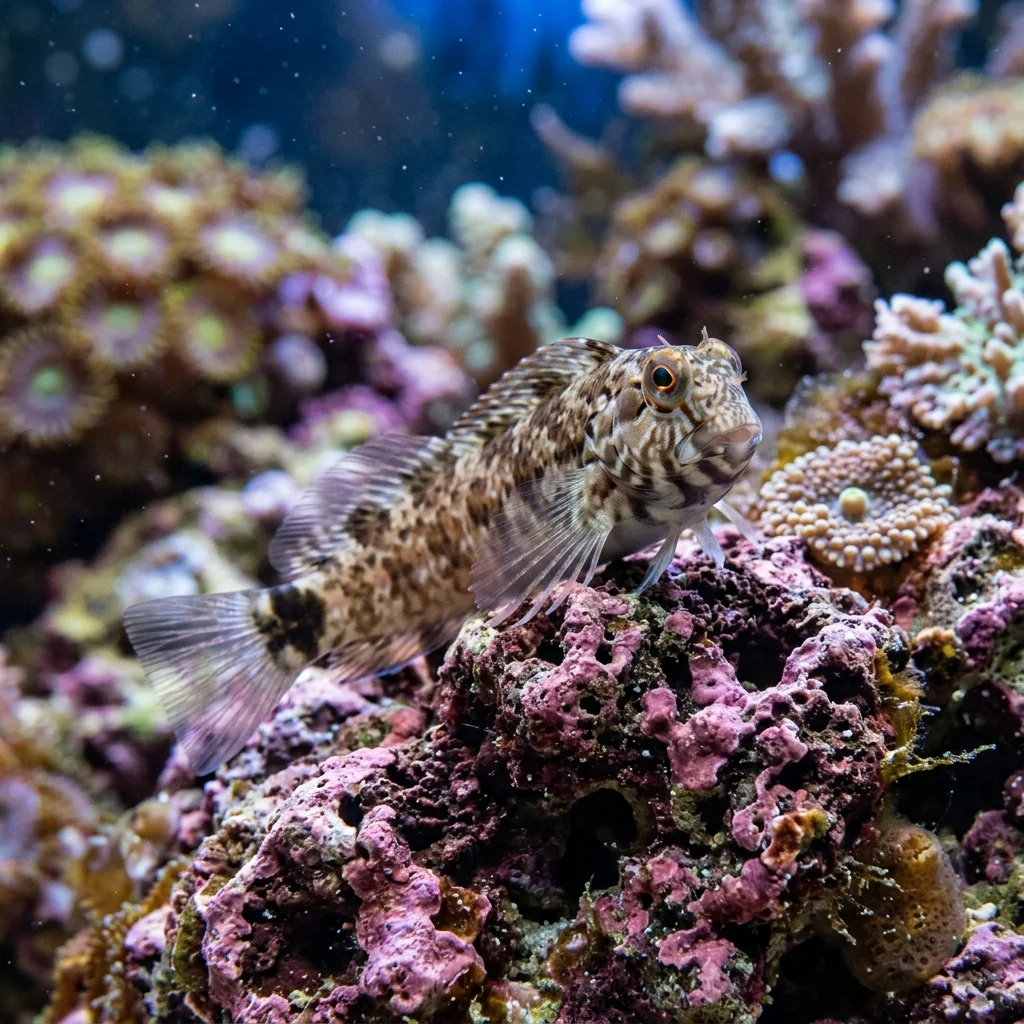
The Tailspot Blenny (Ecsenius stigmatura) is one of the most beloved and personality-packed fish in the marine aquarium hobby. Named for the distinctive dark spot at the base of its tail, this tiny blenny delivers more character per inch than almost any other reef fish at its price point. First described by Springer in 1971, the Tailspot Blenny originates from the coral reefs of the Indo-Pacific, specifically Indonesia, the Philippines, and the Great Barrier Reef region.
Physical Characteristics
Adult Tailspot Blennies reach approximately 2.5 inches (6.4 cm) in length with a torpedo-shaped body, large frog-like eyes, and two whisker-like cirri on the head that resemble antennae. The body displays a stunning gradient from blue to orange across the flanks, with a double horizontal stripe on the face and the signature black tail spot. Males develop slightly more intense coloration and may display a small hump on the forehead when mature. The comical, perpetually confused expression is part of their enduring charm.
Lifespan
With optimal care in a stable reef environment, Tailspot Blennies live 3 to 5 years in captivity, with exceptional individuals reaching 6 years. Their longevity depends entirely on water stability, adequate nutrition, and protection from jumping. Fish kept in tanks with fluctuating salinity or inadequate algae supplementation typically survive only 1 to 2 years.
Conservation Status
The Tailspot Blenny is currently listed as Not Evaluated by the IUCN. Wild populations remain abundant throughout their Indo-Pacific range, and the species is heavily collected for the aquarium trade. Captive breeding efforts are increasing but remain limited.
Care
Housing & Pond Requirements
Minimum Tank Specifications
The absolute minimum tank size for a single Tailspot Blenny is 10 gallons (38 liters) with a footprint of at least 20x10 inches (50x25 cm). A 15 to 20 gallon (57 to 76 liter) tank is strongly recommended for long-term health and natural behavioral expression. The tank must be fully cycled and mature (minimum 8 weeks old) with established biofilm and microalgae growth. A brand-new sterile tank will starve this fish. Tank height is irrelevant; bottom footprint and rock structure are everything.
Filtration & Water Flow
Use standard reef filtration including a protein skimmer and moderate water flow (5x to 8x turnover per hour). Excessive flow stresses blennies and prevents them from perching comfortably. Provide at least one low-flow zone with calm water where the blenny can rest. Weekly 20% water changes are mandatory to maintain low nitrates and stable parameters.
Rockwork & Substrate
Provide 1.5 pounds of live rock per gallon minimum. The rockwork must include at least 5 distinct perching spots at varying heights, small caves or crevices for hiding, and branching structures for grazing. Sandy substrate is preferred over bare bottom; blennies enjoy sifting through sand for microfauna. Avoid sharp rock edges that could injure the fish during panic dashes.
Lid & Security
A tight-fitting lid with no gaps is absolutely mandatory. Tailspot Blennies are notorious jumpers and will escape through gaps as small as 0.5 inches (1.3 cm). Use glass canopies, mesh screens with clips, or custom-cut acrylic lids. Check lid integrity weekly. Finding a dried blenny on the floor is one of the most common and preventable losses in the hobby.
Lighting
Standard reef lighting (PAR 100 to 250) is ideal. The blenny does not require specialized lighting, but adequate light promotes algae growth on live rock, which serves as a natural food source. Maintain an 8 to 10 hour photoperiod. Use a ramp timer to gradually increase and decrease light intensity to prevent startle responses.
Diet
Diet & Nutrition
Tailspot Blennies are primarily herbivores with a high metabolism that requires constant grazing. Their natural diet consists of microalgae, biofilm, and detritus growing on live rock. In captivity, you must supplement this natural food source aggressively, as clean reef tanks rarely produce enough algae to sustain them.
Health
Health & Disease Management
Tailspot Blennies are generally hardy when kept in stable, mature reef systems. However, their small size and sensitivity to water parameter fluctuations make them vulnerable to common marine diseases, particularly during the acclimation period and in newly established tanks.
Marine Ich (Cryptocaryon irritans)
The most common parasitic infection in newly acquired Tailspot Blennies, caused by a ciliated protozoan that attaches to skin and gills.
- Small white salt-like spots on body and fins, rapid breathing, rubbing against substrate or rockwork, loss of appetite, clamped fins, increased mucus production.
Introduction via infected fish or live foods, stress from acclimation, temperature fluctuations, poor quarantine practices.
Quarantine all new fish for 14 days minimum. Use chloroquine phosphate prophylaxis at 15 mg/L. Maintain stable temperature at 78°F (25.5°C). Avoid adding fish to tanks younger than 8 weeks.
Marine Velvet (Amyloodinium ocellatum)
A highly contagious and deadly dinoflagellate parasite that causes a fine golden or rusty dusting on the skin. More dangerous than ich due to rapid gill damage.
- Fine golden dusting on body, rapid breathing, lethargy, loss of appetite, flashing against rocks, clamped fins, death within days if untreated.
Introduction via infected fish, stress, poor quarantine, transfer from systems with known outbreaks. Velvet spreads faster than ich and is more lethal.
Strict 14-day quarantine with chloroquine phosphate. Observe new fish under blue moonlight for early velvet detection. Never skip quarantine for reef fish.
Bacterial Fin Rot & Cloudy Eye
Secondary bacterial infections following injury, poor water quality, or parasitic damage. Common in blennies that have injured themselves during panic dashes.
- Frayed or receding fins, white cloudy film over one or both eyes, lethargy, loss of appetite, reddening at fin bases.
Poor water quality (nitrates above 20 ppm), physical injury from rockwork, untreated parasitic infections, stress from incompatible tank mates.
Maintain nitrates below 10 ppm. Remove sharp rock edges. Treat underlying parasites before bacterial infections develop. Use broad-spectrum antibiotics (Maracyn, Furan-2) in a hospital tank.
Starvation & Emaciation
The leading cause of premature death in Tailspot Blennies kept in clean, heavily skimmed reef tanks with insufficient supplemental feeding.
- Sunken belly, faded coloration, lethargy, reduced activity, coral nipping behavior, weight loss despite apparent feeding.
Relying solely on tank algae in a clean system, outcompeted by faster tank mates at feeding time, inadequate nori supplementation, tank too new to support biofilm.
Feed nori strips daily in a dedicated clip. Ensure blenny reaches food before faster fish. Maintain detectable phosphate levels (0.03 to 0.1 ppm) for natural algae growth. Target-feed with a turkey baster if necessary.
Osmotic Stress & Shock
Acute stress caused by rapid salinity or temperature changes during acclimation or water changes. Particularly dangerous for small marine fish.
- Rapid breathing, erratic swimming, loss of color, lying on substrate, thanatosis (playing dead), death within hours if severe.
Improper acclimation (less than 45 minutes drip time), salinity mismatch between bag and tank water, temperature swings greater than 3°F during water changes, adding fish to uncycled tanks.
Drip acclimate for 60 to 90 minutes. Match replacement water salinity to within 0.001 of tank water. Match temperature to within 1°F. Never add fish to tanks younger than 8 weeks.
Breeding
Breeding Tailspot Blennies
Breeding Tailspot Blennies in home aquariums is rare but documented among advanced marine breeders. They are substrate spawners with male parental care, but the larval rearing requirements make successful captive breeding challenging for most hobbyists.
Compatible Tank Mates
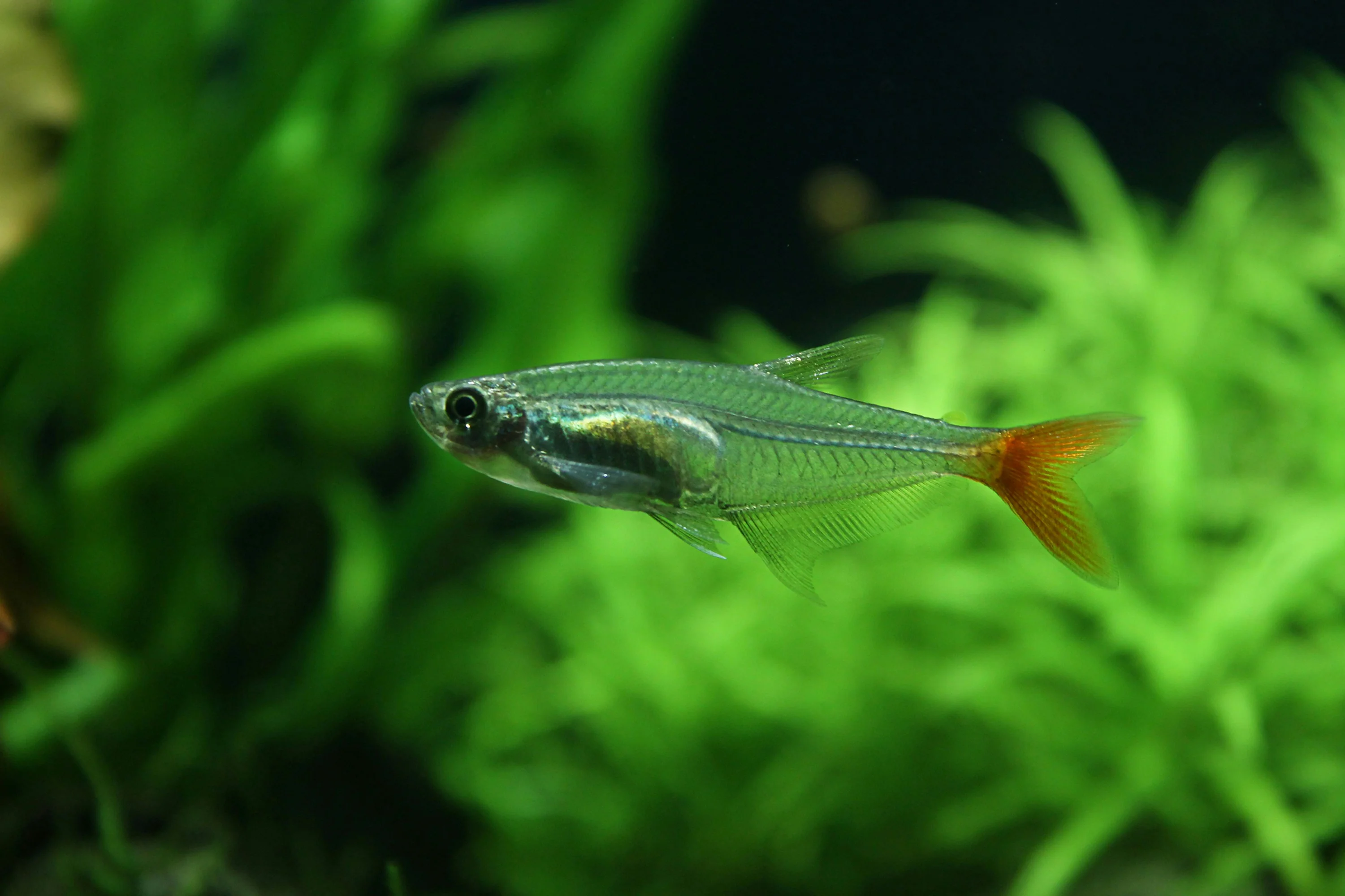
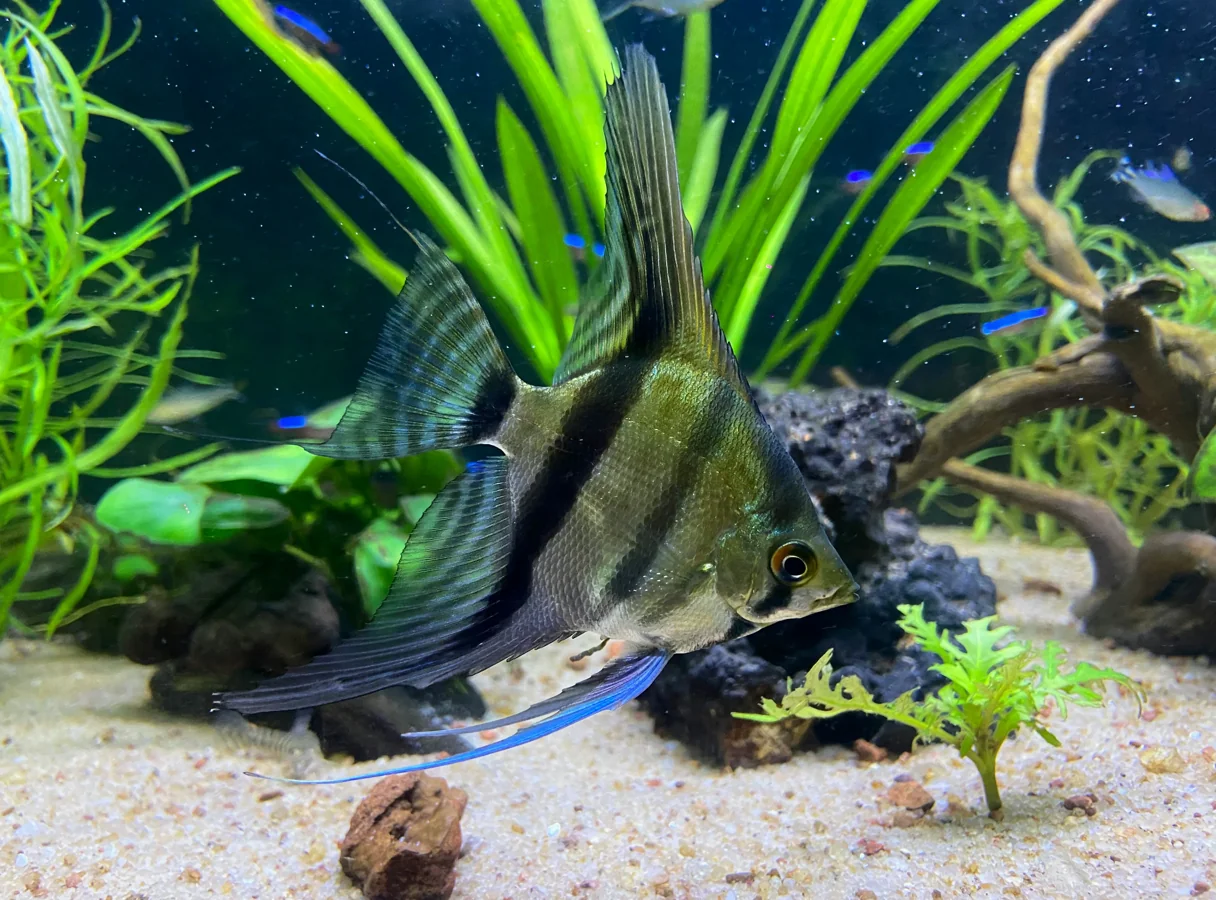
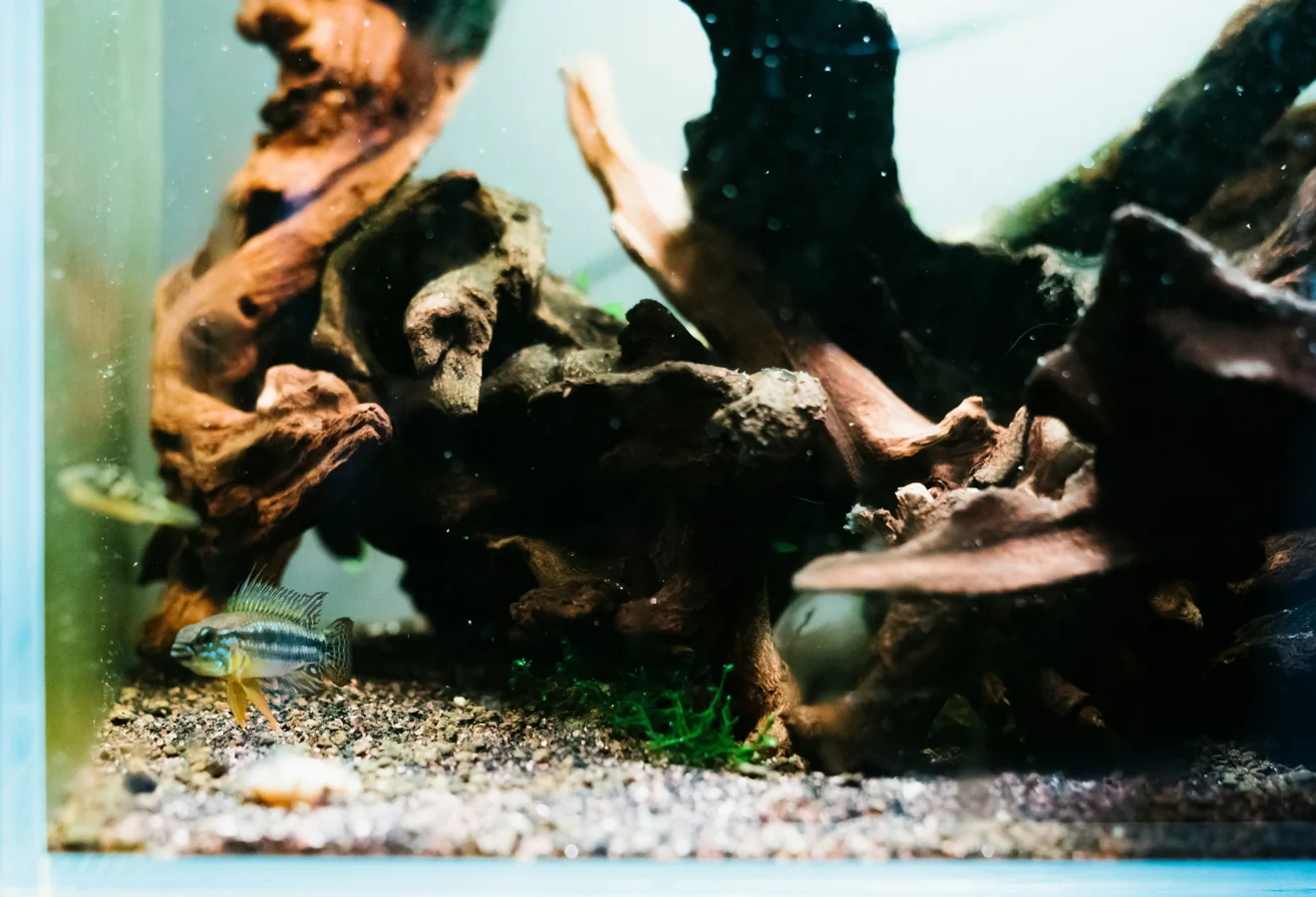
Species Comparison
| Feature | Tailspot Blenny | Bicolor Blenny | Lawnmower Blenny | Starry Blenny |
|---|---|---|---|---|
| Scientific Name | Ecsenius stigmatura | Ecsenius bicolor | Salarias fasciatus | Salarias ramosus |
| Max Size | 2.5 inches (6.4 cm) | 4 inches (10 cm) | 5 inches (13 cm) | 6 inches (15 cm) |
| Temperament | Peaceful, solitary | Peaceful, may nip corals | Peaceful, territorial with blennies | Peaceful, may be pushy |
| Minimum Tank Size | 10 gallons (38 L) | 30 gallons (114 L) | 30 gallons (114 L) | 30 gallons (114 L) |
| Diet | Herbivore (algae, nori) | Herbivore, may accept more protein | Herbivore (requires constant algae) | Herbivore (algae grazer) |
| Reef Safety | Yes (if well fed) | With caution (nips LPS) | Yes | Yes |
| Coral Nipping Risk | Low (only if underfed) | High (known LPS nipper) | Very low | Low |
| Difficulty Level | Beginner | Beginner-Intermediate | Intermediate | Intermediate |