
Percula Clownfish (Amphiprion percula)
Quick Answer
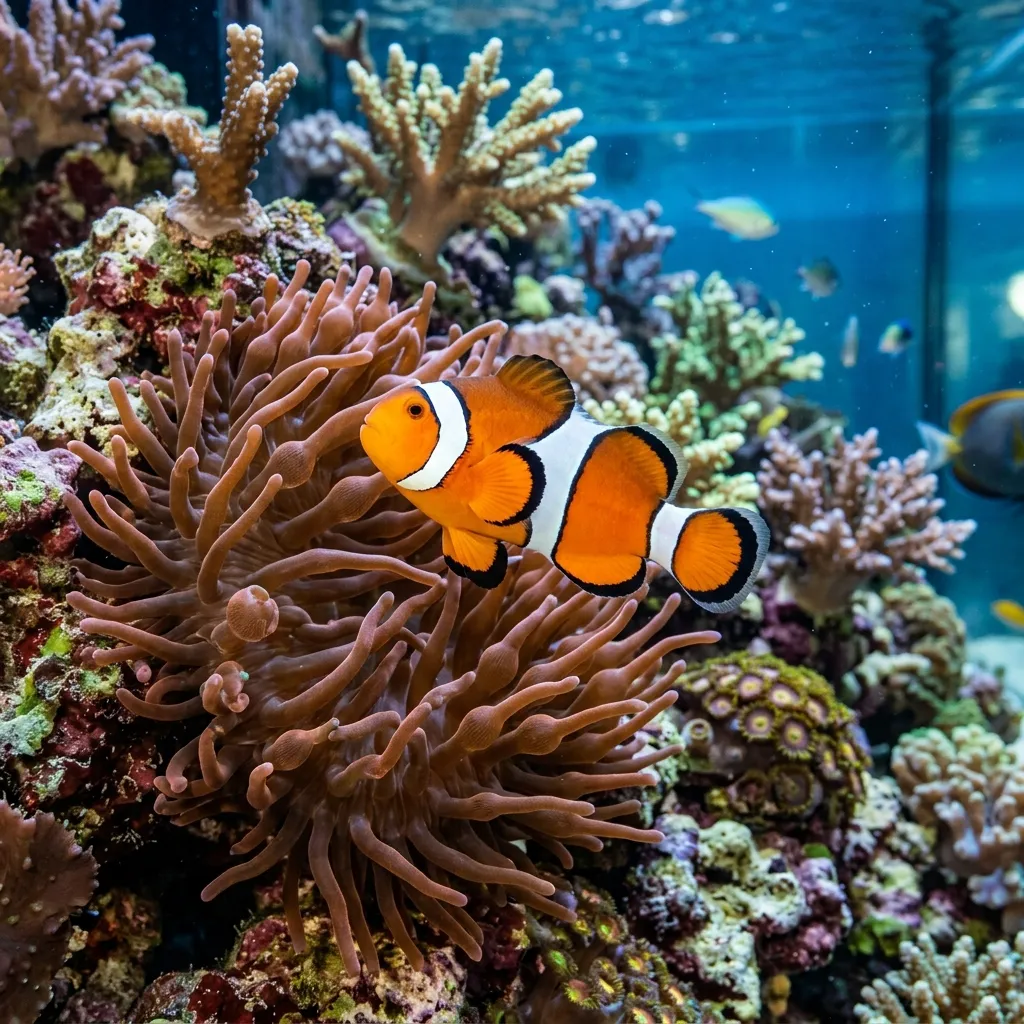
Percula Clownfish (Amphiprion percula) is a small, colorful marine fish from the Indo-Pacific, closely related to but distinct from the Ocellaris Clownfish. It requires a minimum 10-gallon (38-liter) tank for a single fish or 20 gallons (76 liters) for a bonded pair, with stable reef parameters (pH 8.1 to 8.4, salinity 1.023 to 1.025, temperature 75°F to 82°F). Known for thicker black bands, 10 dorsal spines, and slightly more aggressive temperament than Ocellaris.
Quick Facts
| Scientific Name | Amphiprion percula |
|---|---|
| Common Names | Percula Clownfish |
| Family | Pomacentridae |
| Genus | Amphiprion |
| Type | Saltwater |
| Temperament | semi-aggressive |
| Care Difficulty | beginner |
| Lifespan | 10 years |
| Maximum Size | Up to 3 in (8 cm) |
| Diet | Omnivore |
| Temperature | 75–82°F (24–28°C) |
| pH | 8.1–8.4 |
| Hardness | 7–12 dGH |
| Minimum Size | 20 gallons |
Key Takeaways
- Distinguished from Ocellaris by 10 dorsal spines, thicker black bands, and orange eye color.
- Requires either solitary housing or a bonded pair; multiple pairs fight to the death in small tanks.
- Captive-bred specimens are strongly preferred over wild-caught to avoid Brooklynella.
- Anemone is not required; will host corals, powerheads, or filter intakes instead.
- Brooklynella treatment requires formalin baths; prevention through captive-bred sourcing is critical.
- Powerhead intake guards are mandatory; clownfish hosting powerheads can be killed by suction.
Overview
Species Overview
The Percula Clownfish (Amphiprion percula) is one of the most iconic and recognizable marine fish in the aquarium hobby, immortalized by the character Nemo in popular culture (though Nemo was technically an Ocellaris). Native to the Indo-Pacific region, specifically the Solomon Islands, Papua New Guinea, and northern Australia, the True Percula is distinct from its close relative the Ocellaris Clownfish in several subtle but important ways. First described by Lacepede in 1802, this species has been a staple of the marine aquarium trade for decades and is now predominantly captive-bred.
Physical Characteristics
Adult Percula Clownfish reach approximately 3 inches (7.6 cm) in length, slightly smaller than the Ocellaris. The body displays a rich orange base color with three white stripes bordered by thick, pronounced black bands — the most reliable visual distinguishing feature. The eye shows more orange surrounding the pupil compared to the darker eye of Ocellaris. The dorsal fin contains 10 spines (versus 11 in Ocellaris), and the rear portion of the dorsal fin is shorter and less tall than in Ocellaris. Males are smaller than females; all clownfish are born male and the dominant individual in a pair transforms into a female — a process called protandrous hermaphroditism.
Lifespan
With optimal care in a stable reef environment, Percula Clownfish live 8 to 10 years in captivity, with exceptional individuals reaching 12 to 15 years. Their longevity depends on water stability, diet variety, and prevention of Brooklynella and Marine Velvet. Captive-bred specimens generally outlive wild-caught fish due to reduced parasite load and acclimation to aquarium conditions.
Conservation Status
The Percula Clownfish is currently listed as Not Evaluated by the IUCN. Wild populations remain stable throughout their Indo-Pacific range. The aquarium trade now relies almost entirely on captive-bred specimens, significantly reducing pressure on wild stocks. Captive breeding programs have also produced numerous designer color morphs including Black Onyx, Snowflake, and Picasso varieties.
Care
Housing & Pond Requirements
Minimum Tank Specifications
The absolute minimum tank size for a single Percula is 10 gallons (38 liters). For a bonded pair, provide at least 20 gallons (76 liters) with a footprint of 24x12 inches (60x30 cm). A 29 to 40 gallon (110 to 151 liter) tank is strongly recommended for a pair with tank mates, as it provides adequate territory for the clownfish while accommodating other reef inhabitants. Tank height is less critical than footprint; clownfish occupy the middle water column and rarely venture to the bottom.
Filtration & Water Flow
Use standard reef filtration including a protein skimmer and moderate water flow (5x to 10x turnover per hour). Perculas tolerate a wide range of flow but prefer moderate currents. Ensure all powerhead intakes are covered with foam guards, as clownfish are notorious for hosting powerheads and can be injured or killed by suction.
Substrate & Rockwork
Standard reef sand or crushed coral substrate is acceptable. Provide live rock (1 pound per gallon minimum) for biological filtration and territory definition. Create caves and crevices where the pair can establish a nesting site. A flat clay pot, tile, or PVC pipe provides an ideal artificial spawning site.
Anemone Considerations
An anemone is not required for clownfish health or happiness. If you choose to keep an anemone, ensure your tank is at least 6 months old with stable parameters. Suitable species include Carpet Anemone (Stichodactyla gigantea), Magnificent Sea Anemone (Heteractis magnifica), and Saddle Anemone (Stichodactyla haddoni). Avoid Condylactis anemones and tube anemones, which are not natural hosts and may sting or injure clownfish.
Lid
A lid is recommended to prevent jumping, though Perculas are less prone to jumping than blennies or gobies. Secure the lid around filter returns and wiring holes.
Diet
Diet & Nutrition
Percula Clownfish are omnivores with a strong carnivorous tendency. In the wild, their diet consists of crustaceans (copepods, amphipods), algae, polychaete worms, and leftovers from the anemone's meals. In captivity, they are aggressive eaters that readily accept virtually any aquarium food, making them one of the easiest marine fish to feed.
Health
Health & Disease Management
Percula Clownfish are generally hardy when kept in stable reef systems with appropriate quarantine protocols. However, they are susceptible to specific diseases, particularly Brooklynella (Clownfish Disease), which is most commonly associated with wild-caught specimens. Preventive care through quarantine and captive-bred sourcing is far more effective than treatment.
Brooklynella (Brooklynella hostilis)
A fatal and highly contagious ciliated protozoan parasite primarily affecting clownfish and damselfish. Attacks gills and skin, causing rapid suffocation and death within hours to days.
- Excessive white mucous production (skin appears peeling or sloughing off), rapid breathing, gasping at surface, lethargy, loss of appetite, cloudy skin patches, fish rubbing against objects.
Introduction via wild-caught fish, stress from poor acclimation, contaminated water, or contact with infected fish. Captive-bred fish are rarely affected.
Purchase captive-bred fish only. Quarantine all new fish for 14 days minimum. Perform freshwater dips on all new arrivals before quarantine. Maintain stable water parameters and reduce stress.
Marine Ich (Cryptocaryon irritans)
Common parasitic infection in marine fish, caused by a ciliated protozoan that attaches to skin and gills.
- Small white salt-like spots on body and fins, rapid breathing, rubbing against substrate, flashing, clamped fins, loss of appetite.
Introduction via infected fish, temperature fluctuations, stress from poor water quality, inadequate quarantine.
Quarantine all new fish for 14 days. Maintain stable temperature at 78°F (25.5°C). Use copper treatment (0.15 to 0.2 mg/L Cupramine) or chloroquine phosphate (15 mg/L) in quarantine. Remove carbon during treatment.
Marine Velvet (Amyloodinium ocellatum)
A highly contagious and deadly dinoflagellate parasite that causes a fine golden or rusty dusting on the skin. More dangerous than ich due to rapid gill damage.
- Fine golden dusting on body, rapid breathing, lethargy, loss of appetite, flashing against rocks, clamped fins, death within days if untreated.
Introduction via infected fish, stress, poor quarantine, transfer from systems with known outbreaks.
Strict 14-day quarantine with chloroquine phosphate. Observe new fish under blue moonlight for early velvet detection. Never skip quarantine for marine fish.
Bacterial Fin Rot & Cloudy Eye
Secondary bacterial infections following injury, poor water quality, or parasitic damage. Common after aggressive territorial disputes or rough handling.
- Frayed or receding fins, white cloudy film over eyes, lethargy, loss of appetite, reddening at fin bases, difficulty swimming.
Poor water quality (nitrates above 15 ppm), physical injury from aggression or handling, untreated parasitic infections, stress from incompatible tank mates.
Maintain nitrates below 15 ppm with weekly 20% water changes. Avoid aggressive tank mates. Treat underlying parasites before bacterial infections develop. Use broad-spectrum antibiotics (Maracyn, Furan-2) in a hospital tank.
Nutritional Deficiency & Fatty Liver Disease
Chronic condition caused by feeding only dry pellets or a monotonous diet, leading to vitamin deficiencies, color fading, and organ failure over time.
- Faded orange coloration, lethargy, swollen abdomen, loss of appetite, weight loss despite feeding, stringy feces, premature death.
Exclusive dry pellet diet lacking marine-derived carotenoids and vitamins. Overfeeding high-fat foods. Lack of vegetable matter and live foods.
Feed a varied diet including marine flakes, frozen mysis, spirulina, nori, and fresh seafood. Supplement with vitamin-enriched foods. Feed appropriate portions 2 to 3 times daily.
Breeding
Breeding Percula Clownfish
Breeding Percula Clownfish is one of the most rewarding achievements in marine aquaculture. They are the most commonly captive-bred marine fish species, with well-established protocols that hobbyists can replicate at home with dedication and the right equipment.
Compatible Tank Mates
Species Comparison
| Feature | Percula Clownfish | Ocellaris Clownfish | Tomato Clownfish | Maroon Clownfish |
|---|---|---|---|---|
| Scientific Name | Amphiprion percula | Amphiprion ocellaris | Amphiprion frenatus | Premnas biaculeatus |
| Max Size | 3 inches (7.6 cm) | 3.5 inches (8.9 cm) | 5 inches (13 cm) | 6 inches (15 cm) |
| Temperament | Semi-aggressive, territorial | Semi-aggressive, slightly milder | Aggressive, highly territorial | Very aggressive, belligerent |
| Minimum Tank Size | 20 gallons (76 L) for pair | 20 gallons (76 L) for pair | 30 gallons (114 L) | 30 gallons (114 L) |
| Diet | Omnivore (45% protein) | Omnivore (45% protein) | Omnivore (50% protein) | Omnivore (50% protein) |
| Dorsal Spines | 10 (rarely 9) | 11 (rarely 10) | 10-11 | 10 |
| Black Band Thickness | Thick, pronounced | Thin to moderate | One stripe only | White bars with red body |
| Hardiness | Moderate (slightly less hardy) | High (very hardy) | High | High |
| Breeding Difficulty | Easy (well-documented) | Easy (most common) | Moderate | Moderate |
| Price per Fish | $15 - $40 | $10 - $30 | $15 - $35 | $20 - $50 |