
Blue Tang (Paracanthurus hepatus)
Quick Answer
Blue Tang (Paracanthurus hepatus) is a stunning surgeonfish requiring a minimum 125-gallon (473-liter) aquarium with a pH of 8.1-8.4 and temperature range of 75-80°F (23.9-26.7°C). As an obligate herbivore with semi-aggressive tendencies toward conspecifics, careful tank mate selection, daily marine algae feeding, and strict quarantine protocols are essential for long-term success.
Quick Facts
| Scientific Name | Paracanthurus hepatus |
|---|---|
| Common Names | Blue Tang |
| Family | Acanthuridae |
| Genus | Paracanthurus |
| Type | Saltwater |
| Temperament | semi-aggressive |
| Care Difficulty | advanced |
| Lifespan | 12 years |
| Maximum Size | Up to 12 in (30 cm) |
| Diet | Herbivore |
| Temperature | 75–80°F (24–27°C) |
| pH | 8.1–8.4 |
| Hardness | 7–12 dGH |
| Minimum Size | 125 gallons |
Key Takeaways
- Requires minimum 125 gallons (473 liters), ideally 180+ gallons (681+ liters) for lifelong health.
- Obligate herbivore needing daily marine algae (nori) to prevent malnutrition and HLLE.
- Highly disease-prone; mandatory 21-day quarantine with chloroquine phosphate prophylaxis.
- Territorial toward other tangs; keep strictly one per tank unless system exceeds 300 gallons.
- Completely reef-safe; will not harm corals or ornamental invertebrates.
- Possesses venomous caudal spine; use container method for capture, never nets.
Overview
Species Overview
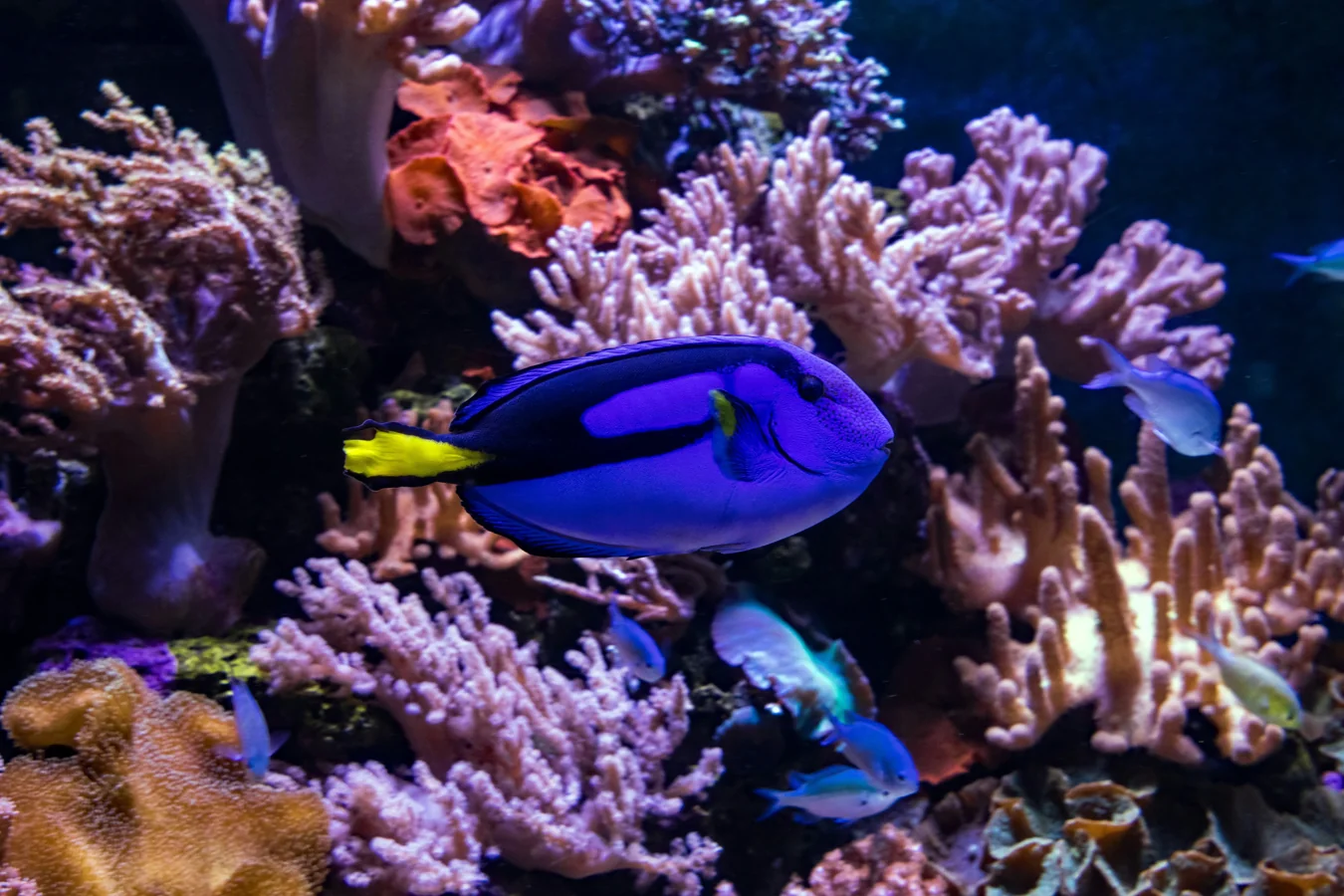
The Blue Tang (Paracanthurus hepatus), also known as the Palette Surgeonfish, Regal Tang, Hippo Tang, and Pacific Blue Tang, is one of the most recognizable marine fish in the aquarium trade. Made iconic by animated films, this species commands respect from advanced aquarists due to its demanding care requirements, massive adult size, and notorious disease susceptibility. Native to the Indo-Pacific region from East Africa to Samoa, Blue Tangs inhabit coral-rich lagoons and outer reef slopes at depths of 6 to 131 feet (2 to 40 meters).
Physical Characteristics
Adult Blue Tangs display a brilliant royal blue body with a striking black palette pattern resembling an artist's paintbrush stroke, bordered by bright yellow on the caudal peduncle and tail. Juveniles are bright yellow with blue spots near the eyes, transitioning to the adult coloration at approximately 3 to 4 inches (7.6 to 10 cm) in length. The body is laterally compressed and disc-shaped, an adaptation for rapid maneuvering through coral branches. A single retractable, venomous caudal spine on each side of the tail base serves as defense against predators.
Conservation and Aquaculture
While currently listed as Least Concern by the IUCN, wild populations face pressure from the aquarium trade. Captive-bred specimens are increasingly available from professional aquaculture facilities and represent the ethical choice for environmentally conscious aquarists. Wild-caught specimens require extended quarantine and often carry parasitic loads requiring aggressive treatment.
Care
Housing and Aquarium Requirements
Tank Size and Dimensions
The minimum tank size for an adult Blue Tang is 125 gallons (473 liters) measuring at least 72 inches (183 cm) in length and 18 inches (46 cm) in width. The recommended lifelong housing is 180 gallons (681 liters) with dimensions of 72x24 inches (183x61 cm) or larger. Blue Tangs are continuous roamers that traverse vast reef territories in nature. Inadequate swimming space causes chronic stress, suppressed immune function, and stunted growth. Tank height is secondary to length and width; a 125-gallon tank that is 6 feet (183 cm) long and 18 inches (46 cm) wide provides superior welfare to a taller 150-gallon (568-liter) tank with only 4 feet (122 cm) of length.
Filtration and Water Flow
You must provide water flow measuring 20 to 30 times turnover per hour. Use multiple powerheads or a wave maker system to create chaotic, turbulent flow patterns that eliminate dead zones. A protein skimmer rated for double your display volume is mandatory to handle the substantial bioload. Install a UV sterilizer at 25 watts per 100 gallons (378 liters) to control free-floating parasites. A refugium with Chaetomorpha macroalgae significantly aids nitrate export and provides a natural food source.
Aquascape Design
Create an aquascape with ample open swimming lanes comprising at least 60% of the tank floor area. Use live rock formations along the back and side walls to create caves and crevices with multiple escape routes. Overhanging rockwork and branching coral skeletons provide essential security zones. Avoid sharp rock edges that can damage the tang's delicate skin. A mature tank with established biofilm and coralline algae is strongly preferred over newly cycled systems.
Substrate and Lighting
Use a 2 to 3-inch (5 to 7.6 cm) aragonite sand bed to support denitrifying bacteria and maintain stable pH and alkalinity. Moderate to high-intensity reef lighting supports algae growth on rock surfaces, providing natural grazing opportunities. Maintain a photoperiod of 10 to 12 hours daily with a gradual dawn-dusk transition.
Diet
Feeding and Nutrition
Dietary Composition
Blue Tangs are obligate herbivores that require a diet consisting of 70-80% vegetable matter and 20-30% protein. In their natural habitat, they graze continuously on filamentous algae, turf algae, and zooplankton. You must replicate this grazing behavior in captivity to prevent malnutrition and HLLE.
Primary Foods
Feed dried nori sheets daily using an algae clip. Use raw, unseasoned nori intended for human consumption or premium aquarium-grade seaweed. Offer approximately one half-sheet per adult fish, replacing it once it becomes tattered or sinks. Supplement with spirulina-based pellets, herbivore flakes, and frozen mysis shrimp every other day. High-quality prepared foods should list marine algae, spirulina, or kelp as the first ingredient.
Supplementation Protocol
Soak all prepared foods in Selcon, Zoecon, or similar vitamin supplement 3-4 times weekly. Vitamin C and vitamin E enrichment is critical for immune support and HLLE prevention. Garlic extract soaks stimulate appetite and provide antiparasitic benefits. Offer blanched zucchini, spinach, or broccoli once weekly as a treat. Feed small portions 3-4 times daily rather than one large meal to mimic natural grazing behavior.
Common Feeding Mistakes
Avoid beef heart, terrestrial animal proteins, and flake foods containing wheat or soy as primary ingredients. These cause digestive blockages and fatty liver disease. Never rely solely on pellet or flake foods. A Blue Tang without daily access to marine algae will develop color fading, lethargy, and compromised immunity within 4-6 weeks.
Health
Health and Disease Management
Blue Tangs are among the most disease-susceptible fish in the marine aquarium trade. Their reduced body slime coat, often called 'dry skin,' makes them prime targets for protozoan parasites and bacterial infections. Prevention through quarantine, pristine water quality, and proper nutrition is vastly more effective than treatment. You must quarantine all new specimens for a minimum of 21 days before introducing them to a display tank.
Quarantine Protocol
Set up a dedicated quarantine tank of at least 40 gallons (151 liters) with PVC pipe hiding places and no substrate. Maintain identical water parameters to the display tank. Observe for 21 days, feeding vitamin-enriched foods daily. Perform prophylactic treatment with chloroquine phosphate at 15 mg/L for Marine Ich prevention if the specimen is wild-caught. Never introduce a Blue Tang directly to a display tank without quarantine.
Cryptocaryon irritans (Marine Ich)
A ciliated protozoan parasite causing white spots, respiratory distress, and rubbing against surfaces.
- Small white salt-like spots on fins and body, rapid breathing, flashing against rocks, loss of appetite, clamped fins.
Introduction via unquarantined livestock, stress from poor water quality or inadequate nutrition, temperature fluctuations.
Mandatory 21-day quarantine for all new fish. UV sterilization at 25W per 100 gallons. Maintain stable temperature and salinity. Vitamin-enriched diet to boost immunity.
Amyloodinium ocellatum (Marine Velvet)
A dinoflagellate parasite more deadly than Marine Ich, causing a fine golden or rusty dusting on the skin and rapid mortality.
- Fine yellow-gold dust on skin, labored breathing, lethargy, clamped fins, death within 48-72 hours if untreated.
Introduction via unquarantined livestock, stress, overcrowding, poor water circulation.
Quarantine all new specimens. Maintain strong water flow and excellent oxygenation. UV sterilization. Avoid temperature spikes above 82°F (28°C).
Head and Lateral Line Erosion (HLLE)
A chronic degenerative condition causing pitting and erosion along the lateral line and head, strongly correlated with elevated nitrates and carbon use.
- Pitting and erosion along the lateral line, around the eyes, and on the head. Faded coloration. Gradual weight loss in advanced cases.
Nitrates exceeding 40-100 ppm, use of low-quality activated carbon, stray voltage in the aquarium, nutritional deficiencies especially vitamin C and fatty acids.
Maintain nitrates below 5 ppm through water changes and refugium use. Use only high-quality carbon briefly and replace frequently. Install a grounding probe to eliminate stray voltage. Feed vitamin-enriched foods daily.
Brooklynella hostilis (Anemonefish Disease)
A ciliated protozoan that causes heavy slime coat production, skin sloughing, and rapid death in tangs.
- Excess mucus production giving a cloudy appearance, sloughing skin, rapid breathing, loss of appetite, death within days.
Strict quarantine protocol. Formalin baths at therapeutic concentrations in quarantine only. Maintain zero ammonia and nitrite at all times.
Bacterial Fin Rot and Ulcer Disease
Secondary bacterial infections often following parasitic infestation or physical injury from aggression.
- Frayed or disintegrating fin edges, red ulcers on the body, cloudy eyes, lethargy, loss of appetite.
Poor water quality, physical injury from tank mate aggression, secondary infection following parasite damage, immunosuppression from chronic stress.
Maintain pristine water quality with zero ammonia and nitrite. Remove aggressive tank mates promptly. Treat underlying parasites first before addressing bacterial infection. Use broad-spectrum antibiotics in quarantine only.
Breeding
Breeding and Reproduction
Natural Spawning Behavior
Blue Tangs are open-water pelagic spawners that form monogamous pairs within larger social groups. In the wild, bonded pairs rise to the water column at dusk during the lunar cycle to release gametes. Females release 10,000 to 40,000 eggs per spawning event. Fertilized eggs are buoyant and drift with currents, hatching within 24 hours into larvae approximately 0.08 inches (2 mm) in length.
Captive Breeding Challenges
Home aquarium breeding is not feasible. The larvae remain in a planktonic state for 60 to 70 days, requiring specialized greenwater culture, constant rotifer and copepod feeding, and precise environmental control. Mortality rates exceed 95% even in professional aquaculture facilities. Commercial breeders use hormone-induced spawning in 500+ gallon (1,893+ liter) circular tanks with continuous current and automated feeding systems.
Captive-Bred Specimens
Purchase captive-bred Blue Tangs from verified aquaculture operations when available. These specimens demonstrate superior disease resistance, acceptance of prepared foods, and reduced environmental impact. Captive-bred fish typically command higher prices but offset costs through reduced quarantine medication and mortality risk. They adapt more readily to aquarium life and show less skittish behavior than wild-caught counterparts.
Tips
Expert Tips and Common Mistakes
Critical Success Factors
Tip 1: Never trust minimum tank size recommendations from general pet stores. Most retailers cite 75 gallons (284 liters) based on juvenile size. You must plan for a 12-inch (30.5 cm) adult from day one. Upgrading tanks for large fish causes extreme stress and often triggers fatal disease outbreaks.
Tip 2: Ground your aquarium. Stray voltage is a documented trigger for HLLE in tangs. Install a titanium grounding probe connected to a verified earth ground. Test with a multimeter; any reading above 0.3 volts indicates a problem requiring immediate investigation of heaters, pumps, and lighting.
Tip 3: Use the container method for capture. Nets destroy caudal spines and remove protective slime. Always use a rigid container or specimen box. If spiked, immerse the wound in hot water immediately and seek medical attention.
Tip 4: Feed algae first, protein second. A Blue Tang fed only mysis and pellets will develop HLLE within months. Marine algae must constitute the majority of the diet. Place nori clips at opposite ends of the tank to encourage natural foraging movement.
Common Mistakes to Avoid
Mistake 1: Adding a second tang to an established tank. This is the most common cause of fatal aggression. If you want multiple tangs, introduce all specimens simultaneously in a system exceeding 300 gallons (1,136 liters).
Mistake 2: Using low-quality activated carbon continuously. Cheap carbon releases abrasive particles and adsorbs essential trace elements. If you use carbon, select high-quality ROX-0.8 or similar, replace it every 7-14 days, and never run it continuously for months.
Mistake 3: Skipping quarantine. Blue Tangs are parasite magnets. A single unquarantined specimen can wipe out an entire reef tank. The 21-day quarantine is non-negotiable.
Mistake 4: Inadequate water flow. Stagnant zones allow parasites to complete life cycles. You need turbulent, chaotic flow patterns with no dead spots.
Compatible Tank Mates
Species Comparison
| Feature | Blue Tang | Yellow Tang | Powder Blue Tang | Purple Tang |
|---|---|---|---|---|
| Scientific Name | Paracanthurus hepatus | Zebrasoma flavescens | Acanthurus leucosternon | Zebrasoma xanthurum |
| Adult Size | 12 inches (30.5 cm) | 8 inches (20 cm) | 9 inches (23 cm) | 10 inches (25 cm) |
| Temperament | Semi-aggressive | Semi-aggressive | Aggressive | Semi-aggressive |
| Minimum Tank Size | 125 gallons (473 L) | 100 gallons (378 L) | 125 gallons (473 L) | 125 gallons (473 L) |
| Diet | Herbivore (70-80% algae) | Herbivore (90% algae) | Herbivore (80% algae) | Herbivore (85% algae) |
| Disease Susceptibility | Very High (HLLE prone) | High | Extremely High | Very High (HLLE barometer) |
| Reef Safety | Completely Safe | Completely Safe | Completely Safe | Completely Safe |
| Care Difficulty | Advanced | Moderate | Expert Only | Advanced |