
Garra Rufa (Garra rufa)
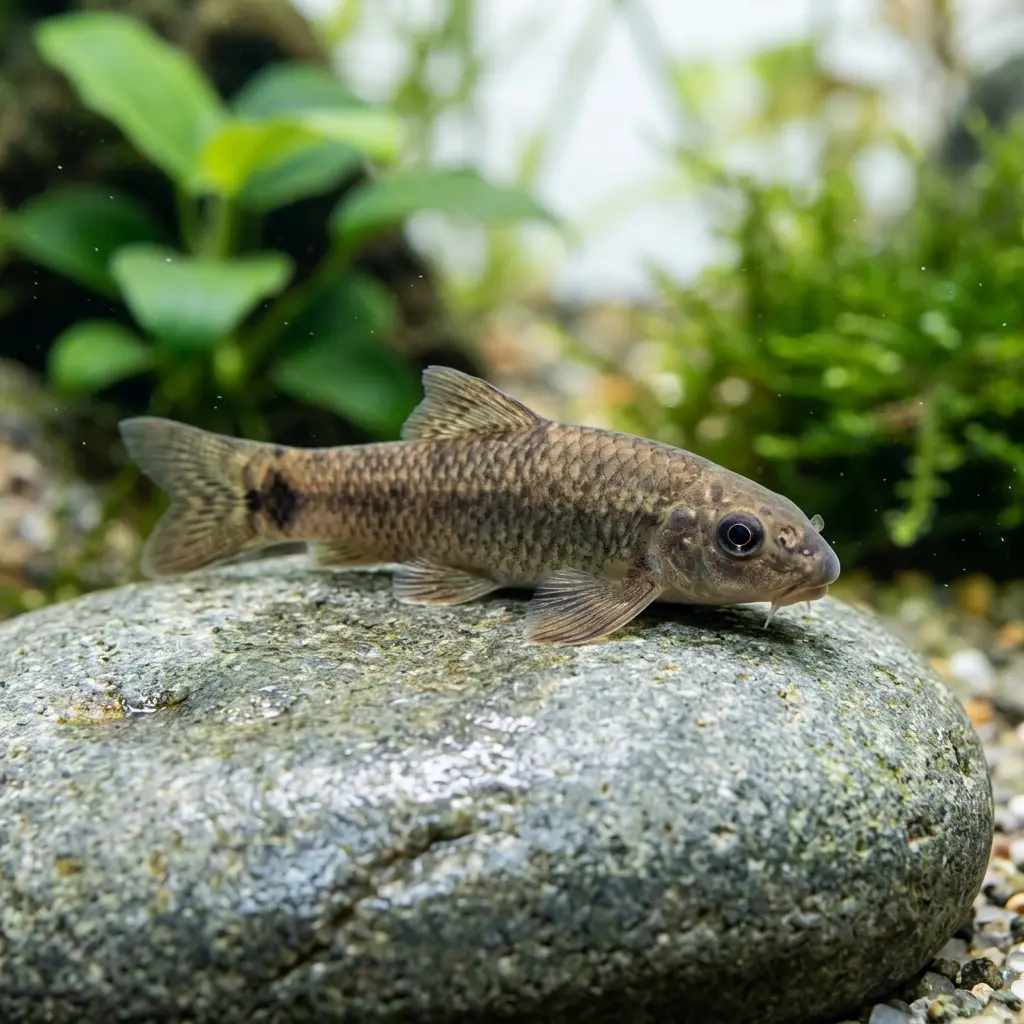
Quick Answer
Garra Rufa is a semi-aggressive, omnivorous cyprinid native to Middle Eastern river systems. It requires a minimum 30 gallon (113 liter) aquarium with high water flow, excellent oxygenation, and groups of 6 or more to thrive. Temperature range 60 to 82 degrees Fahrenheit (15.6 to 28 degrees Celsius), pH 6.2 to 8.0.
Quick Facts
| Scientific Name | Garra rufa |
|---|---|
| Common Names | Garra Rufa |
| Family | Cyprinidae |
| Genus | Garra |
| Type | Freshwater |
| Temperament | semi-aggressive |
| Care Difficulty | intermediate |
| Lifespan | 5 years |
| Maximum Size | Up to 5.5 in (14 cm) |
| Diet | Omnivore |
| Temperature | 60–82°F (16–28°C) |
| pH | 6.2–8 |
| Hardness | 5–18 dGH |
| Minimum Size | 30 gallons |
Key Takeaways
- Requires high water flow of 8 to 12 times turnover and strong oxygenation.
- Must be kept in groups of 6 or more to reduce intraspecific aggression.
- Grows to 5.5 inches (14 cm); minimum tank length 36 inches (90 cm).
- Grazes on biofilm and algae; supplement with spirulina and protein foods.
- Territorial toward conspecifics and similar-looking species.
- Smooth substrate critical to prevent barbel and adhesive disc damage.
Overview
Natural History and Origin
Garra rufa, commonly known as the Doctor Fish or Red Garra, is a small cyprinid native to the swiftly-flowing freshwater systems of the Middle East. Its natural range spans the Tigris-Euphrates, Jordan, Orontes, Ceyhan, Seyhan, and numerous smaller river basins across Turkey, Syria, Iraq, Iran, Jordan, and Israel. The type locality is Aleppo, Syria.
This species has gained international notoriety as the doctor fish used in spa pedicures, where it nibbles dead skin from human feet. However, aquarists must understand that the skin-feeding behavior only manifests under conditions of food scarcity and unpredictability. In a well-fed aquarium, this behavior is rarely observed. Furthermore, many commercial doctor fish are actually closely related species such as Garra jordanica or Garra turcica, not true G. rufa.
Physical Characteristics
Adult Garra rufa reach a maximum standard length of 5.5 inches (14 cm), though most aquarium specimens remain slightly smaller. The body is streamlined and torpedo-shaped, adapted for life in fast currents. A well-developed adhesive disc formed from modified lower lip structures allows the fish to cling to rocks and submerged surfaces in rushing water. Coloration is highly variable across populations, typically presenting a pinkish-red to silvery body with a dark or iridescent blue spot at the upper opercle and another on the caudal peduncle. The upper caudal fin lobe often features a black tip, particularly in younger individuals.
Conservation and Trade Considerations
The taxonomy of G. rufa is currently unresolved; it likely represents a species complex rather than a single entity. Wild populations in Turkey are legally protected from capture due to overharvesting concerns for the spa trade. Most aquarium specimens originate from commercial facilities in Israel and Turkey. The species is listed as Not Evaluated by the IUCN.
Care
Aquarium Requirements
Garra rufa demands an aquarium that replicates its natural hillstream habitat. The absolute minimum tank size for a group of 6 individuals is 30 gallons (113 liters) with a footprint of 36 inches by 12 inches (90 cm by 30 cm). However, a 55 gallon (208 liter) tank measuring 48 inches by 12 inches (120 cm by 30 cm) is strongly recommended for long-term success, as these fish are active swimmers that patrol the bottom constantly.
Filtration and Water Flow
High water flow is non-negotiable. You must provide a filter turnover rate of 8 to 12 times the tank volume per hour. Use external canister filters, powerheads, or dedicated river manifold systems to create unidirectional flow. Surface agitation must be vigorous to maintain dissolved oxygen levels above 6 mg per liter. Air stones or venturi-driven powerheads are essential supplements, particularly in warmer water above 75 degrees Fahrenheit (24 degrees Celsius).
Substrate and Hardscape
Use smooth sand or very fine rounded gravel with a grain size under 3 mm. Sharp or coarse gravel abrades the sensitive barbels and adhesive disc, leading to chronic infections. Provide numerous smooth cobbles, rounded river rocks measuring 2 to 4 inches (5 to 10 cm) in diameter, and carefully selected bogwood pieces. Arrange rockwork to create visual barriers that break line of sight, which is critical for dispersing territorial aggression among group members.
Plant Decor
Lighting should be moderate to bright to encourage algae and biofilm growth. Hardy low-light plants such as Anubias species and Java Fern can be attached to rocks and wood. Avoid delicate stem plants that may be uprooted by the fish's energetic grazing and digging behavior. Shaded areas created by rock overhangs provide necessary refuge from bright light.
Water Parameter Stability
While Garra rufa tolerates a broad parameter range, stability is paramount. Sudden pH crashes below 6.0 or temperature spikes above 85 degrees Fahrenheit (29 degrees Celsius) induce acute stress. Perform weekly water changes of 25 to 30 percent using temperature-matched, dechlorinated water. Maintain nitrates below 20 ppm at all times; these fish are sensitive to nitrate accumulation despite their reputation for hardiness in polluted wild habitats.
Diet
Dietary Requirements
Garra rufa is an omnivorous grazer with a digestive system adapted to constant browsing. In the wild, it consumes aufwuchs, a complex biofilm of algae, diatoms, bacteria, and microscopic invertebrates carpeting submerged rocks. In captivity, you must replicate this grazing behavior to prevent malnutrition and obesity.
Staple Foods
Provide high-quality sinking pellets or wafers as the dietary foundation. Algae wafers and spirulina-based flakes should constitute 50 percent of the diet. Supplement with sinking community pellets containing 35 to 40 percent protein. Feed twice daily, offering only what the fish can consume in 2 to 3 minutes.
Supplemental Foods
Rotate frozen or live foods including bloodworms, Artemia, and Tubifex twice weekly. These protein sources are essential for maintaining vibrant coloration and supporting the immune system. Offer fresh vegetables such as blanched zucchini, cucumber, spinach, and melon rind once weekly. Vegetable matter provides necessary fiber and mimics the wild intake of plant detritus.
Feeding Behavior and Competition
These fish are exuberant feeders. In community tanks, ensure food reaches the bottom by using sinking pellets. Fast-moving surface feeders such as danios may outcompete Garra rufa for floating flakes, so avoid relying on surface foods. The fish will graze algae and biofilm between scheduled feedings, which is why bright lighting and mature tank surfaces are beneficial.
Prohibited Foods
Never feed beef heart, pork, or other mammalian proteins. Cyprinids lack the digestive enzymes to process mammalian fats, leading to fatty liver degeneration. Avoid dried foods past their expiration date, as vitamin degradation causes deficiency disorders within weeks.
Health
General Health and Immunity
Garra rufa is a remarkably hardy species that tolerates suboptimal conditions in the wild, including polluted canals and ephemeral streams. However, aquarium specimens are susceptible to the same bacterial, parasitic, and fungal pathogens as other cyprinids. Their scaleless or partially scaled condition makes them sensitive to certain medications, particularly copper-based treatments and malachite green at standard dosages.
Quarantine Protocol
All new specimens must undergo a 14-day quarantine in a bare-bottom hospital tank with sponge filtration. Perform a 7-day treatment with methylene blue at 3 mg per liter to eliminate external protozoans and fungal spores. Observe for Camallanus worms, which this species can harbor asymptomatically; treat with levamisole at 2 mg per liter if red worms protrude from the vent.
Ich (White Spot Disease)
A protozoan infection caused by Ichthyophthirius multifiliis, characterized by white cysts on fins and body.
- Small white salt-like granules on fins, body, and gills; rubbing against decor; rapid breathing; clamped fins.
Introduced via infected fish or plants; triggered by temperature fluctuations or stress from inadequate water flow.
Quarantine all new arrivals for 14 days. Maintain stable temperature between 72 and 78 degrees Fahrenheit. Ensure high water flow and oxygenation to reduce stress.
Velvet (Gold Dust Disease)
A parasitic infection caused by Piscinoodinium or related dinoflagellates, presenting as a fine yellow-gold dust on the body.
- Yellowish gold or rust-colored dusting on body and fins; scratching against substrate; lethargy; rapid gill movement; difficulty breathing.
Introduced via new fish or contaminated equipment; exacerbated by poor water quality, low oxygen, and stress from insufficient current.
Quarantine new fish. Maintain excellent water quality with nitrates below 20 ppm. Provide strong surface agitation and air stones to maximize oxygen saturation.
Fin Rot and Tail Rot
A bacterial infection typically caused by Aeromonas, Pseudomonas, or Flexibacter species, attacking the fin rays and tail tissue.
- Frayed or ragged fin edges; white or blackened fin margins; receding fin tissue; red streaks at fin base in advanced cases; lethargy.
Poor water quality with elevated nitrates or ammonia; fin nipping from territorial disputes; injury on sharp substrate; stress from inadequate group size.
Maintain weekly 25 to 30 percent water changes. Use smooth substrate only. Keep groups of 6 or more to disperse aggression. Remove sharp decor edges.
Columnaris (Mouth Fungus)
A bacterial infection caused by Flavobacterium columnare, often mistaken for fungal growth due to its cottony appearance.
- White or grayish cotton-like patches on mouth, fins, or body; frayed fins; ulcers on body; rapid breathing; loss of appetite.
High organic load; overcrowding; temperature spikes above 80 degrees Fahrenheit; stress from low oxygen or inadequate water flow.
Avoid overcrowding. Maintain high water flow and surface agitation. Perform regular gravel vacuuming to remove organic waste. Keep temperature stable between 72 and 78 degrees Fahrenheit.
Camallanus Worm Infestation
An internal parasitic nematode infection that is particularly common in wild-caught or farm-raised cyprinids.
- Thin red or brown worms protruding from the vent; wasting despite normal appetite; bloated abdomen in advanced cases; lethargy.
Introduction via infected live foods or new fish; poor quarantine protocols; overcrowded conditions facilitating parasite transmission.
Quarantine all new specimens for 14 days minimum. Avoid feeding untreated live tubifex or bloodworms from questionable sources. Treat prophylactically with levamisole during quarantine if worms are suspected.
Barbel and Adhesive Disc Injury
Physical trauma to the sensory barbels and lower lip disc, leading to secondary bacterial infections.
- Shortened or frayed barbels; reddened or swollen lower lip; refusal to feed; visible abrasions on the ventral head surface; white fungal patches on damaged tissue.
Sharp or coarse gravel substrate; aggressive chasing into decor; rough handling during netting or transport; bacterial contamination of damaged tissue.
Use only smooth sand or rounded gravel under 3 mm. Remove sharp rock edges. Handle with soft nets only. Maintain pristine water quality to prevent secondary infection of minor injuries.
Breeding
Captive Breeding Overview
Breeding Garra rufa in home aquariums is challenging but achievable with proper conditioning and environmental manipulation. Commercial production often relies on hormone induction, but natural spawning can be triggered by simulating seasonal spring floods.
Conditioning Phase
Select a group of 8 to 10 mature fish measuring minimum 3 inches (7.5 cm) and condition them for 4 weeks on high-protein live and frozen foods including bloodworms, brine shrimp, and tubifex. Maintain water temperature at 68 degrees Fahrenheit (20 degrees Celsius) during conditioning with a 10-hour photoperiod.
Spawning Trigger
Simulate spring flooding by raising the temperature to 75 to 78 degrees Fahrenheit (24 to 25.5 degrees Celsius) over 7 days. Increase the photoperiod to 14 hours. Perform daily 20 percent water changes with slightly cooler water to mimic rain runoff. Increase water flow velocity by 30 percent using additional powerheads. Provide smooth flat rocks and fine gravel as spawning substrates.
Spawning Behavior and Egg Care
Garra rufa are egg scatterers. When ready, females release 200 to 500 adhesive eggs over rocks and gravel while males fertilize them simultaneously. Adults exhibit no parental care and will consume eggs and fry voraciously. You must remove adults immediately after spawning concludes, typically within 2 hours of peak activity.
Fry Rearing
Eggs hatch in 48 to 72 hours at 75 degrees Fahrenheit (24 degrees Celsius). Newly hatched fry absorb their yolk sacs for 36 hours. First feeding requires infusoria or commercially available liquid fry food for 3 days, followed by microworms, then newly hatched brine shrimp nauplii. Fry require strong water flow and biofilm-covered rocks from day 7 onward to stimulate their grazing instinct. Grow-out tanks must be at least 20 gallons (75 liters) with sponge filtration and gentle air-driven circulation.
Tips
Expert Tips for Long-Term Success
Flow is Everything
The single most common mistake aquarists make with Garra rufa is insufficient water flow. Standard hang-on-back filters providing 4 times turnover are inadequate. You must invest in canister filtration, powerheads, or river manifold systems delivering 8 to 12 times turnover. Without this, the fish become lethargic, lose their appetite, and succumb to opportunistic infections.
Group Size Dictates Behavior
Never keep fewer than 6 individuals. A trio or pair will result in one dominant individual that relentlessly harasses the others until death. In groups of 8 or more, the aggression is diluted to harmless chasing. If you cannot accommodate a proper group, do not purchase this species.
Substrate Selection
Sharp gravel is a death sentence for this fish. The adhesive disc and barbels are delicate structures that abrade easily on coarse substrates. Once damaged, secondary bacterial infections set in rapidly. Use pool filter sand or smooth rounded pebbles under 3 mm diameter.
Lighting for Food
Contrary to most aquarium advice, you want some algae growth for Garra rufa. Bright lighting on rocks and glass encourages biofilm, which the fish graze between meals. This natural browsing behavior prevents obesity and provides essential micronutrients not found in prepared foods alone.
Medication Caution
As a scaleless cyprinid, Garra rufa is sensitive to copper, malachite green, and formalin at standard dosages. Always halve the recommended dose for scaled fish and extend treatment duration. Praziquantel and levamisole are generally well-tolerated. Salt baths up to 5 ppt for 15 minutes are safe for external parasite treatment.
Spa Fish Misconceptions
Do not purchase Garra rufa expecting them to eat dead skin from your hands or feet. This behavior requires deliberate starvation and specific environmental stressors that are unethical to replicate. In a properly fed aquarium, they will show no interest in human skin.
Compatible Tank Mates






Species Comparison
| Feature | Garra Rufa | Siamese Algae Eater | Panda Garra | Otocinclus |
|---|---|---|---|---|
| Maximum Size | 5.5 inches (14 cm) | 6 inches (15 cm) | 3.5 inches (9 cm) | 2 inches (5 cm) |
| Temperament | Semi-aggressive; territorial with conspecifics | Peaceful; may become territorial as adult | Peaceful; territorial with conspecifics | Very peaceful; strictly schooling |
| Minimum Tank Size | 30 gallons (113 L); 55 gal (208 L) recommended | 30 gallons (113 L) | 20 gallons (75 L) | 10 gallons (38 L) |
| Diet | Omnivore; aufwuchs, algae, protein, vegetables | Omnivore; algae, plant matter, pellets | Omnivore; biofilm, algae, small invertebrates | Herbivore; algae, biofilm, vegetables |
| pH Range | 6.2 to 8.0 | 6.5 to 7.5 | 6.5 to 7.5 | 6.5 to 7.5 |
| Water Flow Requirement | High; 8 to 12x turnover essential | Moderate; adaptable to standard flow | Moderate to high; prefers current | Low to moderate; gentle flow preferred |