
Glass Catfish (Kryptopterus vitreolus)
Quick Answer
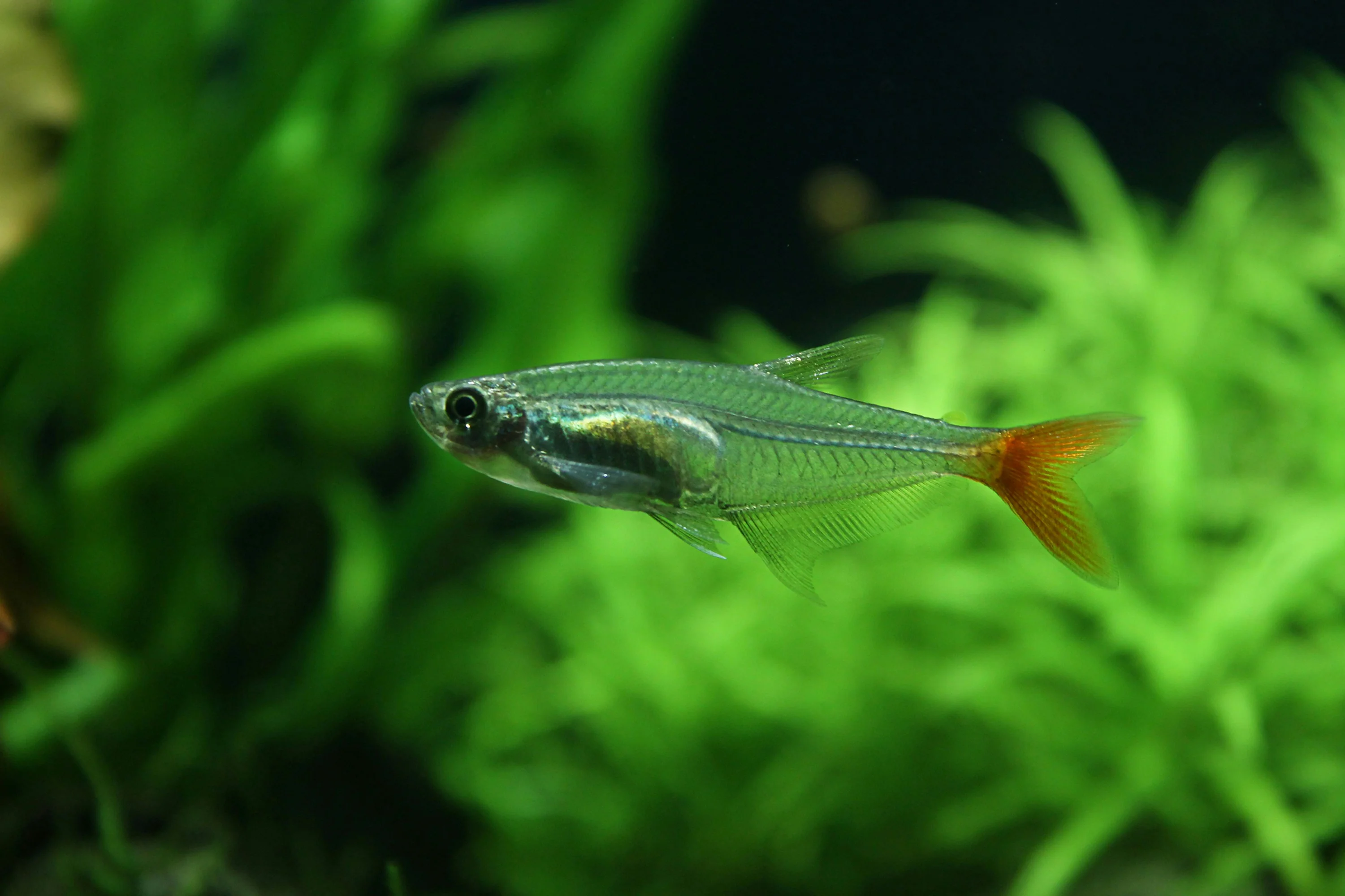
Glass Catfish (Kryptopterus vitreolus) is a captivating, almost completely transparent schooling fish native to Thailand. It requires a minimum 30 gallon (113 liter) aquarium with a school of 6 to 8 individuals, pH 6.0 to 7.5, moderate hardness of 2 to 12 dGH, and temperature between 75 and 82 degrees Fahrenheit (24 to 28 degrees Celsius). This scaleless micropredator demands pristine water quality, dim lighting, and peaceful tank mates to maintain its signature transparency.
Quick Facts
| Scientific Name | Kryptopterus vitreolus |
|---|---|
| Common Names | Glass Catfish |
| Family | Siluridae |
| Genus | Kryptopterus |
| Type | Freshwater |
| Temperament | peaceful |
| Care Difficulty | intermediate |
| Lifespan | 7 years |
| Maximum Size | Up to 2.6 in (7 cm) |
| Diet | Micropredator |
| Temperature | 75–82°F (24–28°C) |
| pH | 6–7.5 |
| Hardness | 2–12 dGH |
| Minimum Size | 30 gallons |
Key Takeaways
- Requires a minimum school of 6 to 8 individuals; smaller groups cause stress, opacity, and premature death.
- Scaleless body is highly sensitive to copper medications and aquarium salt; use praziquantel or half-dose metronidazole instead.
- All trade specimens are wild-caught from Thailand; mandatory 4-week quarantine is essential to prevent ich and velvet outbreaks.
- Body transparency is a real-time health indicator; cloudiness signals stress, poor water quality, or disease.
- Requires a biologically mature aquarium (3+ months old) with zero ammonia and nitrite; never add to new or uncycled tanks.
- Breeding in home aquariums is virtually impossible; all specimens are wild-caught with no commercial captive breeding.
Overview
Species Overview
The Glass Catfish (Kryptopterus vitreolus) is one of the most visually arresting species in the freshwater aquarium hobby. Its body is almost completely transparent, revealing the skeleton, beating heart, and digestive tract in vivid detail. This is not a trick of lighting or selective breeding; it is the result of reduced pigmentation and a lack of scales, an adaptation that provides camouflage in the turbid, tannin-stained waters of its native Thailand. Until 2013, this species was misidentified as Kryptopterus bicirrhis, a much larger, non-transparent relative from Borneo and Sumatra. The taxonomic correction by Ng and Kottelat clarified that the aquarium trade overwhelmingly deals in K. vitreolus, a species with a far more restricted range and distinct care requirements.
At a maximum standard length of 2.6 inches (6.5 cm), the Glass Catfish is a small, elongated fish with a streamlined profile. The dorsal fin is reduced to a tiny, almost invisible structure, while the anal fin is exceptionally long, extending nearly the full length of the body and connecting to the caudal fin. Two pairs of long, sensitive barbels extend from the upper and lower jaw, used to detect vibrations and chemical cues in murky water. When kept in proper schools of 6 to 10 or more individuals in a dimly lit, heavily planted aquarium, they form tight, synchronized midwater shoals that hover and glide with an ethereal, ghost-like quality.
Why This Species Commands Expertise
Do not mistake their popularity for hardiness. Glass Catfish are intermediate-level fish that demand mature aquariums, stable parameters, and careful medication management. They are scaleless, making them acutely sensitive to copper and standard doses of many common treatments. They are exclusively wild-caught, which means they arrive stressed and frequently parasitized. They are schooling fish that deteriorate physically and behaviorally when kept in insufficient groups. This guide provides the exact parameters, dietary protocols, and environmental engineering necessary to maintain a thriving, transparent school.
Diet
Dietary Requirements and Feeding Protocol
Glass Catfish are obligate micropredators in the wild, feeding primarily on tiny aquatic invertebrates, zooplankton, insect larvae, and very small fish swept into their slow-moving habitats. In captivity, they can be hesitant to accept dry foods initially and require patient conditioning with live and frozen fare to establish robust feeding behavior.
Health
Health Management and Disease Protocols
Glass Catfish are susceptible to standard aquarium pathogens, but their scaleless bodies, wild-caught origins, and sensitivity to medications create unique treatment challenges. Prevention through rigorous quarantine, stable parameters, and stress reduction is vastly superior to treatment. When disease does occur, medication selection and dosing require extreme precision.
Ichthyophthiriasis (Ich or White Spot Disease)
A protozoan infection caused by Ichthyophthirius multifiliis, presenting as white salt-like granules on fins, body, and gills. Extremely common in wild-caught Glass Catfish due to import stress.
- Small white cysts (0.5 to 1 mm) resembling salt grains on skin and fins; rubbing against decor; rapid breathing; clamped fins; loss of transparency; isolation from school.
Introduction via infected wild-caught specimens; temperature fluctuations; stress from transport and poor acclimation; inadequate quarantine.
Quarantine all new fish for 4 weeks minimum; maintain stable temperature at 78 to 80 degrees Fahrenheit (25.5 to 26.5 degrees Celsius); ensure proper school size to minimize stress; use UV sterilization at 1 watt per 10 gallons to kill free-swimming theronts.
Velvet Disease (Piscinoodinium pillulare)
A dinoflagellate infection producing a fine golden or rust-colored dust on the skin. Often mistaken for ich but with much smaller, more numerous particles. Common in stressed, wild-caught fish.
- Fine gold or rust-colored dusting across the body; scratching against substrate; lethargy; rapid gill movement; refusal to eat; loss of transparency; fish may flash under light.
Introduction via infected wild-caught stock; low light conditions that favor dinoflagellate reproduction; poor water circulation; stress from parameter instability during acclimation.
Quarantine all new arrivals for 4 weeks; maintain consistent water parameters; provide gentle water movement without strong current; use a 1-hour daily photoperiod with bright light if velvet is suspected, as the parasite is light-sensitive.
Columnaris (Flavobacterium columnare)
A bacterial infection presenting as white or grayish patches on the mouth, fins, or body, often with a cotton-like appearance and rapid tissue erosion. Highly lethal in scaleless fish if untreated.
- White or gray patches around mouth and fin edges; frayed or eroding fins; lethargy; loss of appetite; rapid mortality within 24 to 48 hours if untreated; body becomes opaque.
Poor water quality with elevated nitrates above 20 ppm; temperature spikes above 82 degrees Fahrenheit (28 degrees Celsius); overcrowding; introduction via contaminated equipment or new stock; stress from inadequate school size.
Maintain nitrates below 10 ppm through weekly water changes; avoid temperature fluctuations greater than 2 degrees Fahrenheit (1 degree Celsius) per day; do not overstock; sterilize nets and equipment between tanks; ensure school size of 6 or more to reduce individual stress.
Barbel Erosion and Infection
Physical damage to the sensitive barbels from rough substrate, sharp decor, or aggressive handling, leading to bacterial or fungal secondary infection.
- Shortened, frayed, or reddened barbels; reluctance to explore or feed; reduced schooling behavior; barbels appear clubbed or dissolved at the tips.
Sharp gravel or coarse sand substrate; rough lava rock or slate decor; aggressive netting or handling; poor water quality allowing bacterial colonization of damaged tissue.
Internal Parasites (Hexamita, Nematodes, Tapeworms)
Protozoan or worm infections of the digestive tract causing wasting, stringy feces, and bloating. Extremely common in wild-caught specimens.
- Emaciation despite normal feeding; white, stringy, or segmented feces; bloated abdomen in later stages; loss of transparency; lethargy; isolation from school.
Introduction via wild-caught specimens; contaminated live foods from unverified sources; compromised immune system from chronic stress or improper water parameters.
Quarantine all new fish for 4 weeks with fecal observation; source live foods from reputable cultures only; maintain optimal water parameters to support immune function; prophylactic treatment of quarantine tank with praziquantel at standard dose.
Breeding
Breeding Glass Catfish
Breeding Kryptopterus vitreolus in the home aquarium is considered extremely difficult to virtually impossible. There are no documented, repeatable methods for hobbyist breeding. All specimens in the aquarium trade are wild-caught, and commercial captive breeding does not exist. The species is thought to be an open-water egg scatterer that spawns during rainy season floods, but the exact triggers and requirements remain unknown outside of scientific laboratory settings.
Tips
Common Mistakes to Avoid
- Adding to an immature tank: Introducing Glass Catfish to a newly set-up or uncycled aquarium is the leading cause of death. They require biologically mature systems only.
- Insufficient group size: Keeping fewer than 6 individuals causes chronic stress, opacity, hiding, and premature death. Always maintain 6 to 10 or more fish.
- Overly bright lighting: Unshaded bright LEDs cause these fish to hide and lose transparency. Use floating plants to reduce light intensity by 50 to 70 percent.
- Strong water current: Canister filter outflows or powerheads directed into the tank create flow that exhausts these fish. Baffle all outflows or switch to sponge filtration.
- Rough substrate: Gravel with sharp edges or coarse crushed stone abrades barbels, leading to infection and sensory loss. Use only fine sand or smooth rounded gravel.
- Mixing with boisterous tank mates: Tiger barbs, danios, large tetras, and rainbow sharks will harass and outcompete Glass Catfish. Keep them with equally peaceful, slow-moving species only.
- Skipping quarantine: Because all specimens are wild-caught, skipping quarantine risks introducing ich, velvet, and internal parasites that can wipe out the entire school and infect tank mates.
- Using copper medications: Treating ich with standard copper doses kills scaleless Glass Catfish. Use temperature elevation and half-strength formalin or malachite green alternatives instead.
Expert Tips for Long-Term Success
- Use a dark background: Paint the rear aquarium glass black or apply a dark vinyl background. This reduces reflection, decreases skittishness, and creates the stunning visual effect of floating skeletons that makes this species famous.
- Simulate dawn and dusk: Program your LED lights with a 30-minute ramp-up and ramp-down period. Abrupt lighting changes trigger jumping behavior that can result in fatalities.
- Maintain a mature tank: Never add Glass Catfish to a tank less than 3 months old. They require stable bacterial colonies, established biofilms, and consistent parameters that only mature systems provide.
- Use a tight-fitting lid: Glass Catfish are notorious jumpers, especially during the first 48 hours after introduction or during sudden light changes. A glass lid with minimal gaps is mandatory.
- Target-feed with a pipette: In community tanks, faster fish such as tetras will outcompete Glass Catfish for food. Use a glass pipette or turkey baster to deliver live foods directly to the school in the midwater column.
- Monitor transparency daily: Transparency is your best health indicator. Clouding or opacity is the first sign of stress, poor water quality, or disease. Address the cause immediately upon observation.
- Protect the barbels: Inspect barbels weekly with a magnifying glass. Frayed, shortened, or reddened barbels indicate substrate damage or poor water quality. Correct the substrate or perform an immediate water change.
- Age your water: If using reverse osmosis water, age it in a separate container with Indian almond leaves for 48 hours before water changes. This stabilizes pH and introduces beneficial tannins.
Compatible Tank Mates
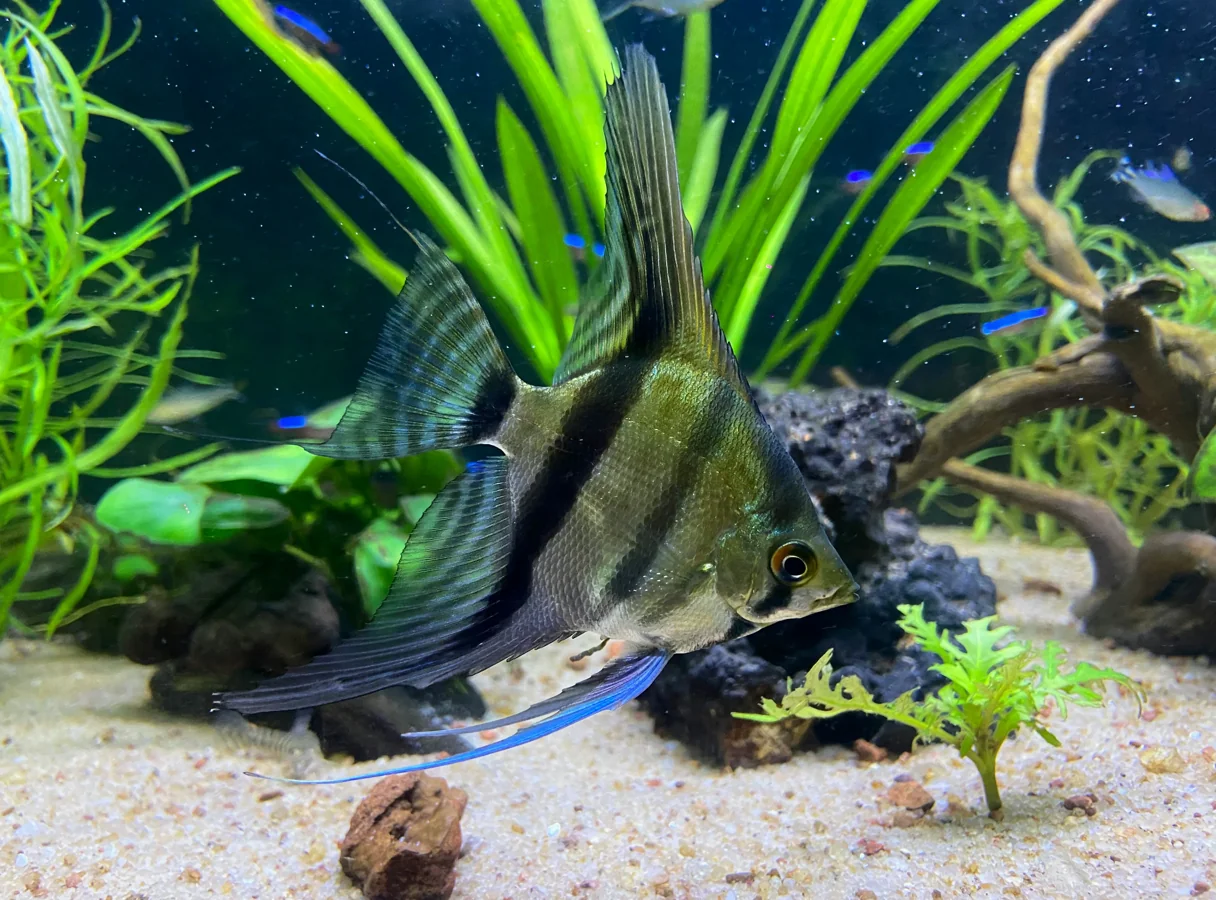
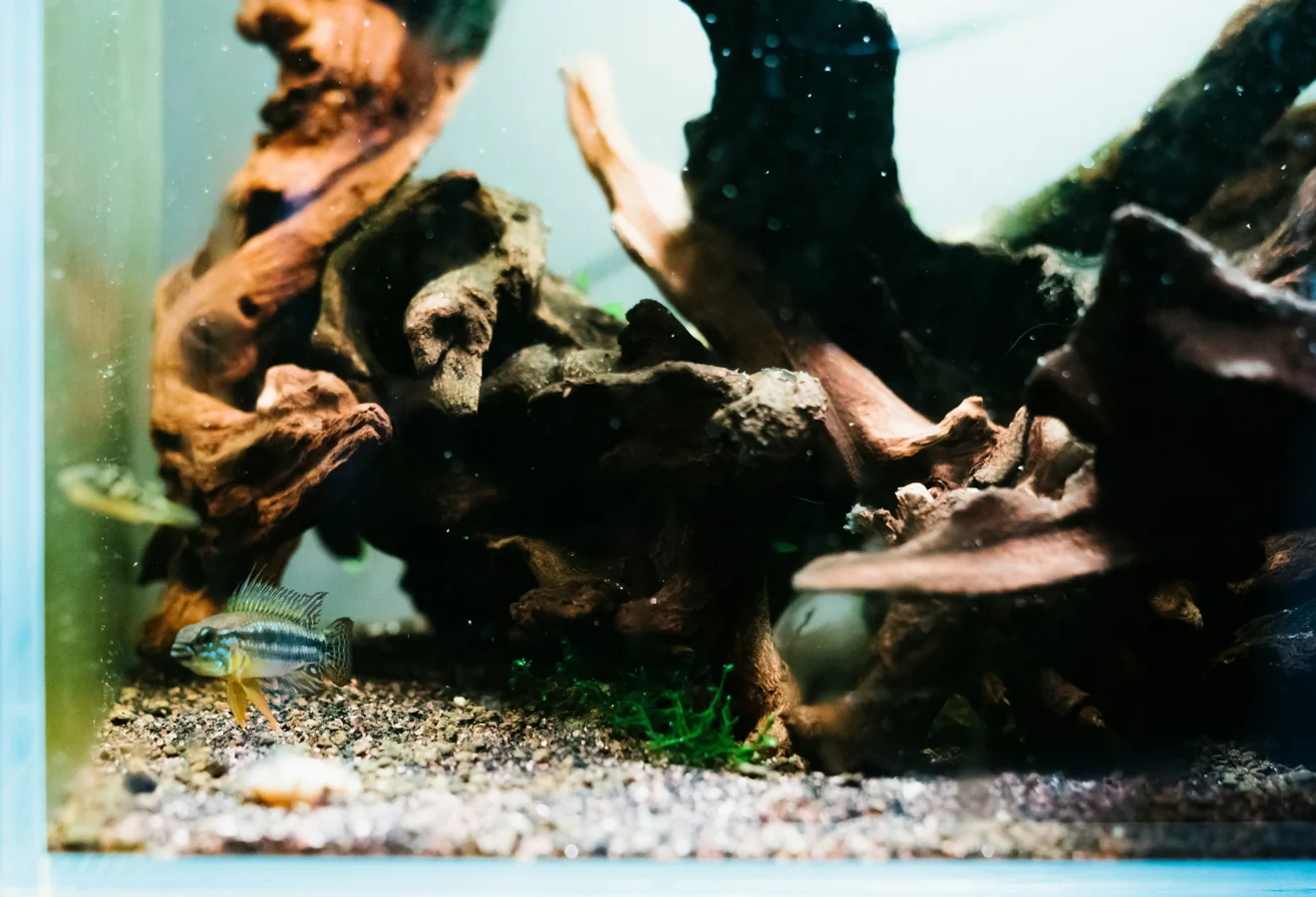
Species Comparison
| Feature | Glass Catfish | African Glass Catfish | Harlequin Rasbora | Pygmy Corydoras |
|---|---|---|---|---|
| Maximum Size | 2.6 inches (6.5 cm) | 6 inches (15 cm) | 2 inches (5 cm) | 1 inch (2.5 cm) |
| Temperament | Peaceful, shy, midwater schooling | Peaceful, nocturnal, bottom-oriented | Peaceful, active, midwater schooling | Peaceful, bottom-dwelling, gregarious |
| Minimum Tank Size | 30 gallons (113 liters) for 6 to 8 fish | 40 gallons (151 liters) for 4 to 6 fish | 20 gallons (75 liters) for 8 to 10 fish | 10 gallons (38 liters) for 6 to 8 fish |
| Diet Type | Micropredator (zooplankton, tiny invertebrates) | Micropredator (small invertebrates, insect larvae) | Omnivore (flakes, small pellets, live foods) | Omnivore (detritus, micro-worms, sinking pellets) |
| Ideal pH Range | 6.0 to 7.5 (slightly acidic to neutral) | 6.5 to 7.5 (neutral) | 6.0 to 7.5 (soft, acidic to neutral) | 6.0 to 7.2 (slightly acidic to neutral) |
| Body Transparency | Fully transparent; internal organs visible | Semi-transparent; becomes opaque with age | Opaque; metallic copper and black patches | Opaque; silver-gray with black markings |
| Care Difficulty | Intermediate (requires mature tank, stable parameters, scaleless medication care) | Intermediate (requires larger tank, low light) | Beginner (hardy, adaptable, forgiving) | Beginner to Intermediate (sensitive to nitrates) |