
Black Neon Tetra (Hyphessobrycon herbertaxelrodi)
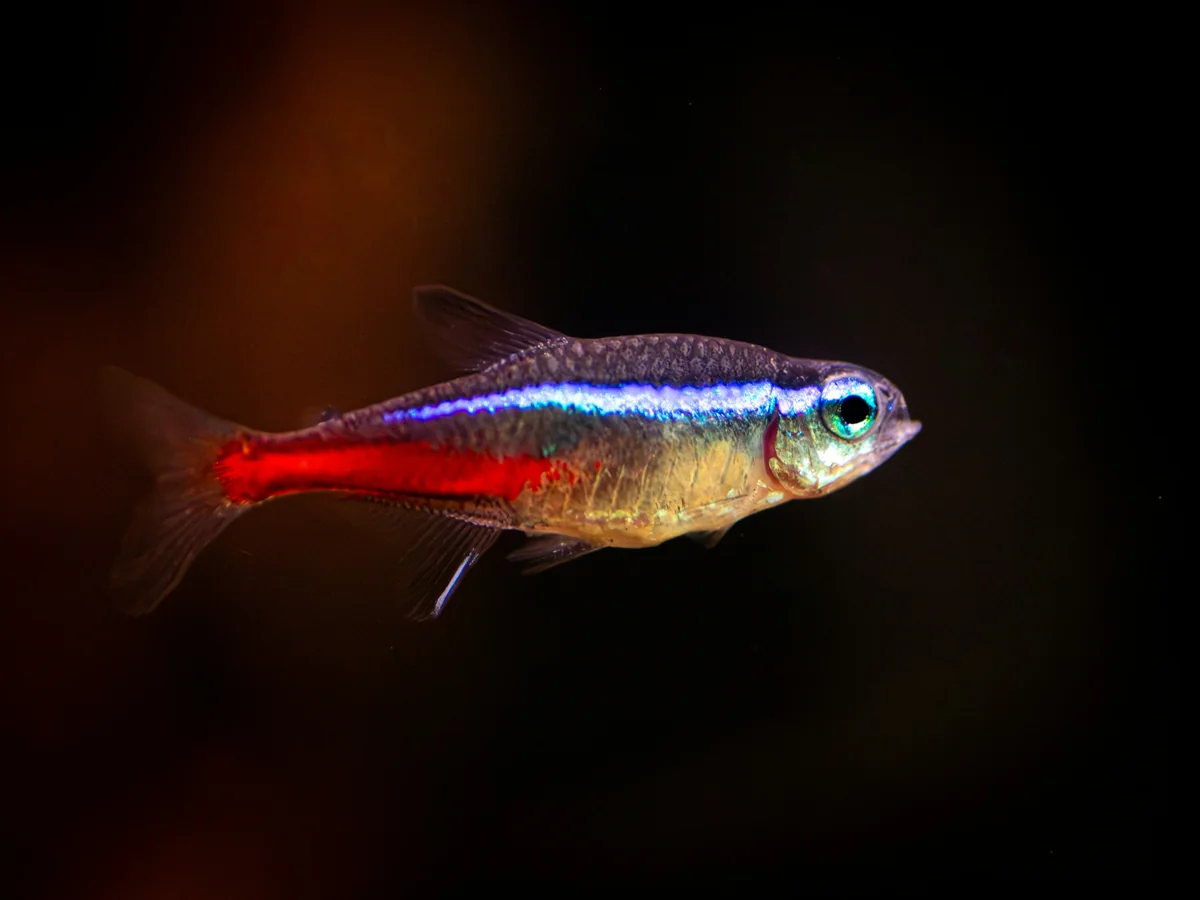
Quick Answer
Black Neon Tetra (Hyphessobrycon herbertaxelrodi) is a hardy, peaceful freshwater characin reaching 1.5 inches (3.8 cm). It requires a minimum 20 gallon (76 liter) aquarium with a pH of 5.5 to 7.5 and temperature range of 72 to 82 degrees Fahrenheit (22 to 28 degrees Celsius). This omnivore occupies the middle to upper zone and makes an excellent addition to planted community setups.
Quick Facts
| Scientific Name | Hyphessobrycon herbertaxelrodi |
|---|---|
| Common Names | Black Neon Tetra |
| Family | Characidae |
| Genus | Hyphessobrycon |
| Type | Freshwater |
| Temperament | peaceful |
| Care Difficulty | beginner |
| Lifespan | 5 years |
| Maximum Size | Up to 1.5 in (4 cm) |
| Diet | Omnivore |
| Temperature | 72–82°F (22–28°C) |
| pH | 5.5–7.5 |
| Hardness | 2–10 dGH |
| Minimum Size | 20 gallons |
Key Takeaways
- Reaches 1.5 inches (3.8 cm) and lives approximately 5 years in captivity.
- Requires a minimum 20 gallon (76 liter) tank for schools of 8 to 12 fish.
- Must be kept in groups of 8 or more to prevent stress and display natural schooling.
- Significantly hardier and more adaptable than true Neon Tetras.
- Color display depends entirely on dark substrate and subdued lighting.
- Notorious jumper; requires a tight-fitting lid at all times.
- Susceptible to Neon Tetra Disease; quarantine all new purchases for 2 to 4 weeks.
- Safe with adult shrimp but will eat baby shrimp and shrimplets.
Overview
Species Overview
The Black Neon Tetra (Hyphessobrycon herbertaxelrodi) is one of the most underrated and capable tetras in the aquarium hobby. Native to the Paraguay River basin in southern Brazil, this small characin is frequently overshadowed by its more famous cousins, the Neon Tetra and Cardinal Tetra. However, experienced aquarists know that the black neon is significantly hardier, bolder, and more adaptable than either species, making it the superior choice for beginners and planted tank enthusiasts alike.
Why the Name Is Misleading
The name Black Neon Tetra causes constant confusion, but the two fish have nothing in common except the word neon. They belong to different genera (Hyphessobrycon vs Paracheirodon), have different color patterns, different behaviors, and different care requirements. The black neon has a black body with a pearly white to greenish-yellow iridescent stripe and a distinctive red-orange spot above the eye. It lacks the red lower-body stripe of the true neon tetra entirely.
Natural History and Conservation
Black Neon Tetras inhabit small creeks, shallow streams, and flooded forest areas within the Paraguay River basin. Their natural waters are typically acidic, stained brown by tannins from decaying plant matter, and moderately flowing. The species is widely captive-bred and readily available in the aquarium trade, reducing pressure on wild populations. However, wild-caught specimens still enter the market and may carry parasites requiring quarantine.
Diet
Diet and Nutrition
Black neon tetras are opportunistic omnivores with a preference for small invertebrates and zooplankton. In the wild, they consume small crustaceans, filamentous algae, insect larvae, worms, and fallen fruits. A varied, high-quality diet is essential for coloration, growth, and immune function.
Health
Health and Disease Management
Black neon tetras are significantly hardier than neon tetras and tolerate a wider range of water conditions. However, they are still susceptible to common aquarium diseases, particularly when stressed by poor water quality, inadequate schooling numbers, or improper acclimation. Proactive disease prevention is essential.
Ich (White Spot Disease)
The most common external parasite affecting black neon tetras, caused by Ichthyophthirius multifiliis.
- White salt-like spots on body and fins, rubbing against decor, rapid breathing, lethargy, clamped fins, loss of appetite.
Introduced via new fish or plants; triggered by temperature drops below 70 degrees Fahrenheit (21 degrees Celsius), poor water quality, transport stress, or inadequate acclimation.
Quarantine all new additions for 2 to 4 weeks. Maintain temperature at 75 to 82 degrees Fahrenheit (24 to 28 degrees Celsius). Avoid sudden temperature fluctuations. Use a UV sterilizer for prevention in display tanks.
Neon Tetra Disease (Pleistophora hyphessobryconis)
A devastating microsporidian parasite that affects tetras and related characins. Despite the name, it infects black neon tetras as well.
- Cysts visible as white patches under the skin, difficulty swimming, loss of color, curved spine (scoliosis), segregation from tank mates, rapid wasting.
Spores from the microsporidian parasite Pleistophora hyphessobryconis, often introduced via infected live foods (tubifex worms are common vectors) or new fish.
Avoid tubifex worms and other potentially contaminated live foods. Quarantine all new fish for 4 weeks. There is no cure; remove and euthanize infected fish immediately to prevent spread.
Dropsy (Edema)
A symptom of underlying organ failure rather than a specific disease, characterized by fluid accumulation in body tissues.
- Pinecone-like scales (raised scales giving a pinecone appearance), swollen abdomen, lethargy, loss of appetite, unusual floating at the surface or sinking to the bottom.
Bacterial infection (Aeromonas, Pseudomonas), poor water quality, internal parasites, or kidney failure. Often the final stage of untreated disease.
Maintain pristine water quality with weekly 20 to 25 percent water changes. Avoid overfeeding. Treat underlying diseases promptly. Isolate affected fish immediately.
Fin Rot
Bacterial infection of the fins causing progressive erosion and tissue death.
- Frayed, ragged, or receding fin edges, redness at fin base, white or blackened fin edges, lethargy.
Aeromonas, Pseudomonas, or Flavobacterium columnare bacteria. Triggered by poor water quality, fin nipping from tank mates, or physical damage from sharp decor.
Maintain nitrates below 15 ppm with regular water changes. Avoid sharp-edged decor. Remove aggressive fin-nipping tank mates. Treat with aquarium-safe antibiotics (kanamycin, nitrofurazone) at first sign.
Internal Parasites (Nematodes, Tapeworms)
Roundworms and flatworms that compromise nutrient absorption and cause chronic wasting.
- Gradual weight loss despite normal appetite, bloating, visible worms in feces, stringy white feces, reduced activity.
Introduced via live foods (especially wild-caught invertebrates) or contaminated substrate. More common in wild-caught specimens.
Avoid wild-caught live foods. Freeze all live foods for 48 hours before feeding to kill parasites. Prophylactic deworming with praziquantel during quarantine.
Breeding
Breeding and Reproduction
Breeding black neon tetras in home aquariums is relatively straightforward compared to neon tetras, though raising fry requires attention to detail. They are egg-scatterers that freely spawn in schools or pairs under the right conditions.
Tips
Common Mistakes to Avoid
- Buying too few: Groups of 3 to 4 result in stressed, hiding fish that never display natural behavior. Minimum 8 is mandatory; 12+ is recommended.
- Light substrate and bright lights: The most common complaint is they look boring. They are not boring; your tank setup is wrong. Fix the lighting and substrate first.
- Skipping the lid: Finding dried black neon tetras on the floor is heartbreaking and entirely preventable.
- Keeping with aggressive fish: Even semi-aggressive fish like dwarf gouramis or angelfish can stress black neons into hiding.
- Overfeeding: Their small stomachs cannot handle large meals. Multiple small feedings are far better than one large feeding.
- Ignoring quarantine: New black neons often carry ich or internal parasites. A 2-week quarantine prevents tank-wide outbreaks.
- Assuming they are the same as neon tetras: Different species, different behavior, different hardiness. Treat them as the distinct species they are.
Expert Tips for Success
- Invest in dark substrate: This is the single most impactful change you can make. Black sand or dark aquasoil transforms their appearance from gray to iridescent.
- Use tannins: Indian almond leaves, driftwood, or peat filtration create the tea-colored water they prefer and enhance their stripe's shimmer.
- Buy larger schools: A group of 15 to 20 black neons in a 40-gallon planted tank is one of the most stunning displays in the hobby. The cost difference from a group of 6 is minimal; the visual impact is exponential.
- Combine with other tetras: Mixing black neons with cardinal tetras or rummy nose tetras creates a multi-species schooling effect that is visually spectacular.
- Feed live foods weekly: Even a small amount of daphnia or baby brine shrimp weekly dramatically improves coloration and triggers natural hunting behavior.
- Always use a lid: Even a small gap is enough for these expert jumpers to escape. Check filter openings and cord cutouts.
- Acclimate carefully: Black neons from chain pet stores are often kept in vastly different water. Drip acclimate for 1 to 2 hours to prevent pH shock.
Compatible Tank Mates






Black Neon Tetra vs. Similar Tetra Species
| Feature | Black Neon Tetra | Neon Tetra | Cardinal Tetra | Rummy Nose Tetra |
|---|---|---|---|---|
| Scientific Name | Hyphessobrycon herbertaxelrodi | Paracheirodon innesi | Paracheirodon axelrodi | Hemigrammus rhodostomus |
| Max Size | 1.5 inches (3.8 cm) | 1.5 inches (3.8 cm) | 2 inches (5 cm) | 2 inches (5 cm) |
| Temperament | Peaceful, bold schooling | Peaceful, timid schooling | Peaceful, moderate schooling | Peaceful, tight schooling |
| Minimum Tank Size | 20 gallons (76 L) | 10 gallons (38 L) | 20 gallons (76 L) | 20 gallons (76 L) |
| Schooling Requirement | 8 to 12+ individuals | 6 to 10 individuals | 6 to 10 individuals | 6 to 10 individuals |
| Diet | Omnivore; micro-foods | Omnivore; micro-foods | Omnivore; micro-foods | Omnivore; micro-foods |
| pH Range | 5.5 to 7.5 | 5.0 to 7.0 | 5.5 to 7.5 | 5.5 to 7.0 |
| Temperature Range | 72 to 82 degrees F (22 to 28 degrees C) | 70 to 81 degrees F (21 to 27 degrees C) | 73 to 81 degrees F (23 to 27 degrees C) | 75 to 82 degrees F (24 to 28 degrees C) |
| Hardiness / Beginner Suitability | Very hardy; excellent beginner fish | Fragile; prone to mystery deaths | Moderate; sensitive to water quality | Moderate; sensitive to nitrates |
| Color Dependency on Tank Setup | High; requires dark substrate and dim light | Moderate; color visible in most setups | Moderate; color visible in most setups | Low; red nose visible in all setups |