
Dwarf Gourami (Trichogaster lalius)
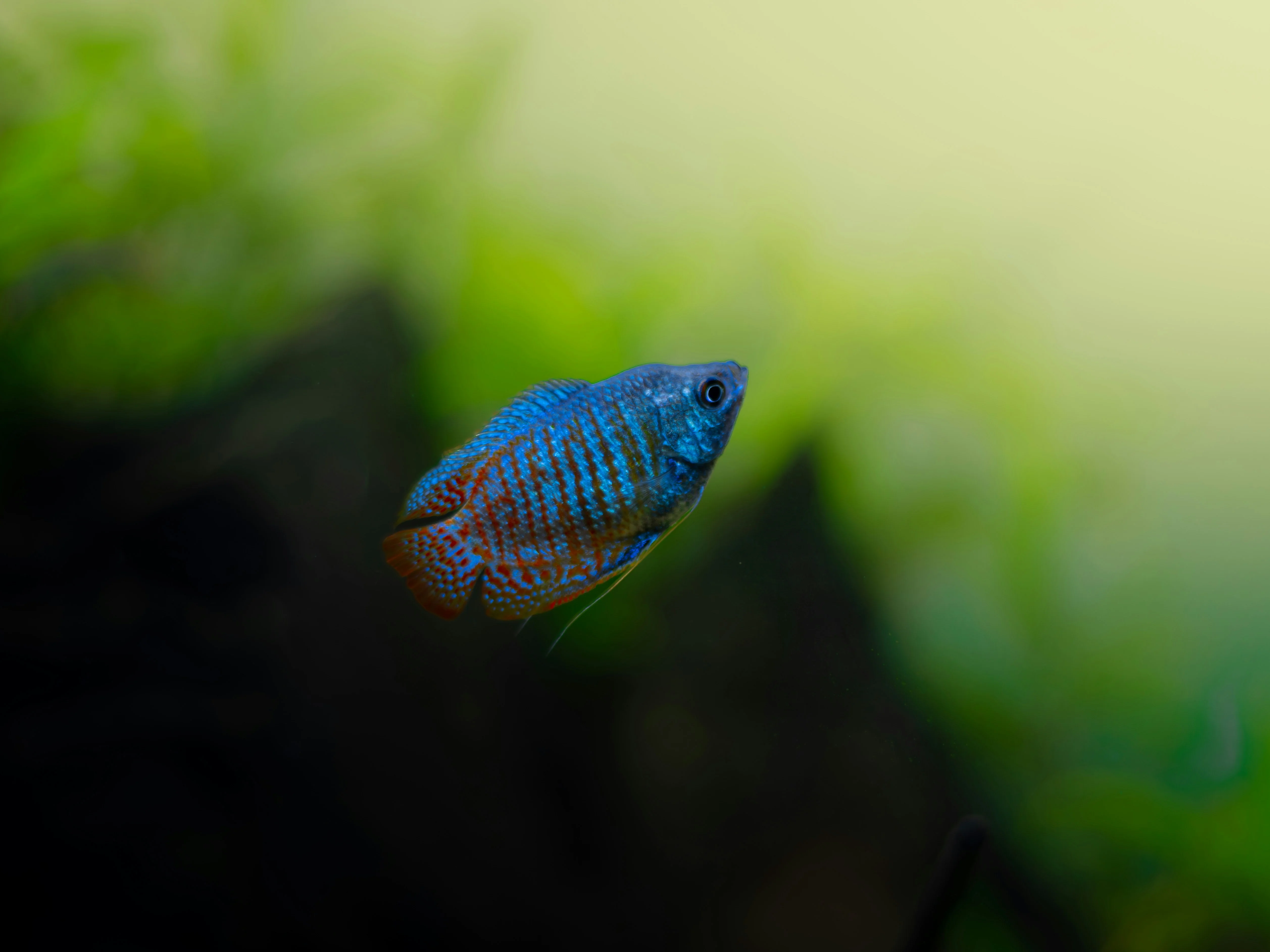
Quick Answer
Dwarf Gourami (Trichogaster lalius) is a captivating, labyrinth-breathing freshwater species prized for iridescent coloration. It requires a minimum 10-gallon (38L) aquarium with pH 6.0-7.2, temperature 75-82°F (24-28°C), and soft water (4-10 dGH). As a semi-aggressive omnivore, keep only one male per tank and avoid other anabantoids. Beware of Dwarf Gourami Iridovirus (DGIV)—quarantine all new fish for 4-6 weeks.
Quick Facts
| Scientific Name | Trichogaster lalius |
|---|---|
| Common Names | Dwarf Gourami |
| Family | Osphronemidae |
| Genus | Trichogaster |
| Type | Freshwater |
| Temperament | semi-aggressive |
| Care Difficulty | intermediate |
| Lifespan | 4 years |
| Maximum Size | Up to 2.5 in (6 cm) |
| Diet | Omnivore |
| Temperature | 75–82°F (24–28°C) |
| pH | 6–7.2 |
| Hardness | 4–10 dGH |
| Minimum Size | 10 gallons |
Key Takeaways
- Keep only one male per tank; multiple males fight to the death in tanks under 30 gallons.
- Requires a minimum 10-gallon (38L) tank for a solitary male; 20 gallons (75L) for pairs or community setups.
- Highly susceptible to Dwarf Gourami Iridovirus (DGIV)—quarantine all new fish for 4-6 weeks minimum.
- Floating plants are mandatory, not optional—they provide cover, reduce stress, and enable bubble nest construction.
- Never house with bettas or other anabantoids; fatal surface combat will occur.
- Minimal water flow is critical; strong current prevents natural behavior and causes chronic stress.
- Omnivore diet requiring 40% protein, 10% fat, 50% plant matter with spirulina supplementation.
- Tolerates copper medications but sensitive to formalin; salt tolerance below 3 ppt.
Overview
Species Overview
The Dwarf Gourami (Trichogaster lalius), formerly classified as Colisa lalia, is one of the most popular and visually striking freshwater aquarium fish in the hobby. Native to the slow-moving rivers, streams, and rice paddies of South Asia—spanning Pakistan, India, and Bangladesh—this labyrinth fish has captivated aquarists worldwide with its iridescent coloration, flowing pelvic fins, and fascinating bubble-nesting behavior.
Natural Habitat
In the wild, Dwarf Gouramis inhabit heavily vegetated, slow-moving or stagnant waters with dense floating vegetation, submerged roots, and leaf litter. These environments are characterized by soft, acidic water with minimal current and diffused lighting filtered through overhead canopy. The water temperature typically ranges from 75°F to 86°F (24°C to 30°C), with pH values between 6.0 and 7.5 and general hardness of 2-15 dGH.
Color Varieties
Through selective breeding, several color morphs have been developed:
- Wild Type: Males display metallic turquoise-blue faces with 12+ bright orange-red vertical stripes extending into the fins. Females are pale silvery-blue with faint orange-yellow striping.
- Powder Blue: Predominantly bright blue males with reduced striping.
- Neon Blue: Intense electric blue coloration with minimal red.
- Red/Flame/Sunset: Deep red to orange males with blue highlights.
- Honey Dwarf Gourami: A closely related species (T. chuna) often confused with Dwarf Gouramis, featuring warm honey-gold coloration.
It is critical to note that farm-raised specimens from Southeast Asia have been heavily impacted by Dwarf Gourami Iridovirus (DGIV), making quarantine and source selection paramount.
Diet
Dietary Requirements
Dwarf Gouramis are omnivores with specific nutritional needs that must be met to maintain vibrant coloration, robust immune function, and proper growth. Their natural diet consists of small insects, insect larvae, zooplankton, and algae grazed from plant surfaces.
Health
Health and Disease Management
Dwarf Gouramis are moderately hardy but carry a significant disease burden due to intensive farming practices and genetic bottlenecks in commercial breeding. Proactive health management is essential.
Dwarf Gourami Iridovirus (DGIV / ISKNV)
A fatal megalocytivirus infection that is the single greatest threat to Dwarf Gouramis in captivity. There is no cure.
- Early: lethargy, loss of appetite, faded coloration, clamped fins. Progressive: skin ulcers (especially facial), fin erosion, sunken eyes, abdominal swelling/dropsy, white or gray skin patches, spinal curvature. Death occurs within 2-4 weeks of symptom onset.
Infectious Spleen and Kidney Necrosis Virus (ISKNV), a megalocytivirus strain. Prevalence in farm-raised stock from Southeast Asia has been documented at 18.7% pre-quarantine and up to 68.6% in moribund fish during quarantine.
Quarantine all new fish 4-6 weeks. Purchase from reputable local breeders rather than mass-market suppliers. Maintain pristine water quality with nitrates below 15 ppm. Avoid stressors. Do not medicate prophylactically with antibiotics. Euthanize infected fish immediately; disinfect tank with 1:19 bleach solution before restocking.
Ich (White Spot Disease / Ichthyophthirius multifiliis)
A common protozoan parasite causing white salt-like spots on the skin, fins, and gills.
Ichthyophthirius multifiliis protozoan. Triggered by temperature fluctuations, stress, or introduction of infected fish/plants.
Quarantine new additions. Maintain stable temperature. Treat with heat (86°F/30°C for 10-14 days) combined with aquarium salt (1-2 ppt) or formalin-based medication. Dwarf Gouramis tolerate heat treatment well but are sensitive to formalin—use half-dose if combining with heat.
Fin Rot (Bacterial / Pseudomonas, Aeromonas)
Bacterial infection causing progressive deterioration of fin tissue, often secondary to fin nipping or poor water quality.
- Frayed, ragged, or receding fin edges. Reddening or inflammation at fin base. White or cloudy fin margins. In advanced cases, fin tissue erodes to the body wall.
Pseudomonas fluorescens, Aeromonas hydrophila, or Flexibacter columnaris. Triggered by ammonia/nitrite spikes, fin nipping from tank mates, or physical damage from sharp decor.
Improve water quality immediately (0 ppm ammonia/nitrite). Remove sharp or abrasive decor. Treat with broad-spectrum antibiotic (e.g., Kanamycin or Maracyn) in a quarantine tank. Dwarf Gouramis tolerate Kanamycin well. Avoid Melafix as primary treatment—it is insufficient for true bacterial infections.
Dropsy (Edema / Kidney Failure)
A symptom rather than a disease, characterized by fluid accumulation due to kidney or liver failure. Often terminal.
- Severe abdominal swelling with scales protruding (pineconing). Bulging eyes (exophthalmia). Lethargy. Loss of appetite. Difficulty swimming. Pale or stringy feces.
Bacterial infection (Aeromonas, Pseudomonas), internal parasites, poor water quality, or advanced DGIV. Kidney dysfunction causes osmotic imbalance and fluid retention.
Dropsy is extremely difficult to treat. Epsom salt baths (1-3 tbsp per 5 gallons) may reduce swelling temporarily. Treat with broad-spectrum antibiotics (Kanamycin + Metronidazole) in a hospital tank. Success rate is low; humane euthanasia is often the most compassionate option for advanced cases.
Velvet Disease (Oodinium / Piscinoodinium pillulare)
A dinoflagellate parasite causing a golden or rust-colored dusting on the fish’s body, often mistaken for ich but finer in appearance.
- Fine golden, yellow, or rust-colored dust on skin and fins. Scratching against objects. Rapid breathing. Clamped fins. Lethargy. Fish may appear to be covered in gold dust.
Piscinoodinium pillulare dinoflagellate. Thrives in low-light conditions and poor water quality. Highly contagious.
Treat with copper-based medication (0.15 mg/L) or formalin. Dwarf Gouramis tolerate copper at this concentration but are sensitive to formalin—use half-dose. Increase temperature to 82°F (28°C) to accelerate parasite life cycle. Maintain complete darkness during treatment (Oodinium is photosynthetic). Treat the entire tank, not just the affected fish.
Constipation and Bloat
Digestive blockage caused by improper diet, overfeeding, or lack of fiber.
- Swollen abdomen (not pineconed). Stringy, pale feces or no feces at all. Loss of appetite. Lethargy. Fish may float awkwardly or sink to the bottom.
Overfeeding, dry flake-only diet, freeze-dried foods without rehydration, or insufficient vegetable matter.
Feed blanched, shelled peas (mashed) as a laxative. Fast the fish for 2-3 days. Increase vegetable content in diet (spirulina, blanched vegetables). Ensure foods are appropriately sized. Avoid overfeeding—feed only what is consumed in 2-3 minutes.
Breeding
Breeding Dwarf Gouramis
Dwarf Gouramis are bubble nest builders and relatively straightforward to breed in captivity, provided the proper conditions are met. Success requires careful conditioning, a dedicated breeding tank, and diligent fry management.
Compatible Tank Mates






Dwarf Gourami vs Similar Species
| Feature | Dwarf Gourami | Honey Gourami | Sparkling Gourami | Betta Fish |
|---|---|---|---|---|
| Scientific Name | Trichogaster lalius | Trichogaster chuna | Trichopsis pumila | Betta splendens |
| Adult Size | 2.5 in (6.4 cm) | 2 in (5 cm) | 1.5 in (3.8 cm) | 2.5-3 in (6.4-7.6 cm) |
| Temperament | Semi-aggressive (territorial males) | Peaceful | Peaceful | Aggressive (highly territorial) |
| Minimum Tank Size | 10 gal (38 L) solo; 20 gal (75 L) community | 10 gal (38 L) | 10 gal (38 L) | 5 gal (19 L) solo; 10 gal (38 L) community |
| Diet | Omnivore (flakes, pellets, frozen/live foods, spirulina) | Omnivore (flakes, small pellets, live foods) | Omnivore (micro pellets, baby brine shrimp) | Carnivore (high-protein pellets, bloodworms, brine shrimp) |
| Ideal pH Range | 6.0 - 7.2 | 6.0 - 7.5 | 6.0 - 7.0 | 6.5 - 7.5 |
| Temperature Range | 75-82°F (24-28°C) | 72-82°F (22-28°C) | 72-78°F (22-26°C) | 76-82°F (24-28°C) |
| Disease Risk | Very High (DGIV/Iridovirus) | Moderate | Low | Moderate (fin rot, velvet) |