
Black Skirt Tetra (Gymnocorymbus ternetzi)
Quick Answer
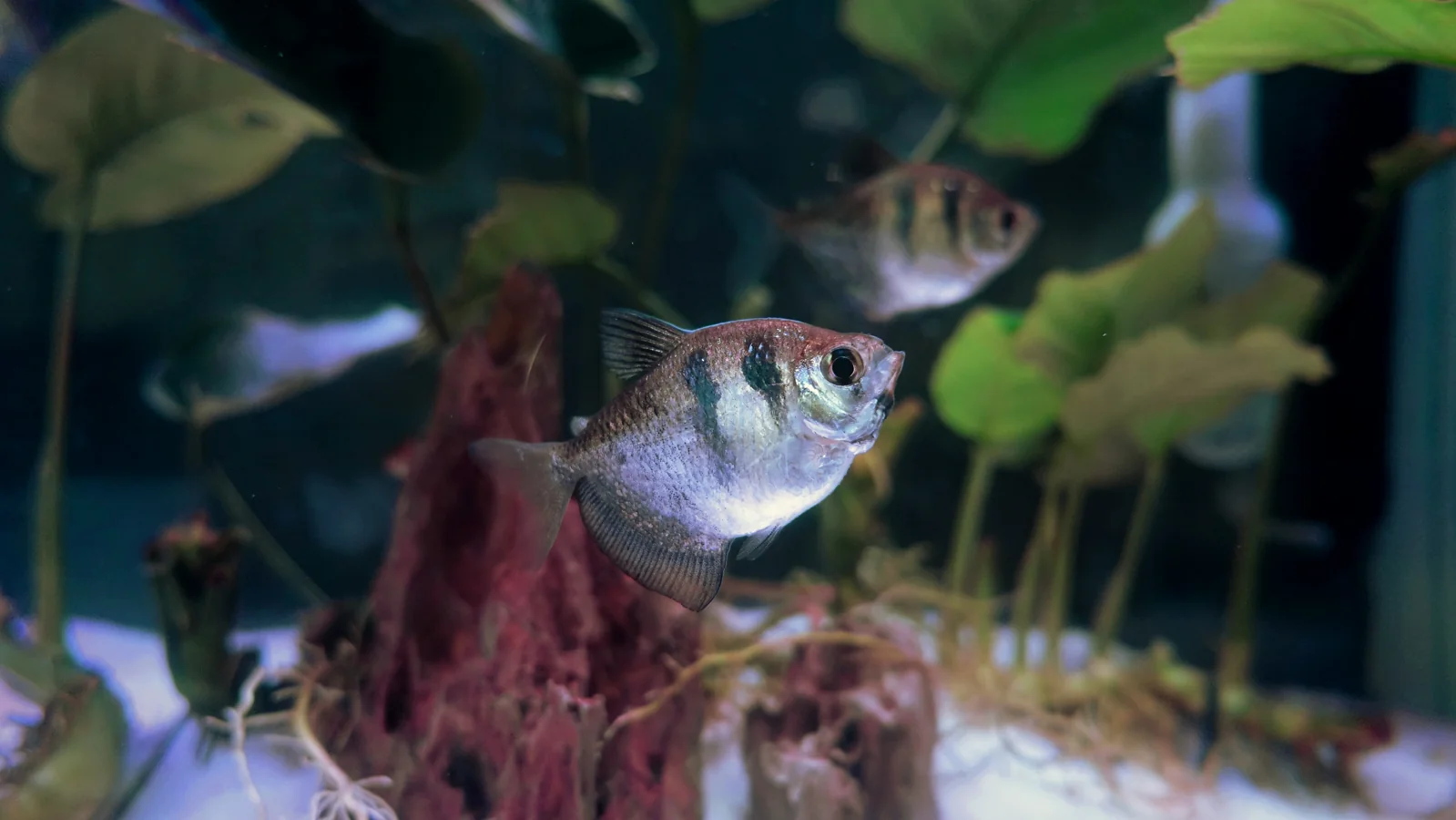
Black Skirt Tetra (Gymnocorymbus ternetzi) is a hardy, peaceful freshwater characin reaching 2.5 inches (6.4 cm). It requires a minimum 20 gallon (76 liter) aquarium with a pH of 6.0 to 8.0 and temperature range of 72 to 82 degrees Fahrenheit (22 to 28 degrees Celsius). This omnivore occupies the middle to upper zone and must be kept in schools of 6 or more to prevent fin nipping.
Quick Facts
| Scientific Name | Gymnocorymbus ternetzi |
|---|---|
| Common Names | Black Skirt Tetra |
| Family | Characidae |
| Genus | Gymnocorymbus |
| Type | Freshwater |
| Temperament | peaceful |
| Care Difficulty | beginner |
| Lifespan | 5 years |
| Maximum Size | Up to 2.5 in (6 cm) |
| Diet | Omnivore |
| Temperature | 72–82°F (22–28°C) |
| pH | 6–8 |
| Hardness | 5–20 dGH |
| Minimum Size | 20 gallons |
Key Takeaways
- Reaches 2.5 inches (6.4 cm) and lives 3 to 5 years in captivity.
- Requires a minimum 20 gallon (76 liter) tank for schools of 6 to 8 fish.
- Must be kept in groups of 6 or more to prevent fin nipping and stress.
- Extremely hardy and adaptable; excellent beginner fish when properly stocked.
- Fin nipping is environmental, not inherent; fix the school size, not the fish.
- Avoid long-finned tank mates (angelfish, bettas, fancy guppies) entirely.
- GloFish Tetras are the same species but heavily inbred and less hardy.
- Color display depends on dark substrate and subdued lighting.
Overview
Species Overview
The Black Skirt Tetra (Gymnocorymbus ternetzi) is one of the most underrated and capable beginner fish in the aquarium hobby. Native to the river basins of Brazil, Bolivia, Argentina, and Paraguay, this species is frequently dismissed as a fin-nipping nuisance. However, experienced aquarists know that the black skirt is peaceful, hardy, and extraordinarily forgiving when kept in proper schools. Its reputation for aggression is almost entirely the result of poor stocking practices by inexperienced keepers.
Why the Bad Reputation Is Unfair
The single greatest misconception about black skirt tetras is that they are inherently aggressive. In reality, they are peaceful schooling fish that redirect natural schooling behavior toward tank mate fins only when kept in groups too small to satisfy their social needs. A school of 10 or more black skirts in a 29 to 40 gallon tank is one of the most harmonious community setups possible. A group of 3 in a 10 gallon tank is a recipe for disaster. This guide corrects the misinformation and provides the definitive care protocol.
Natural History and Conservation
Black skirt tetras inhabit the warm, slow-moving waters of river basins in South America, including the Rio Negro, which is characterized by dark, tannin-stained water rich in decomposing wood. They have also become established in Colombia, Thailand, and potentially the southern United States through aquarium releases. The species is widely captive-bred and readily available, though color variants (White Skirt, GloFish) dominate the market.
Diet
Diet and Nutrition
Black skirt tetras are enthusiastic, non-picky omnivores that consume a wide variety of foods in the wild, including worms, insects, invertebrates, algae, and plant matter. Their feeding behavior is one of their most entertaining traits; they attack food with surprising speed and aggression, often creating a feeding frenzy.
Health
Health and Disease Management
Black skirt tetras are generally hardy and disease-resistant when kept in proper conditions. However, they are susceptible to common aquarium diseases, particularly when stressed by poor water quality, inadequate schooling numbers, or improper acclimation. Proactive disease prevention is straightforward with this species.
Ich (White Spot Disease)
The most common external parasite affecting black skirt tetras, caused by Ichthyophthirius multifiliis.
- White salt-like spots on body and fins, rubbing against decor, rapid breathing, lethargy, clamped fins, loss of appetite.
Introduced via new fish or plants; triggered by temperature drops below 70 degrees Fahrenheit (21 degrees Celsius), poor water quality, transport stress, or inadequate acclimation.
Quarantine all new additions for 2 to 4 weeks. Maintain temperature at 75 to 80 degrees Fahrenheit (24 to 26.7 degrees Celsius). Avoid sudden temperature fluctuations. Use a UV sterilizer for prevention in display tanks.
Neon Tetra Disease (Pleistophora hyphessobryconis)
A devastating microsporidian parasite that affects tetras and related characins. Despite the name, it infects black skirt tetras as well.
- Cysts visible as white patches under the skin, difficulty swimming, loss of color, curved spine (scoliosis), segregation from tank mates, rapid wasting.
Spores from the microsporidian parasite Pleistophora hyphessobryconis, often introduced via infected live foods (tubifex worms are common vectors) or new fish.
Avoid tubifex worms and other potentially contaminated live foods. Quarantine all new fish for 4 weeks. There is no cure; remove and euthanize infected fish immediately to prevent spread.
Fin Rot
Bacterial infection of the fins causing progressive erosion and tissue death, often secondary to fin nipping or poor water quality.
- Frayed, ragged, or receding fin edges, redness at fin base, white or blackened fin edges, lethargy.
Aeromonas, Pseudomonas, or Flavobacterium columnare bacteria. Triggered by poor water quality, fin nipping from tank mates, or physical damage from sharp decor.
Maintain nitrates below 20 ppm with regular water changes. Avoid sharp-edged decor. Keep fish in proper school sizes to minimize fin nipping. Treat with aquarium-safe antibiotics (kanamycin, nitrofurazone) at first sign.
Fungal Infections
Cotton-like fungal growth on body, fins, or mouth, often secondary to injury or stress.
- White, cottony patches on body or fins, frayed fins, lethargy, loss of appetite.
Saprolegnia and other water molds. Triggered by physical injury, poor water quality, or stress from inadequate schooling numbers.
Maintain pristine water quality. Avoid rough handling and sharp decor. Quarantine new fish. Treat with methylene blue or aquarium antifungal medications at first sign.
Internal Parasites (Nematodes, Tapeworms)
Roundworms and flatworms that compromise nutrient absorption and cause chronic wasting.
- Gradual weight loss despite normal appetite, bloating, visible worms in feces, stringy white feces, reduced activity.
Introduced via live foods (especially wild-caught invertebrates) or contaminated substrate. More common in wild-caught specimens.
Avoid wild-caught live foods. Freeze all live foods for 48 hours before feeding to kill parasites. Prophylactic deworming with praziquantel during quarantine.
Breeding
Breeding and Reproduction
Breeding black skirt tetras in home aquariums is moderately easy compared to many tetra species. They are prolific egg-scatterers that show no parental care, making the primary challenge protecting eggs and fry from predation by the parents and other tank inhabitants.
Tips
Common Mistakes to Avoid
- Buying too few: Groups of 3 to 4 result in stressed, nippy fish that harass tank mates. Minimum 6 is mandatory; 8 to 10+ is recommended.
- Keeping with long-finned fish: Even in proper schools, black skirts will nip angelfish, bettas, and fancy guppies. This is not aggression; it is instinct. Avoid these combinations entirely.
- Keeping with bettas: There are numerous reports of black skirts and bettas constantly fighting. The body shape or skirt triggers aggression. Never house them together.
- Light substrate and bright lights: The most common complaint is they look boring. They are not boring; your tank setup is wrong. Fix the lighting and substrate first.
- Adding to an uncycled tank: Despite their hardiness, black skirts will not survive ammonia or nitrite spikes. Cycle the tank completely before introduction.
- Overfeeding: Their enthusiastic eating leads to obesity and water quality issues. Feed small portions twice daily.
- Assuming GloFish are the same: GloFish tetras are the same species but heavily inbred and more sensitive. Do not apply black skirt hardiness expectations to GloFish variants.
- Ignoring quarantine: New fish almost always carry ich or parasites. Quarantine is not optional, even for hardy species.
Expert Tips for Success
- Invest in a larger school: A group of 15 to 20 black skirts in a 40-gallon planted tank is one of the most stunning beginner displays. The cost difference from a group of 6 is minimal; the behavioral improvement is exponential.
- Use dark substrate and subdued lighting: This single change transforms their appearance from dull gray to striking silver and black.
- Add Indian almond leaves: Tannins from catappa leaves create the blackwater effect they prefer, reduce stress, and have mild antibacterial properties.
- Feed live foods weekly: Even a small amount of daphnia or bloodworms weekly dramatically improves coloration and triggers natural hunting behavior.
- Combine with other tetras: Mixing black skirts with neon tetras or cardinal tetras creates a multi-species display that is visually spectacular.
- Fast one day per week: This prevents obesity and digestive issues common in enthusiastic eaters.
- Quarantine is still essential: Despite their hardiness, new black skirts often carry ich or internal parasites. A 2-week quarantine prevents tank-wide outbreaks.
- Choose wild-type over GloFish: Wild-type black skirts are significantly hardier, longer-lived, and more natural in appearance than their genetically modified cousins.
Compatible Tank Mates






Black Skirt Tetra vs. Similar Tetra Species
| Feature | Black Skirt Tetra | Neon Tetra | Serpae Tetra | Rummy Nose Tetra |
|---|---|---|---|---|
| Scientific Name | Gymnocorymbus ternetzi | Paracheirodon innesi | Hyphessobrycon eques | Hemigrammus rhodostomus |
| Max Size | 2.5 inches (6.4 cm) | 1.5 inches (3.8 cm) | 2 inches (5 cm) | 2 inches (5 cm) |
| Temperament | Peaceful; fin nipper if understocked | Peaceful, timid schooling | Semi-aggressive, nippy | Peaceful, tight schooling |
| Minimum Tank Size | 20 gallons (76 L) | 10 gallons (38 L) | 20 gallons (76 L) | 20 gallons (76 L) |
| Schooling Requirement | 6 to 8+ individuals | 6 to 10 individuals | 6 to 8 individuals | 6 to 10 individuals |
| Diet | Omnivore; enthusiastic eater | Omnivore; micro-foods | Omnivore; protein-heavy | Omnivore; micro-foods |
| pH Range | 6.0 to 8.0 | 5.0 to 7.0 | 5.5 to 7.5 | 5.5 to 7.0 |
| Temperature Range | 72 to 82 degrees F (22 to 28 degrees C) | 70 to 81 degrees F (21 to 27 degrees C) | 72 to 79 degrees F (22 to 26 degrees C) | 75 to 82 degrees F (24 to 28 degrees C) |
| Hardiness / Beginner Suitability | Very hardy; excellent beginner fish | Fragile; prone to mystery deaths | Moderate; nippy behavior | Moderate; sensitive to nitrates |
| Fin Nipping Risk | Moderate; only when understocked | Low | High; inherent behavior | Low |