
Serpae Tetra (Hyphessobrycon eques)
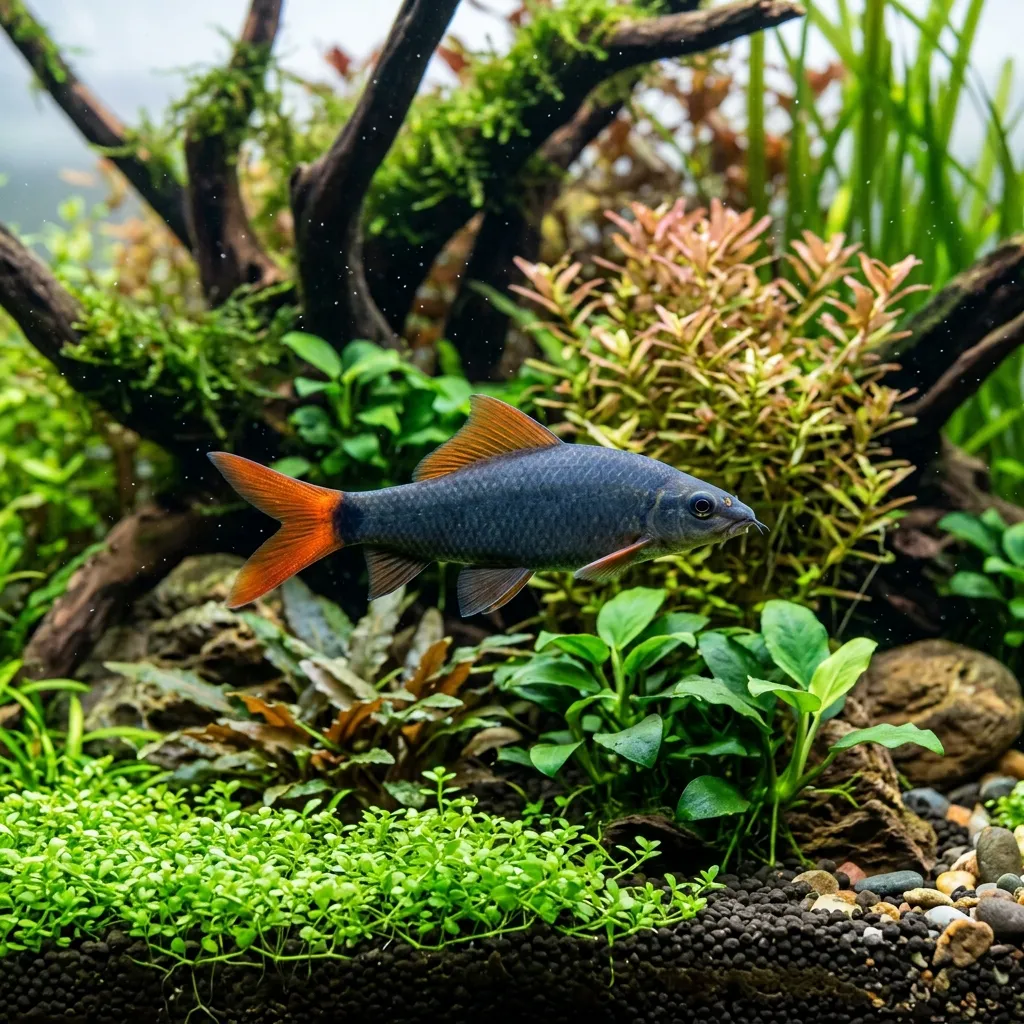
Quick Answer
Serpae Tetra (Hyphessobrycon eques) is a striking freshwater schooling fish requiring intermediate care. It demands schools of 8 or more in tanks of at least 20 gallons (75.7 liters) with a footprint exceeding 30 inches (75 cm).
Quick Facts
| Scientific Name | Hyphessobrycon eques |
|---|---|
| Common Names | Serpae Tetra |
| Family | Characidae |
| Genus | Hyphessobrycon |
| Type | Freshwater |
| Temperament | semi-aggressive |
| Care Difficulty | intermediate |
| Lifespan | 7 years |
| Maximum Size | Up to 2 in (5 cm) |
| Diet | Omnivore |
| Temperature | 72–79°F (22–26°C) |
| pH | 6–7.2 |
| Hardness | 3–10 dGH |
| Minimum Size | 20 gallons |
Key Takeaways
- Known for intense blood-red coloration and a distinctive black comma-shaped spot behind the gills.
- Requires a minimum school of 8 individuals; 12 to 15 is optimal for welfare.
- Notorious fin-nippers that must never be housed with long-finned or slow-moving species.
- Thrives in soft, slightly acidic water but adapts to neutral pH if acclimated gradually.
- Intermediate care level due to behavioral complexity, not physical fragility.
Overview
The Serpae Tetra (Hyphessobrycon eques) is one of the most visually striking freshwater aquarium fish available, distinguished by its deep blood-red coloration, shimmering metallic scales, and distinctive black comma-shaped marking behind the gill plate. Despite its small adult size of approximately 2 inches (5.1 cm), this species commands attention in any well-planned aquascape.
Native to the slow-moving backwaters of the Amazon Basin across northern Argentina, Brazil, Bolivia, Paraguay, and Peru, the Serpae Tetra has adapted to life in stagnant ponds, small lakes, and densely vegetated tributaries. In captivity, this species is frequently mislabeled as a beginner fish. While physically hardy, its behavioral complexity, strict schooling requirements, and notorious fin-nipping tendencies elevate it to an intermediate care level. Success with this species demands precise tank mate selection, adequate school sizes, and stable water chemistry.
Also known as the Red Minor Tetra, Jewel Tetra, Callistus Tetra, and Blood Characin, this species belongs to the Characidae family and is part of the broader Blood Tetra group. It is frequently confused with the Red Phantom Tetra (Hyphessobrycon swegles), though Serpae Tetras display bolder red coloration, a more robust body shape, and black pigmentation on the tail fin that Red Phantoms lack.
Appearance
Appearance and Identification
Serpae Tetras possess a deep, laterally compressed body typical of the Characidae family, with a maximum standard length of 2 inches (5.1 cm) in well-maintained aquariums. Their most defining feature is the intense reddish-copper body coloration that flashes brilliantly under aquarium lighting, particularly when kept over dark substrate.
Key Identification Markings
- A large comma-shaped black spot located immediately posterior to the operculum (gill cover)
- A predominantly black dorsal fin edged with white or cream at the distal margin
- Red pelvic, anal, and caudal fins with the anal fin featuring a white leading edge and black marginal band
- Metallic gold to copper iridescence across the flanks under direct light
Long-Finned Variant
A captive-bred long-finned variety, marketed as the Long Fin Red Minor Tetra, has been developed through selective breeding. This variant exhibits elongated dorsal, anal, and caudal finnage but is more susceptible to fin nipping from conspecifics and requires even more careful tank mate selection.
Natural Habitat
Natural Habitat and Ecology
In the wild, Serpae Tetras inhabit the upper Paraguay and Guaporé River basins within the greater Amazon drainage system. They are found exclusively in freshwater environments characterized by minimal water flow, dense submerged vegetation, submerged tree roots, and leaf litter accumulation.
Water Chemistry in the Wild
Wild populations thrive in soft, acidic blackwater conditions. Typical parameters include pH ranges of 5.5 to 6.5, general hardness below 3 dGH, and temperatures between 75°F and 82°F (24°C to 28°C). The water is typically stained dark brown by tannins released from decaying botanical matter, creating dimly lit environments that this species has evolved to prefer.
Behavioral Ecology
Wild schools can number in the hundreds, congregating around submerged roots and vegetation for protection from predators. Their diet consists of small invertebrates, insect larvae, worms, algae, and detritus. This omnivorous foraging behavior explains their constant activity and curiosity in the aquarium, which, when channeled incorrectly, manifests as fin nipping.
Care
Water Parameters
Water Parameter Management
Serpae Tetras are adaptable within their preferred range but acutely sensitive to sudden parameter shifts. Stability is more important than achieving exact wild-type chemistry. Captive-bred specimens tolerate neutral pH and moderate hardness better than wild-caught individuals.
Critical Parameter Ranges
- Temperature: 72°F to 79°F (22.2°C to 26.1°C). Avoid sustained temperatures above 80°F (26.7°C) as this accelerates metabolism and reduces lifespan.
- pH: 6.0 to 7.2. While wild fish prefer 5.5 to 6.5, captive-bred stock thrives at 6.5 to 7.0.
- General Hardness (GH): 3 to 10 dGH. Hardness below 3 dGH causes osmotic stress and clamped fins.
- Carbonate Hardness (KH): 2 to 8 dKH. This buffers pH against dangerous swings.
- Total Dissolved Solids (TDS): 80 to 200 ppm.
- Electrical Conductivity: 160 to 400 uS/cm.
- Nitrates: Below 15 ppm at all times.
Blackwater Replication
For optimal coloration and breeding conditioning, replicate blackwater conditions using peat extract, alder cones, or Indian almond leaves. These additions lower pH gradually, soften water, and provide antimicrobial tannins. Monitor pH closely when using botanicals to prevent dangerous crashes below 5.5.
Diet
Serpae Tetras are opportunistic omnivores with a high metabolic rate. In nature, they consume insect larvae, small crustaceans, worms, algae, and plant detritus. In captivity, they require a varied diet with precise macronutrient ratios to maintain immune function, coloration, and breeding condition.
Health
Serpae Tetras are physically hardy and resistant to many common aquarium pathogens when maintained in stable, clean water. However, their sensitivity to water parameter fluctuations, specific medication intolerances, and susceptibility to stress-related outbreaks require proactive health management.
Ichthyophthiriasis (Ich / White Spot Disease)
The most common parasitic infection in Serpae Tetras, caused by the ciliated protozoan Ichthyophthirius multifiliis.
- Small white cysts resembling grains of salt on fins, body, and gills; rubbing against substrate and decor (flashing); clamped fins; rapid opercular movement; lethargy in advanced stages.
Introduced via infected fish, plants, or equipment; triggered by temperature fluctuations or stress from poor water quality.
Quarantine all new additions for 14 days; maintain stable temperature; avoid sudden drops below 72°F (22.2°C).
Fin Rot (Bacterial)
A bacterial infection typically affecting fish with pre-existing fin damage from nipping or poor water quality.
- Frayed or receding fin edges with white, red, or black discoloration at the margins; inflammation at the fin base; potential progression to body rot if untreated.
Maintain nitrates below 15 ppm; ensure adequate school size to reduce conspecific nipping; perform weekly water changes.
Neon Tetra Disease (Pleistophora hyphessobryconis)
A devastating microsporidian parasite that infects characin species including Serpae Tetras, often misdiagnosed as bacterial infections.
- Progressive color loss starting at the red lateral line; difficulty swimming; spinal curvature in advanced cases; visible cysts beneath the skin; rapid emaciation despite normal feeding.
Ingestion of parasitic spores from infected live foods, deceased tank mates, or contaminated equipment. Highly contagious with no effective cure.
Purchase from reputable breeders; avoid feeding live foods from questionable sources; immediately remove and euthanize infected fish to prevent spore release.
Columnaris (Cotton Wool Disease)
A highly contagious bacterial infection caused by Flavobacterium columnare that can kill infected fish within 48 hours if untreated.
- White or grayish patches resembling cotton or suede on the mouth, fins, or body; frayed fins; lethargy; reduced appetite; rapid breathing.
Triggered by stress, elevated temperatures above 80°F (26.7°C), poor water quality, and overcrowding. Spreads rapidly in tanks with inadequate filtration.
Avoid temperatures above 79°F (26.1°C); maintain excellent water quality; do not overcrowd; quarantine new fish for minimum 14 days.
Dropsy (Edema)
A symptom of internal organ failure rather than a specific disease, presenting as severe fluid retention and abdominal swelling.
- Pinecone-like scales protruding from the body; severely swollen abdomen; bulging eyes (exophthalmia); pale feces; floating at the surface or resting on the substrate.
Bacterial kidney infection, internal parasites, or prolonged exposure to poor water conditions. Often terminal by the time external symptoms appear.
Maintain pristine water quality; avoid overfeeding; provide varied diet with plant matter to prevent constipation and organ stress.
Breeding
Breeding Serpae Tetras in captivity is moderately difficult and requires precise environmental manipulation. They are egg-scattering spawners with no parental care. Success depends on conditioning, appropriate spawning tank design, and meticulous fry management.
Tips
Common Mistakes to Avoid
Mistake 1: Insufficient School Size
Keeping 5 or 6 Serpae Tetras is the single most common error. Groups this small guarantee chronic aggression, fin damage, and stress-related disease. The minimum functional school is 8, with 12 to 15 being the welfare threshold.
Mistake 2: Housing with Long-Finned Fish
Despite their small size, Serpae Tetras will systematically shred the fins of angelfish, bettas, guppies, and fancy goldfish. The damage occurs primarily at night and during feeding. By morning, tank mates may have severely compromised fins vulnerable to bacterial infection.
Mistake 3: Bright, Bare Tanks
Serpae Tetras kept in tanks with light-colored gravel, no plants, and bright lighting display washed-out colors, hide constantly, and exhibit elevated aggression. Dark substrate, dense planting, and subdued lighting are not optional aesthetic choices but behavioral requirements.
Mistake 4: Ignoring Water Stability
While Serpae Tetras tolerate a range of parameters, they do not tolerate rapid shifts. Adding driftwood that drastically lowers pH, performing large water changes with unmatched temperature, or moving fish between tanks with different chemistry causes shock and mortality. Always acclimate slowly using the drip method over 45 to 60 minutes.
Expert Tips for Advanced Keepers
Color Maximization
To achieve the deepest red coloration possible, maintain a blackwater environment using peat filtration or heavy botanical additions. Pair this with a dark sand substrate and dim overhead lighting. Fish kept under these conditions consistently out-color those in brightly lit tanks with light gravel.
Hierarchy Stabilization
When introducing new fish to an existing school, add a group of 3 to 5 individuals simultaneously rather than one at a time. Single introductions trigger prolonged aggression as the established hierarchy must be renegotiated. Adding a cohort allows the newcomers to form a sub-group and distribute aggression.
Jump Prevention
Serpae Tetras are prolific jumpers, especially during the first 48 hours in a new environment or when startled by sudden light changes. Use a glass canopy with no gaps larger than 0.25 inches (6 mm). Avoid mesh lids, which can snag fins and cause injury.
Feeding Competition Management
In schools larger than 12, dominant fish often monopolize food. Use multiple feeding rings positioned at opposite ends of the tank, or broadcast feed across the entire surface. This ensures subordinate fish receive adequate nutrition and reduces fin nipping triggered by food competition.
Compatible Tank Mates






Species Comparison
| Feature | Serpae Tetra | Ember Tetra | Red Phantom Tetra | Buenos Aires Tetra |
|---|---|---|---|---|
| Scientific Name | Hyphessobrycon eques | Hyphessobrycon amandae | Hyphessobrycon swegles | Hyphessobrycon anisitsi |
| Adult Size | 2 inches (5.1 cm) | 0.8 inches (2 cm) | 1.5 inches (3.8 cm) | 2.75 inches (7 cm) |
| Temperament | Semi-aggressive; notorious fin nipper | Peaceful; never nips fins | Peaceful; shy in small groups | Semi-aggressive; may nip fins |
| Minimum Tank Size | 20 gallons (75.7 L) for 8 to 12 fish | 10 gallons (37.9 L) for 6 to 8 fish | 15 gallons (56.8 L) for 6 to 8 fish | 30 gallons (113.6 L) for 6 to 8 fish |
| Schooling Requirement | 8 minimum; 12 to 15 optimal | 6 minimum; 10 optimal | 6 minimum; 8 optimal | 6 minimum; 8 optimal |
| Diet Type | Omnivore; 35% protein, 55% plant matter | Omnivore; accepts micro foods | Omnivore; prefers small live foods | Omnivore; may eat plants if underfed |
| pH Range | 6.0 to 7.2 | 5.5 to 7.0 | 5.5 to 6.5 | 6.5 to 8.0 |
| Temperature Range | 72°F to 79°F (22.2°C to 26.1°C) | 73°F to 82°F (22.8°C to 27.8°C) | 72°F to 78°F (22.2°C to 25.6°C) | 64°F to 82°F (17.8°C to 27.8°C) |
| Best For | Intermediate keepers; active community tanks | Beginners; nano tanks; peaceful communities | Planted tanks; blackwater setups | Cooler water tanks; larger communities |