
Senegal Bichir (Polypterus senegalus)
Quick Answer
Senegal Bichir (Polypterus senegalus) is a living fossil from West Africa requiring a minimum 55 gallon aquarium for juveniles and 75 to 90 gallons for adults. Maintain pH 6.5 to 7.5, temperature 75 to 82 degrees Fahrenheit (24 to 28 degrees Celsius), and provide a secure, heavy-duty lid. This scaleless carnivore is sensitive to copper medications and requires a sand substrate with abundant hiding places.
Quick Facts
| Scientific Name | Polypterus senegalus |
|---|---|
| Common Names | Senegal Bichir |
| Family | Polypteridae |
| Genus | Polypterus |
| Type | Freshwater |
| Temperament | semi-aggressive |
| Care Difficulty | intermediate |
| Lifespan | 15 years |
| Maximum Size | Up to 14 in (36 cm) |
| Diet | Carnivore |
| Temperature | 75–82°F (24–28°C) |
| pH | 6.5–7.5 |
| Hardness | 5–15 dGH |
| Minimum Size | 55 gallons |
Key Takeaways
- Ancient living fossil with lung-like swim bladder for breathing air
- Requires secure, heavy-duty lid with 2-inch air gap to prevent escape and drowning
- Scaleless skin makes it extremely sensitive to copper and formalin medications
- Obligate carnivore requiring thiaminase-free foods; avoid feeder goldfish
- Minimum 55 gallons for juveniles, 75 to 90 gallons for adults
- Sand substrate mandatory; coarse gravel causes abrasion and infection
- Nocturnal predator best observed under blue moon lighting
- Will eat any tank mate under 3 inches including shrimp and small fish
Overview
Species Overview
The Senegal Bichir, scientifically known as Polypterus senegalus, is one of the most captivating living fossils available to aquarium hobbyists. This ancient ray-finned fish belongs to the family Polypteridae and has remained virtually unchanged for over 60 million years, earning it the nickname dinosaur eel or dragonfish. Despite its common names, the Senegal Bichir is neither an eel nor a dinosaur. It is a primitive bony fish native to the slow-moving rivers, swamps, floodplains, and marshes of West and Central Africa, including the Nile, Chad, Senegal, and Gambia river basins.
What makes this species extraordinary is its combination of primitive and modern anatomical features. The Senegal Bichir possesses a lung-like swim bladder that allows it to breathe atmospheric air, a trait shared with only a handful of other fish families. It also uses its powerful pectoral fins as functional limbs, capable of crawling short distances across land and pushing off surfaces to launch itself out of aquariums. These adaptations make it a survival specialist in oxygen-poor, stagnant waters where most modern fish would perish.
Physical Characteristics
The Senegal Bichir exhibits an elongated, cylindrical body covered in thick, rhomboid ganoid scales that provide armor-like protection. A series of 7 to 18 dorsal finlets run along the back, each with double-edged tips, giving the fish its distinctive prehistoric silhouette. The head is broad and flat with laterally positioned eyes and a tubular snout packed with numerous small, sharp teeth. Wild specimens can exceed 24 inches (61 cm), though captive specimens typically reach 12 to 14 inches (30 to 35.6 cm). An albino variant, featuring pinkish-white coloration with red eyes, is also common in the aquarium trade.
Conservation and Availability
The species is currently listed as Not Evaluated by the IUCN. It is widely captive-bred and readily available through aquarium retailers. Wild-caught specimens are less common but do enter the trade from West African exports. Always purchase from reputable breeders to avoid specimens carrying parasites or pathogens from feeder fish cycles.
Diet
Feeding and Nutrition
Senegal Bichirs are obligate carnivores that hunt primarily through olfaction rather than vision. Their poor eyesight and nocturnal nature mean they track food by scent in dimly lit environments. This biological reality dictates every aspect of their feeding protocol.
Nutritional Requirements
The ideal dietary composition consists of approximately 60 percent protein, 15 percent fat, and 25 percent moisture and fiber. They require animal-based proteins rich in amino acids and fatty acids. Plant matter is not digestible in significant quantities and should not be offered.
Recommended Foods
- Sinking Carnivore Pellets: High-quality pellets formulated for predatory fish should form the dietary staple. Choose brands with fish meal, krill, and squid as primary ingredients.
- Frozen Foods: Bloodworms, mysis shrimp, krill, and silversides provide excellent nutrition. Thaw completely before feeding.
- Live Foods: Earthworms, ghost shrimp, and blackworms stimulate natural hunting behavior. Gut-load live foods with spirulina for 24 hours before feeding.
- Fresh Fish Fillets: Tilapia, pollock, and lancefish fillets offer lean protein. Cut into pieces no larger than the bichir's eye diameter.
Feeding Schedule
Feed juvenile bichirs daily. Feed adults three to four times weekly. Use feeding tongs or target sticks to deliver food directly to the fish, as they often miss scattered items. Feed at night or during blue moon lighting to match their natural hunting period. Remove uneaten food after 15 minutes to prevent ammonia spikes.
Critical Dietary Warnings
Thiaminase Warning: Avoid feeder goldfish, mussels, and prawns as dietary staples. These foods contain thiaminase, an enzyme that destroys vitamin B1 (thiamine). Chronic thiamine deficiency causes neurological damage, organ failure, spinal deformities, and death. Occasional feeding is acceptable, but staples must be thiaminase-free alternatives such as cockles, pollock, lancefish, and earthworms.
Feeder Fish Warning: Never use feeder goldfish or minnows from pet store tanks. These carry parasites, pathogens, and nutritional imbalances that are difficult to diagnose and treat in scaleless fish.
Beef Heart Warning: Do not feed mammalian meats such as beef heart. Fish cannot digest mammalian fats, leading to fatty liver disease and organ failure.
Health
Health and Disease Management
Senegal Bichirs are remarkably hardy when provided with proper water quality and diet. However, their scaleless skin and primitive physiology create unique vulnerabilities that most care guides fail to address adequately.
Scaleless Sensitivity
Unlike most aquarium fish, Senegal Bichirs lack the protective scale covering that shields other species from medications, parasites, and physical damage. Their skin relies heavily on a mucous slime coat for protection. Any damage to this coat, whether from aggressive tank mates, sharp gravel, or unguarded heaters, creates immediate vulnerability to bacterial and fungal infections.
Medication Protocols
Standard aquarium medications can be lethal to Senegal Bichirs. Always verify medication safety before treatment. Copper sulfate is lethal at 0.05 mg per liter. Formalin and malachite green require quarter-strength dosing. Salt concentrations above 2 ppt cause osmotic stress. Always treat in a hospital tank rather than the display aquarium to prevent collateral damage to biological filtration and tank mates.
Ichthyophthirius multifiliis (Ich / White Spot Disease)
A protozoan parasite causing white cysts on skin, fins, and gills. Highly contagious and potentially fatal if untreated.
- White salt-like spots on body and fins, flashing against decor, rapid breathing, clamped fins, reduced appetite.
Introduced via infected fish, plants, or equipment. Stress from poor water quality or temperature fluctuations reduces resistance.
Quarantine all new additions for 4 weeks. Maintain stable temperature between 75 and 82 degrees Fahrenheit. Avoid sudden temperature drops below 74 degrees Fahrenheit.
Bacterial Fin Rot and Abscesses
Bacterial infection of fin tissue and skin, often progressing to body abscesses. Common in bichirs due to their scaleless skin and vulnerability to physical damage.
- Frayed or receding fin edges, red streaks in fin rays, raised white or red lumps on body, open sores, lethargy, loss of appetite.
Use sand substrate exclusively. Install heater guards on all glass heaters. Avoid Chinese algae eaters and common plecos as tank mates. Maintain pristine water conditions with weekly water changes.
Internal Parasites (Helminths and Nematodes)
Worm parasites infecting the digestive tract, causing malnutrition and organ damage. Common in wild-caught specimens and fish fed live feeder fish.
- Emaciation despite normal feeding, stringy white feces, abdominal bloating, lethargy, visible worms in feces.
Feeding live feeder fish from contaminated sources. Wild-caught specimens carrying native parasites. Poor quarantine protocols.
Never feed pet store feeder goldfish or minnows. Quarantine new specimens for 4 weeks. Treat prophylactically with Praziquantel during quarantine. Source live foods from reputable breeders.
Constipation and Bloat
Digestive blockage causing abdominal swelling and buoyancy issues. Often mistaken for dropsy or tumors.
- Swollen abdomen, difficulty swimming or maintaining buoyancy, stringy feces, loss of appetite, hiding behavior.
Overfeeding, excessive dried pellet consumption, low-fiber diet, ingestion of indigestible items such as gravel or decor fragments.
Feed appropriate portion sizes no larger than the fish’s eye. Include fiber-rich foods such as shell-on krill and earthworms. Fast the fish for 48 hours weekly. Use sand substrate to prevent gravel ingestion.
Septicemia (Systemic Bacterial Infection)
Advanced bacterial infection entering the bloodstream. Life-threatening and requires immediate intervention.
- Red streaks under skin, ulcerations, pop-eye, bloating with scales protruding, color loss, rapid breathing, death within 48 hours if untreated.
Untreated wounds becoming infected, poor water quality with elevated nitrates, stress from incompatible tank mates, introduction of pathogens via unquarantined fish.
Maintain ammonia and nitrite at 0 ppm. Keep nitrates below 20 ppm. Quarantine all new fish for 4 weeks. Treat minor wounds immediately with topical antiseptic in a hospital tank.
Breeding
Breeding Senegal Bichirs
Breeding Senegal Bichirs in captivity is challenging but documented with increasing frequency among dedicated hobbyists. Success requires precise environmental simulation, proper conditioning, and careful fry management.
Sexual Dimorphism
Sexing mature Senegal Bichirs requires close examination of the anal fin. Males possess a significantly broader, thicker anal fin that functions as a clasping organ during spawning. The male's anal fin may be up to 50 percent wider than the female's. Females are generally larger-bodied, fuller in the abdomen, and possess a narrower anal fin. Immature specimens cannot be reliably sexed, as juvenile males resemble females.
Conditioning Protocol
Condition a group of four to five sexually mature adults in a spacious aquarium of 100 gallons (378 liters) or more for six weeks. Feed high-protein live foods daily, including earthworms, ghost shrimp, tilapia fillets, and blackworms. Maintain pristine water quality with twice-weekly 25 percent water changes. Gradually increase protein content to 70 percent of the diet during the final two weeks.
Spawning Triggers
Simulate the West African rainy season, the natural breeding period for this species. Follow this protocol exactly: Lower the water level to 10 inches (25 cm) over 48 hours. Raise the temperature to 82 degrees Fahrenheit (28 degrees Celsius). Perform a 40 percent water change using cool, soft water at 68 degrees Fahrenheit (20 degrees Celsius) poured slowly over 4 hours. Increase humidity around the tank by covering part of the lid with plastic wrap. Provide dense floating plants such as Water Sprite, Hornwort, and spawning mops.
Spawning Behavior
Spawning occurs exclusively at night. The male chases the female through vegetation, bumping her with his snout. When the female is receptive, she stops swimming. The male wraps his broad anal fin around her genital area, forming a cup. She deposits 200 to 300 adhesive eggs into the cup, which the male fertilizes immediately. He then disperses the eggs into the vegetation using powerful tail thrusts. Neither parent provides care.
Fry Rearing
Remove both parents immediately after spawning to prevent egg consumption. Eggs hatch in 3 to 4 days at 78 degrees Fahrenheit (25.5 degrees Celsius). Fry remain attached to vegetation for 2 to 3 days while absorbing their yolk sacs. Once free-swimming, feed newly hatched brine shrimp, microworms, and finely crushed carnivore pellets four times daily. Perform daily 10 percent water changes to maintain pristine conditions. Growth is slow initially; fry reach 2 inches (5 cm) at 3 months. Separate by size aggressively to prevent cannibalism.
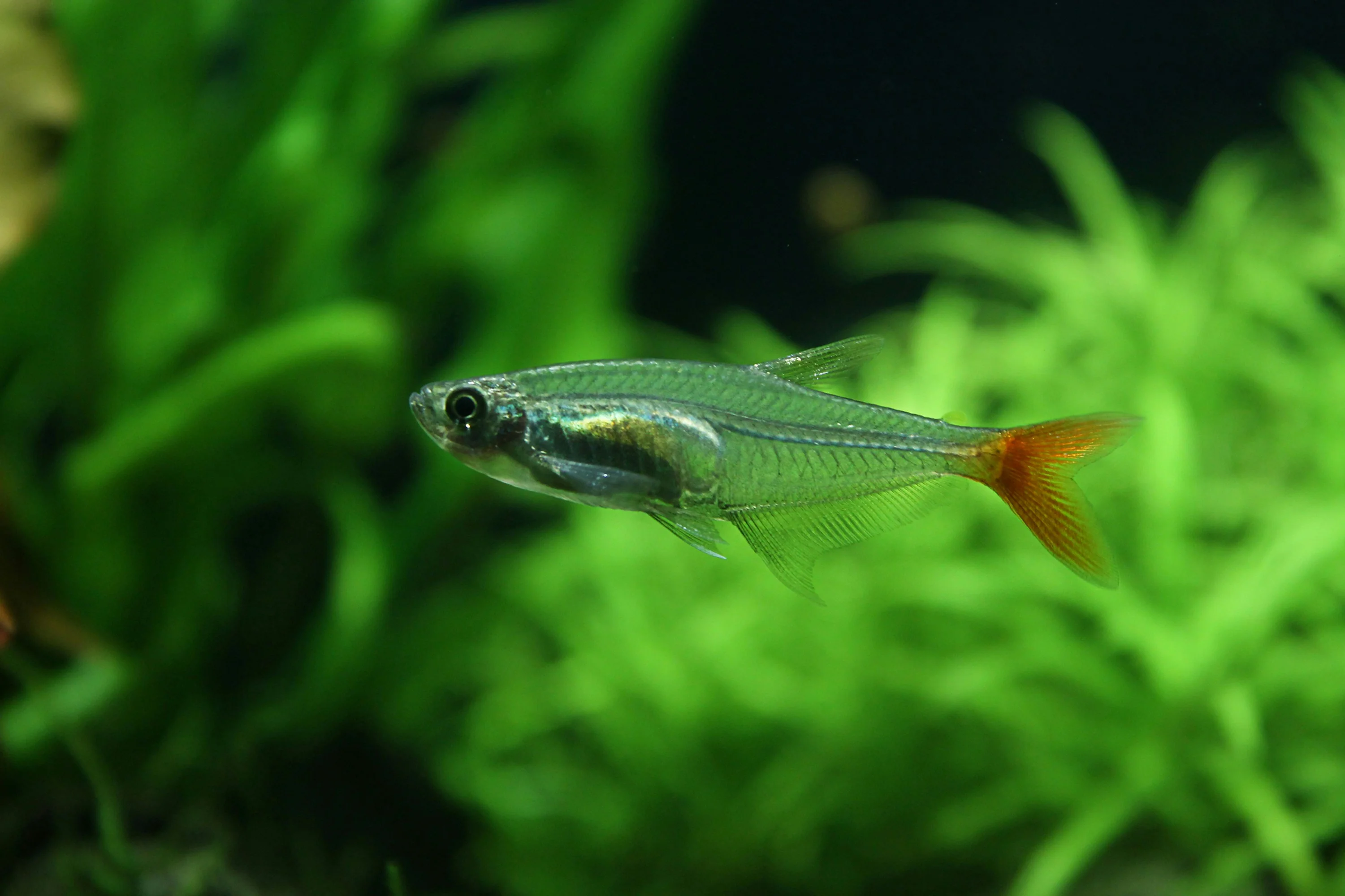
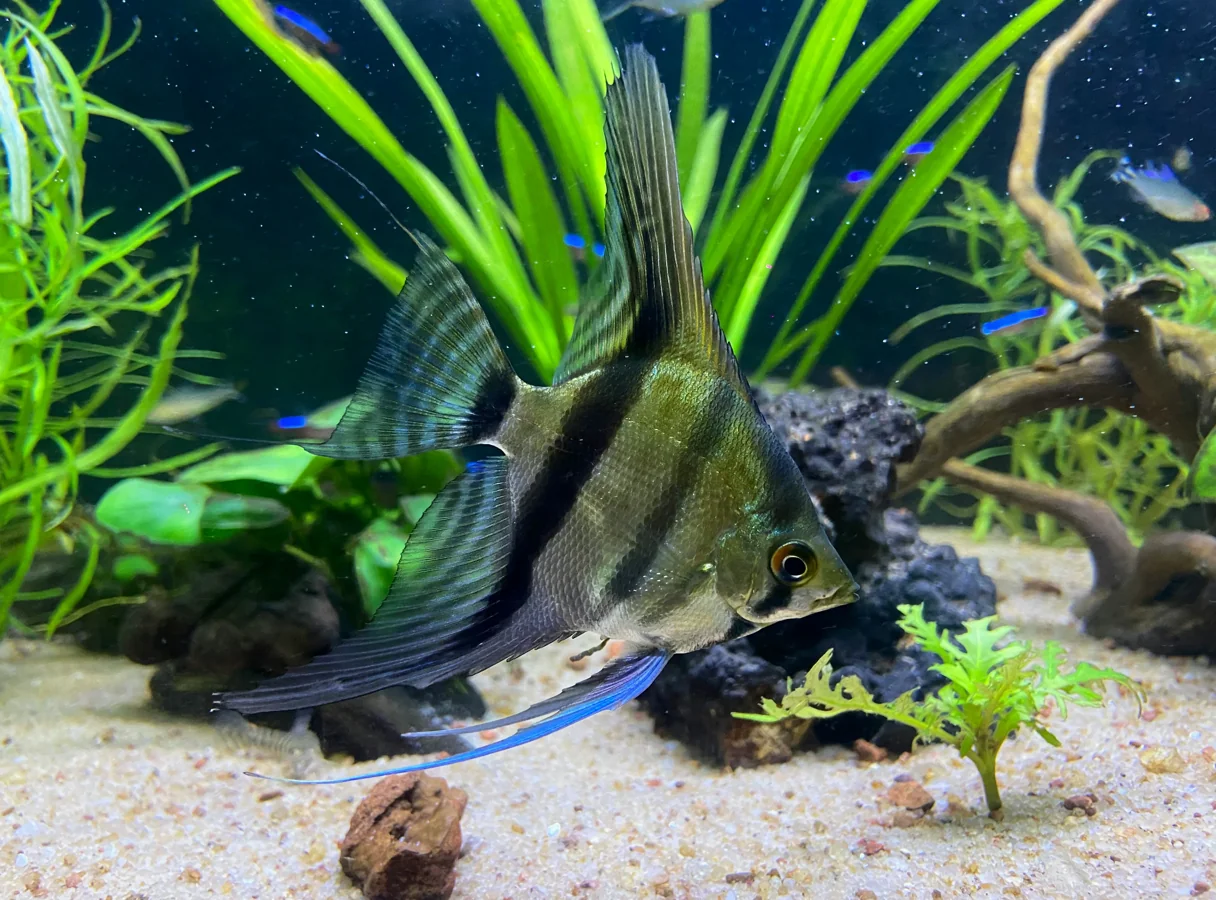
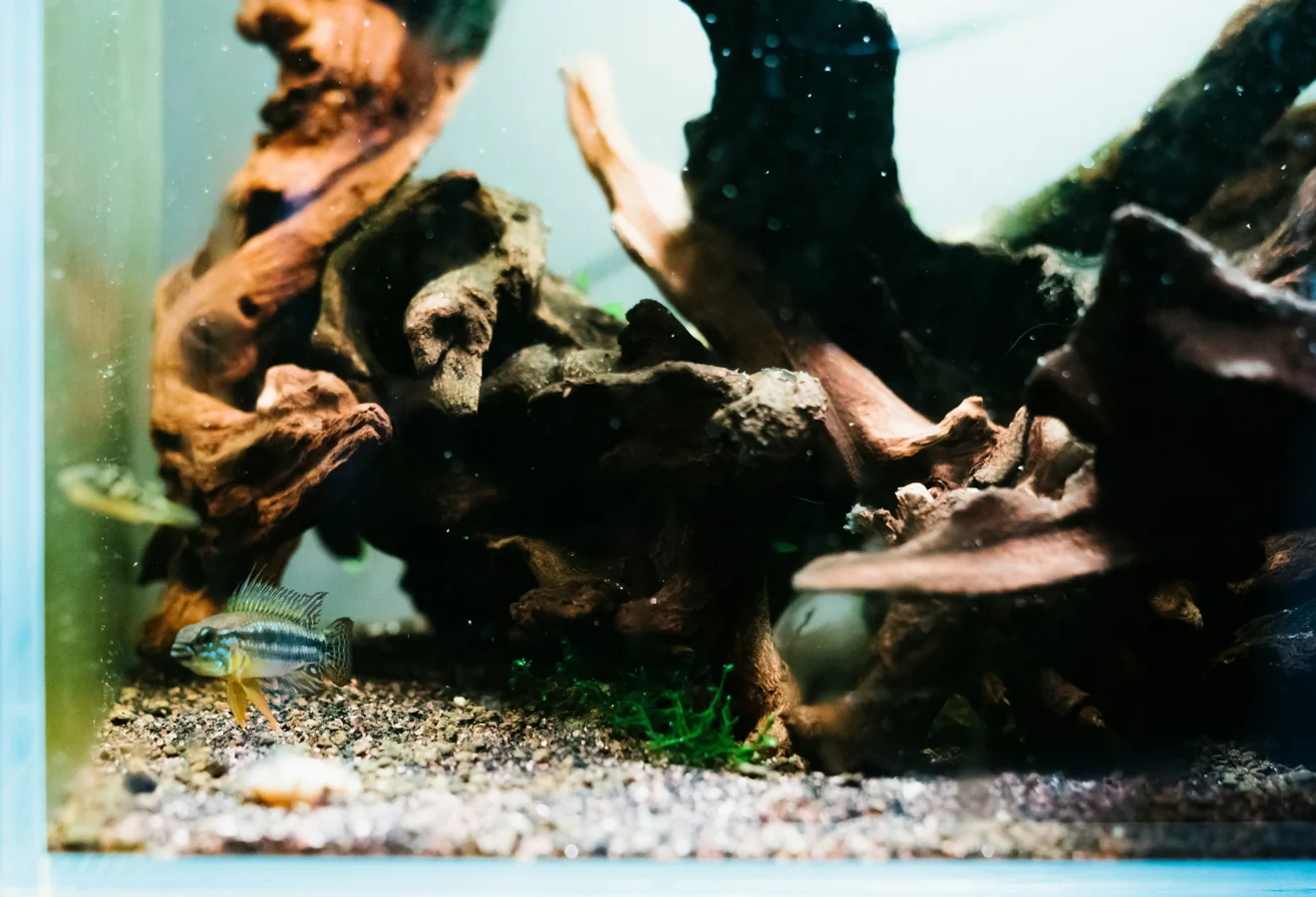
Compatible Tank Mates
Species Comparison
| Feature | Senegal Bichir | Ornate Bichir | Reedfish (Ropefish) | Black Ghost Knife |
|---|---|---|---|---|
| Max Size | 14 in (35.6 cm) | 18 in (45.7 cm) | 15 in (38.1 cm) | 20 in (50.8 cm) |
| Temperament | Semi-Aggressive / Predatory | Semi-Aggressive / Predatory | Peaceful / Social | Peaceful / Shy |
| Minimum Tank Size | 55 gal (208 L) juvenile; 75 gal (284 L) adult | 75 gal (284 L) juvenile; 125 gal (473 L) adult | 50 gal (189 L) juvenile; 75 gal (284 L) adult | 75 gal (284 L) juvenile; 100 gal (378 L) adult |
| Diet | Carnivore: pellets, worms, fish fillets | Carnivore: pellets, crustaceans, fish | Carnivore: bloodworms, small fish | Carnivore: bloodworms, brine shrimp, pellets |
| pH Range | 6.5 - 7.5 | 6.5 - 7.5 | 6.0 - 7.5 | 6.5 - 7.0 |
| Special Requirements | Tight lid, air gap, sand substrate, heater guard | Tight lid, air gap, driftwood caves | Tight lid, social groups, vegetation | Hiding caves, low light, weak current |