
Oscar (Astronotus ocellatus)
Quick Answer
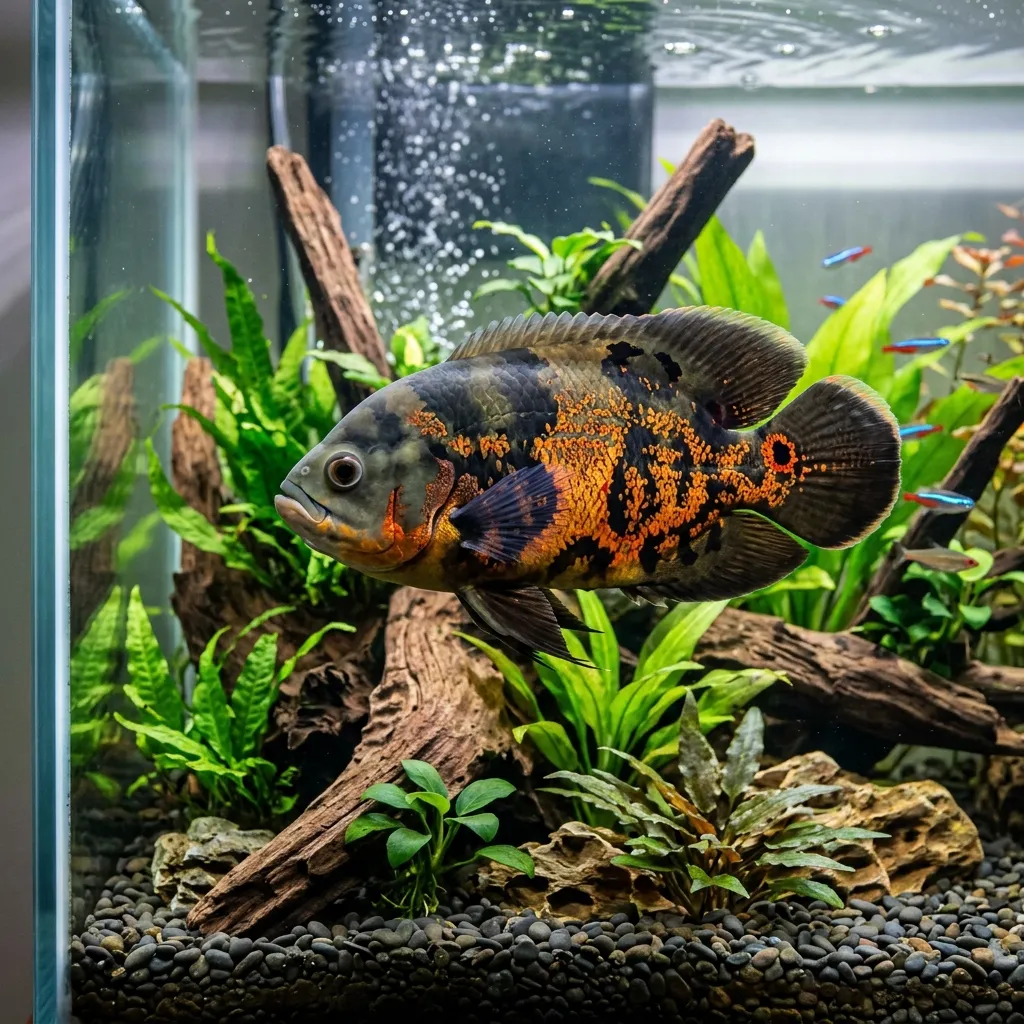
Oscar (Astronotus ocellatus) is a large, personality-rich South American cichlid that grows to 12-14 inches (30-35 cm) and lives 10-15 years. It requires a minimum 75-gallon (284-liter) aquarium with massive filtration, weekly 40-50% water changes, and a varied omnivorous diet. Oscars are intelligent, interactive wet pets but are aggressive toward smaller tank mates and notorious for rearranging tank decor.
Quick Facts
| Scientific Name | Astronotus ocellatus |
|---|---|
| Common Names | Oscar |
| Family | Cichlidae |
| Genus | Astronotus |
| Type | Freshwater |
| Temperament | aggressive |
| Care Difficulty | advanced |
| Lifespan | 12 years |
| Maximum Size | Up to 14 in (36 cm) |
| Diet | Omnivore |
| Temperature | 74–80°F (23–27°C) |
| pH | 6–8 |
| Hardness | 5–20 dGH |
| Minimum Size | 75 gallons |
Key Takeaways
- Requires minimum 75 gallons with canister filtration rated for 2-3x tank volume.
- Produces massive waste; weekly 40-50% water changes are mandatory.
- Intelligent wet pet that recognizes owners and begs for food.
- Aggressive and predatory; will eat any fish under 4 inches.
- Prone to Hole-in-the-Head disease from inadequate biofiltration or poor diet.
- Never feed feeder goldfish; use high-quality pellets, frozen foods, and vegetables.
- Notorious for sulking, rearranging tanks, and jumping; secure lid is mandatory.
Overview
Species Overview
The Oscar (Astronotus ocellatus), also known as the Tiger Oscar, Marble Cichlid, or Velvet Cichlid, is one of the most popular and recognizable large cichlids in the aquarium hobby. Native to the slow-moving rivers, streams, and floodplains of the Amazon River basin in South America, this species has earned a devoted following due to its remarkable intelligence, dog-like personality, and striking coloration.
Oscars are true wet pets. They recognize their owners, beg for food, and have been documented observing humans from distances of 15-20 feet. Their interactive behavior, combined with a wide range of color morphs including Tiger, Albino, Red, Copper, and Lutino variants, makes them a centerpiece fish for dedicated aquarists willing to meet their substantial space and maintenance requirements.
However, Oscars are not beginner fish despite their hardiness. Their massive size, prodigious waste production, aggressive tendencies, and specific dietary needs demand advanced aquarium management. A single adult Oscar can produce more waste than ten community fish combined, necessitating robust filtration and frequent maintenance.
Quick Facts
- Scientific Name: Astronotus ocellatus
- Common Names: Oscar, Tiger Oscar, Marble Cichlid, Velvet Cichlid
- Family: Cichlidae
- Origin: South America (Amazon River basin: Brazil, Colombia, Peru, Venezuela)
- Adult Size: 12-14 inches (30-35 cm); exceptional specimens reach 15+ inches (38+ cm)
- Lifespan: 10-15 years; up to 18 years documented in optimal conditions
- Temperament: Aggressive; predatory toward smaller fish
- Care Level: Advanced
- Tank Level: Middle to Bottom
Diet
Diet and Feeding
Oscars are opportunistic omnivores with enormous appetites and specific nutritional requirements. Their diet directly impacts growth rate, coloration, immune function, and susceptibility to Hole-in-the-Head syndrome. A poorly planned diet is one of the leading causes of premature death in this species.
Health
Health and Disease Prevention
Oscars are hardy fish when provided with excellent water quality and nutrition. However, their massive waste production and specific dietary needs make them susceptible to several serious health conditions. Understanding these vulnerabilities and maintaining rigorous preventive care is essential for their long-term survival.
Hole-in-the-Head / Head and Lateral Line Erosion (HITH/HLLE)
A multifactorial syndrome characterized by pits and erosions around the head and along the lateral line. The most serious and common health issue in Oscars.
- Small pits or holes around the eyes, nostrils, and head; erosions along the lateral line; white stringy feces; lethargy; weight loss; darkened coloration.
Inadequate biofiltration and high bacterial counts in water; Hexamita internal parasites; diet deficient in vitamins C and B1 or lacking vegetable fiber; chronic stress from poor water quality.
Use canister filtration rated for 2-3x tank volume; perform weekly 40-50% water changes; feed varied diet with pellets, vegetables, and frozen foods; avoid feeder fish; maintain nitrates below 20 ppm.
Ich (White Spot Disease)
A protozoan infection caused by Ichthyophthirius multifiliis, common in newly acquired or stressed Oscars.
Introduction of infected fish without quarantine; sudden temperature drops; stress from poor water quality or aggressive tank mates.
Quarantine all new fish for 3-4 weeks; maintain stable temperature at 76-78°F (24-26°C); avoid temperature fluctuations greater than 2°F (1°C) per day.
Fin Rot
A bacterial infection (Aeromonas, Pseudomonas, Flexibacter) that erodes fin tissue, often secondary to aggression or poor water quality.
- Tattered, frayed, or receding fin edges; white or red margins on fins; lethargy; loss of appetite.
Maintain pristine water quality with weekly water changes; remove overly aggressive tank mates; ensure all decor has smooth, rounded edges.
Bloat and Constipation
Digestive impaction caused by overfeeding, dry foods, or lack of dietary fiber. Common in Oscars fed exclusively on pellets or protein-heavy diets.
- Swollen, distended abdomen; stringy white feces; loss of appetite; lethargy; difficulty swimming; floating at the surface or sinking to the bottom.
Overfeeding; exclusive pellet or protein diet without vegetable fiber; feeding dry foods without soaking; low water temperature slowing digestion.
Feed blanched peas weekly; include vegetable matter in diet; soak dry foods before feeding; implement one fasting day per week; maintain temperature at 76-78°F (24-26°C).
Hexamita (Spironucleus)
Internal protozoan parasites that infect the gastrointestinal tract and internal organs, often associated with Hole-in-the-Head syndrome.
- Wasting despite normal appetite; white or clear stringy feces; sunken belly; lethargy; pale coloration; loss of appetite in advanced cases.
Introduction of infected fish; diets lacking vegetable fiber or chitin; poor water quality compromising immune function.
Quarantine and prophylactically treat new fish with metronidazole; include fiber-rich vegetables and chitin sources in diet; maintain excellent water quality and biofiltration.
Physical Injury
Oscars frequently injure themselves by bashing into decor, heaters, filter intakes, or during territorial disputes.
- Abrasions, scale loss, split fins, torn lips, or bruising. Secondary bacterial or fungal infections may develop in open wounds.
Sharp decor; unsecured equipment; territorial fighting; panic responses to sudden movements or bright lights; jumping into tank lids.
Use only smooth, rounded decor; secure all equipment externally or with guards; provide adequate space to reduce territorial disputes; use dim lighting and avoid sudden movements near the tank.
Breeding
Breeding Oscar Cichlids
Breeding Oscars is moderately challenging due to the difficulty of sexing them visually and the need for a compatible pair. However, once a bonded pair forms, they are dedicated parents and will breed repeatedly under the right conditions.
Compatible Tank Mates






Species Comparison
| Feature | Oscar | Jack Dempsey | Green Terror | Severum |
|---|---|---|---|---|
| Adult Size | 12-14 inches (30-35 cm) | 8-10 inches (20-25 cm) | 8-10 inches (20-25 cm) | 8-10 inches (20-25 cm) |
| Temperament | Aggressive; predatory toward small fish | Aggressive; highly territorial | Very aggressive; intolerant | Semi-aggressive; relatively peaceful |
| Minimum Tank Size | 75 gallons (284 L) | 55 gallons (208 L) | 55 gallons (208 L) | 55 gallons (208 L) |
| Diet | Omnivore; pellets, insects, vegetables | Carnivore; pellets, live foods | Carnivore; pellets, shrimp, fish | Omnivore; pellets, vegetables, insects |
| pH Range | 6.0 - 8.0 | 6.5 - 8.0 | 6.5 - 8.0 | 6.0 - 7.5 |
| Care Level | Advanced (massive bioload) | Intermediate | Intermediate | Intermediate |
| Ideal For | Large wet pet in 75+ gal with heavy filtration | Species or large cichlid community | Experienced cichlid keeper | Community with other large cichlids |