
Common Pleco (Hypostomus plecostomus)
Quick Answer
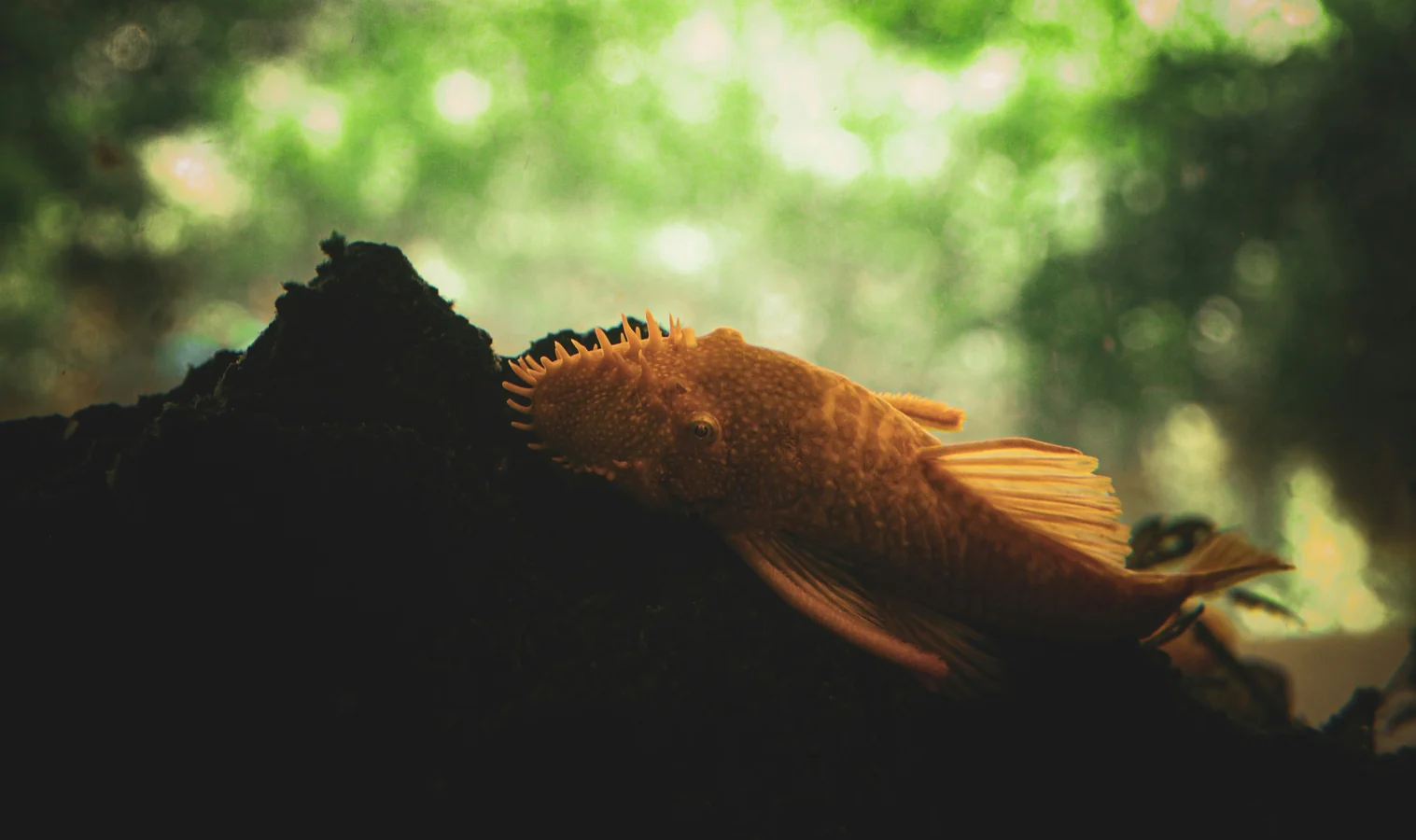
Common Pleco (Hypostomus plecostomus) is a massive armored catfish reaching 24 inches (61 cm). It requires a minimum 150 gallon (568 liter) aquarium with driftwood, high oxygenation, and robust filtration. Juveniles eat algae but adults shift to a mixed diet. Scaleless and extremely sensitive to copper. Not suitable for tanks under 150 gallons.
Quick Facts
| Scientific Name | Hypostomus plecostomus |
|---|---|
| Common Names | Common Pleco |
| Family | Loricariidae |
| Genus | Hypostomus |
| Type | Freshwater |
| Temperament | aggressive |
| Care Difficulty | advanced |
| Lifespan | 15 years |
| Maximum Size | Up to 24 in (61 cm) |
| Diet | Omnivore |
| Temperature | 72–82°F (22–28°C) |
| pH | 6.5–7.5 |
| Hardness | 5–19 dGH |
| Minimum Size | 150 gallons |
Key Takeaways
- Reaches 24 inches (61 cm) and outgrows 99 percent of home aquariums.
- Requires a minimum 150 gallons (568 L); 200 gallons (757 L) strongly recommended.
- Driftwood is mandatory for digestive health and fiber intake.
- Scaleless; copper at 0.05 mg per liter is lethal.
- Juveniles eat algae; adults require mixed diet with significant protein.
- Territorial and aggressive toward other plecos and bottom dwellers.
Overview
Taxonomy and Classification
Common Pleco, scientifically known as Hypostomus plecostomus, belongs to the family Loricariidae, the armored catfish family, within the order Siluriformes. The species was described by Linnaeus in 1758, making it one of the earliest described loricariids. The genus name Hypostomus derives from the Greek hypo meaning under, and stoma meaning mouth, referring to the ventral sucker mouth. The common name Plecostomus or Pleco is so ubiquitous that many aquarists do not realize it refers to a specific species rather than a general category of sucker-mouthed catfish. Superstition in the hobby holds that spelling the full name correctly will cause the fish to die, leading to the widespread abbreviation Pleco.
Synonyms include Plecostomus plecostomus and Hypostomus guacari. The species is part of a large and taxonomically complex genus containing over 130 species, many of which are sold interchangeably in the aquarium trade. The true H. plecostomus is often confused with Pterygoplichthys pardalis, the Sailfin Pleco, which is more commonly imported and sold as the common pleco in many markets.
Natural Distribution and Habitat
The Common Pleco is native to tropical northeastern South America, specifically the Atlantic drainages of the Guianas and the lower Amazon basin in Brazil. Its range includes coastal river systems in Guyana, Suriname, and French Guiana. The species has also been introduced and established as an invasive in multiple regions including the southern United States, particularly Texas and Florida, where released aquarium specimens have colonized warm waterways and caused ecological damage by outcompeting native species and destabilizing riverbanks with their burrowing behavior.
Their natural habitat consists of slow-moving to moderately flowing rivers, streams, and flooded forest areas with substrates of sand, mud, and detritus. They are strongly associated with submerged wood and driftwood, which provides both shelter and a critical food source. During the rainy season, they venture into flooded forests and marginal wetlands. The water is typically warm, well-oxygenated, soft to moderately hard, and stained with tannins from decomposing vegetation.
Physical Characteristics
Adult Common Plecos reach a maximum total length of 24 inches (61 cm), though 18 to 20 inches (46 to 51 cm) is more commonly reported in aquarium specimens. The body is elongated, robust, and dorsoventrally flattened, covered in heavy bony plates called scutes that provide armored protection. The head is broad and flattened with a ventral sucker mouth equipped with rows of small, rasping teeth adapted for scraping algae, detritus, and wood surfaces.
The coloration is highly variable but typically presents a mottled pattern of dark brown to olive with lighter tan or yellowish spots and marbling, providing excellent camouflage against riverbed substrates. The dorsal fin is large and sail-like, often held erect when the fish is active. The pectoral and pelvic fins are broad and muscular, used for clinging to surfaces and maneuvering in current. The caudal fin is moderately forked. Sexual dimorphism is absent in external features; males and females are visually identical. The fish possesses an omega iris, a specialized adaptation that allows the pupil to close to a crescent shape in bright light, protecting the retina during daylight hours when the fish rests in hiding.
Conservation and Invasive Status
The species is listed as Not Evaluated by the IUCN. However, introduced populations in the United States, particularly in Texas and Florida, have become significant ecological concerns. Released aquarium specimens have established breeding populations in warm springs and rivers, where their massive size, aggressive competition for food and shelter, and burrowing behavior destabilize native ecosystems. In some Texas waterways, they have become the most abundant fish species by biomass. This invasive potential underscores the ethical imperative against releasing any aquarium fish into natural waterways.
Care
Aquarium Requirements
Common Plecos demand aquariums that most home aquarists cannot provide. A single juvenile under 6 inches (15 cm) can be temporarily housed in a 75 gallon (284 liter) tank, but this is a stopgap measure only. An adult requires a minimum 150 gallons (568 liters) with a footprint of 72 by 24 inches (180 by 60 cm) and a height of at least 24 inches (60 cm). For long-term health and natural behavior, 200 gallons (757 liters) or more is strongly recommended. Ponds exceeding 500 gallons (1,893 liters) represent the ideal housing for mature specimens. The tank must be at least 3 times the fish's body length in the longest dimension to allow for turning and brief swimming bouts.
Filtration and Water Flow
Massive over-filtration is non-negotiable. Common Plecos produce extraordinary quantities of waste. Use a canister filter rated for at least 4 times the tank volume per hour. In a 150 gallon tank, this means a filter rated for 600 gallons per hour minimum. Add multiple sponge filters for supplemental biological filtration. Water flow should be moderate; these fish prefer slow-moving water with areas of gentle current. Provide high oxygenation with multiple air stones, venturi powerheads, or surface agitation devices. Plecos have high metabolic oxygen demands, particularly after feeding, and will gasp at the surface if oxygen is insufficient.
Substrate and Hardscape
Use sand or large smooth river rocks as substrate. Avoid sharp gravel, which can abrade their soft underbelly and mouth tissues as they graze the bottom. Driftwood is absolutely mandatory, not optional. Provide 1 to 2 large pieces of hardwood driftwood such as Malaysian driftwood, Mopani wood, or Oak per fish. The driftwood serves dual purposes: it provides shelter and security, and it is a critical dietary component. Plecos rasp on driftwood to extract lignin, cellulose, and biofilm, which aid digestion and provide essential fiber. Caves are essential; provide at least 2 large caves per fish using clay pots, PVC pipes of 6 to 8 inch (15 to 20 cm) diameter, or stacked rock formations with smooth interiors. All rockwork must be bonded with aquarium-safe silicone to prevent toppling under the fish's weight and digging behavior.
Plant Decor
Common Plecos are generally safe with robust, well-established plants but may uproot delicate specimens during their nocturnal foraging. Suitable plants include Java Fern, Anubias, Cryptocoryne, and Amazon Sword attached to driftwood or rocks. Floating plants such as Amazon Frogbit, Salvinia, or Water Lettuce provide essential shade and reduce stress from bright lighting. Avoid delicate stem plants such as Rotala or Ludwigia, which will be uprooted and shredded. The fish may occasionally nibble on plant leaves, particularly if underfed, but they do not typically consume healthy aquatic vegetation in quantity.
Water Parameter Stability
Common Plecos tolerate a broad range of standard tropical water conditions but require stability. Sudden pH crashes below 6.0 or temperature drops below 68 degrees Fahrenheit (20 degrees Celsius) cause severe stress, appetite loss, and immune suppression. Perform weekly water changes of 40 percent to maintain nitrates below 30 ppm. Their massive waste output makes nitrate accumulation a constant threat. Use a gravel vacuum during each water change to remove accumulated detritus from the substrate. They can tolerate mildly brackish conditions but thrive in freshwater.
Diet
Dietary Requirements
Common Plecos are opportunistic omnivores with a dietary shift from herbivory in juveniles to a mixed omnivorous diet in adults. In the wild, they consume algae, detritus, biofilm, plant matter, driftwood surfaces, small invertebrates, and carrion. Their specialized sucker mouth and rasping teeth are adapted for scraping surfaces rather than capturing prey. Understanding the juvenile-to-adult dietary transition is essential for preventing malnutrition and aggression.
Staple Foods
Feed large wood-based algae wafers and spirulina disks daily. Sinking pellets specifically formulated for plecos or bottom feeders should form the dietary foundation. Blanched vegetables including zucchini, cucumber, sweet potato, pumpkin, romaine lettuce, and spinach must be offered at least 5 days per week. These provide essential fiber, vitamins, and minerals. Place vegetables on a feeding clip or weighted dish near the driftwood to encourage natural grazing behavior.
Supplemental Foods
Adult Common Plecos require significant protein. Supplement with sinking carnivore pellets, frozen bloodworms, brine shrimp, mysis shrimp, and chopped earthworms or shrimp twice weekly. Live foods including snails, which they crush with their powerful jaws, provide enrichment and calcium. Driftwood is not merely decor but a dietary necessity; the fish rasp the wood surface constantly to ingest lignin and cellulose, which support gut flora and digestion. Without adequate driftwood, plecos develop digestive disorders and constipation.
Feeding Behavior and Schedule
Common Plecos are primarily nocturnal feeders. In community tanks, they are often outcompeted for food by faster, diurnal fish. Feed pleco-specific foods after turning off the aquarium lights to ensure they receive adequate nutrition. Use target feeding with tongs or place food directly into their cave. Juveniles under 6 inches (15 cm) will graze algae and biofilm throughout the day. Adults over 12 inches (30 cm) become less interested in algae and require deliberate feeding of vegetables and protein. Monitor body condition; a sunken belly indicates underfeeding, while a bloated abdomen suggests constipation from excessive dry pellets without vegetable fiber.
Prohibited Foods
Never feed beef heart, pork, or other mammalian proteins. Loricariids lack the digestive enzymes to process mammalian fats, leading to fatty liver degeneration. Avoid cheap generic algae wafers with high grain content and low spirulina percentage; these cause nutritional deficiencies. Do not rely on tank algae as the sole food source for adults; it is nutritionally insufficient for fish exceeding 12 inches (30 cm).
Health
General Health and Immunity
Common Plecos are generally hardy when maintained in clean, stable water with adequate oxygenation and driftwood for dietary fiber. However, their scaleless or partially scaled condition, combined with their massive size and waste production, makes them susceptible to specific health issues. They are extremely sensitive to copper-based medications and standard doses of malachite green and formalin. Their heavy armor of bony plates can mask weight loss and disease progression until the condition is advanced. All new specimens must undergo a 14-day quarantine in a bare-bottom hospital tank with sponge filtration and high aeration.
Quarantine Protocol
Quarantine all new fish for 14 days minimum. Perform a 7-day treatment with methylene blue at half strength (1.5 mg per liter) to eliminate external protozoans and fungal spores. Observe for intestinal worms; treat with praziquantel if white segments are visible in feces. Because plecos are sensitive to many standard medications, quarantine is essential before introducing them to established community tanks. Ensure the quarantine tank contains a piece of driftwood for security and dietary fiber.
Ich (White Spot Disease)
A protozoan infection caused by Ichthyophthirius multifiliis, characterized by white cysts on fins and body.
- Small white salt-like granules on fins, body, and gills; rubbing against decor; rapid breathing; clamped fins; flashing against substrate; visible on armor plates.
Introduced via infected fish or plants; triggered by temperature fluctuations or stress from poor water quality, inadequate oxygenation, or transport trauma.
Quarantine all new arrivals for 14 days. Maintain stable temperature between 74 and 80 degrees Fahrenheit. Ensure robust filtration, surface agitation, and weekly water changes. Avoid sudden temperature drops below 68 degrees Fahrenheit.
Hole in the Head Disease (Hexamita)
A progressive condition caused by the protozoan parasite Hexamita, characterized by lesions on the head and lateral line, particularly prevalent in large cichlids and catfish fed protein-heavy diets.
- Small pits or holes on the head, particularly around the sensory pores; white stringy feces; loss of appetite; darkening of skin color; lethargy; emaciation with distended abdomen; lesions along the lateral line.
Poor water quality with inadequate biofiltration; diet deficient in vegetable fiber and driftwood lignin; chronic stress from overcrowding or small tank size; introduction via infected live foods.
Provide robust biological filtration with at least 100 square feet of biomedia surface area per pound of fish. Feed a varied diet including regular vegetable matter, driftwood, and spirulina. Perform weekly 40 percent water changes. Quarantine new specimens for 14 days.
Velvet (Gold Dust Disease)
A parasitic infection caused by Piscinoodinium or related dinoflagellates, presenting as a fine yellow-gold dust on the body.
- Yellowish gold or rust-colored dusting on body and fins; scratching against substrate; lethargy; rapid gill movement; difficulty breathing; clamped fins; loss of appetite.
Introduced via new fish or contaminated equipment; exacerbated by poor water quality, low oxygen, and stress from bright lighting or inadequate hiding places.
Quarantine new fish. Maintain excellent water quality with nitrates below 30 ppm. Provide adequate surface agitation and aeration. Use dim lighting with floating plants and caves to reduce stress.
Fin Rot and Tail Rot
A bacterial infection typically caused by Aeromonas, Pseudomonas, or Flexibacter species, attacking the fin rays and tail tissue.
- Frayed or ragged fin edges; white or blackened fin margins; receding fin tissue; red streaks at fin base in advanced cases; lethargy; loss of appetite.
Poor water quality with elevated nitrates or ammonia; injury from territorial fighting or sharp decor; stress from inadequate cave space or aggressive tank mates.
Maintain weekly 40 percent water changes. Use smooth substrate and decor. Provide adequate territory space with multiple caves and driftwood pieces. Avoid housing with other bottom-dwelling territorial species.
Bloat and Constipation
A digestive disorder common in plecos fed excessive dry pellets without adequate vegetable fiber and driftwood lignin.
- Bloated, distended abdomen; stringy white feces or lack of feces; loss of appetite; lethargy; floating or difficulty maintaining position; visible discomfort.
Diet lacking in vegetable fiber and driftwood; overfeeding of dry protein pellets; insufficient variety in diet; low water temperature slowing digestion; internal bacterial infection secondary to constipation.
Provide driftwood at all times. Feed blanched vegetables daily. Limit dry pellet foods to 3 to 4 times per week. Maintain temperature above 72 degrees Fahrenheit. Add vegetable-based sinking wafers with high spirulina content.
Bacterial Septicemia
A systemic bacterial infection caused by Aeromonas or Pseudomonas species entering the bloodstream, often secondary to physical injury, slime coat damage, or chronic stress from inadequate tank size.
- Red streaks on body and fins; hemorrhaging under scales or armor plates; bloated abdomen; popeye; loss of appetite; lethargy; rapid breathing; darkened coloration.
Physical injury from fighting or rough decor; poor water quality with high ammonia or nitrite; chronic stress from tanks under 150 gallons; introduction via infected fish or live foods.
Maintain pristine water quality with zero ammonia and nitrite. Use smooth decor and substrate. Provide adequate space of at least 150 gallons. Quarantine new fish for 14 days. Treat injuries immediately with topical antiseptic.
Breeding
Captive Breeding Overview
Breeding Common Plecos in home aquariums is rare but achievable in very large systems. The primary obstacles are the fish's massive size, the difficulty of sexing individuals, and the need for specific environmental triggers to induce spawning. Commercial breeding is accomplished in large outdoor ponds in tropical regions where natural seasonal changes stimulate reproduction.
Sexual Dimorphism
There are no reliable external visual differences between male and female Common Plecos. Both sexes look identical in coloration, fin shape, and body profile. Some breeders claim that mature males develop slightly broader heads or more prominent odontodes on the pectoral fins and cheeks, but this is inconsistent and unreliable. The only practical method for obtaining a pair is to raise 6 to 8 juveniles together in a spacious tank and allow natural pair bonds to form over 2 to 3 years. Once a pair is confirmed through courtship behavior, remove all other fish immediately.
Conditioning and Triggering
Condition a bonded pair with high-protein foods including bloodworms, shrimp, and carnivore pellets for 4 weeks. Simulate the rainy season, their natural spawning trigger, by performing a 50 percent water change with cool water at 68 degrees Fahrenheit (20 degrees Celsius) over 4 hours. Increase water flow velocity by 30 percent using powerheads. Add fresh driftwood pieces to the tank. Raise the temperature gradually to 78 degrees Fahrenheit (25.5 degrees Celsius) over 48 hours. These combined changes mimic the seasonal flooding that stimulates wild populations to spawn.
Spawning Behavior and Egg Care
The male selects and cleans a large cave measuring at least 12 by 8 inches (30 by 20 cm). He may excavate a pit in front of the entrance using his powerful pectoral fins. The female enters the cave and lays 100 to 300 large adhesive orange eggs on the interior walls or ceiling. The male fertilizes the eggs and then drives the female out. He guards the nest ferociously, fanning the eggs with his fins and attacking any fish that approaches. The male does not eat during the guarding period. Eggs hatch in 7 to 10 days at 78 degrees Fahrenheit (25.5 degrees Celsius). The fry absorb their yolk sacs in 3 to 5 days.
Fry Rearing
Remove the male immediately after the fry leave the cave, as he may consume them. The fry are approximately 0.5 inches (1.25 cm) at hatching. Feed blanched zucchini, algae wafers, and biofilm-covered driftwood from day one. They grow rapidly under optimal conditions, reaching 2 inches (5 cm) within 3 months. Perform daily 15 percent water changes to maintain pristine water quality. Grow-out tanks must be at least 75 gallons (284 liters) to accommodate the rapidly growing brood. Sort fry by size weekly to prevent cannibalism among siblings.
Tips
Expert Tips for Long-Term Success
Do Not Buy for Small Tanks
The single most important fact about Common Plecos is that they outgrow 99 percent of home aquariums. Pet stores sell them as 2-inch (5 cm) juveniles labeled as algae eaters for 10-gallon tanks. This is animal cruelty. A Common Pleco reaches 24 inches (61 cm) and needs 150 gallons minimum. If you have a tank under 100 gallons, buy a Bristlenose Pleco instead. If you already have a Common Pleco in an inadequate tank, rehome it immediately to a pond, public aquarium, or qualified private aquarist.
Driftwood is Not Optional
Driftwood is as essential to a Common Pleco as water is to a fish. They rasp on driftwood constantly to extract lignin, cellulose, and biofilm. Without driftwood, they develop chronic constipation, bloat, and malnutrition. Provide 1 to 2 large pieces of hardwood driftwood per fish. Malaysian driftwood, Mopani wood, and Oak are ideal. Softwoods such as Pine or Cedar contain resins that are toxic. Replace driftwood as it decomposes, which can take years in aquarium conditions.
Feed After Lights Out
Common Plecos are nocturnal and often starve in community tanks because diurnal fish consume all the food before the lights go out. Feed pleco-specific wafers, vegetables, and protein foods 30 minutes after turning off the aquarium lights. Use a moonlight LED strip to observe feeding without disturbing their natural cycle. Target feeding with tongs ensures the pleco receives adequate nutrition even in tanks with aggressive feeders.
Monitor for Slime Coat Rasping
Adult Common Plecos sometimes latch onto slow-moving, high-bodied fish and rasp their slime coat. This is a sign of protein deficiency or inadequate diet. If you observe this behavior, increase protein supplementation immediately and remove the victim to a separate tank for wound treatment. Never house Common Plecos with fancy goldfish, angelfish, or discus, as these are the most common victims.
Copper is Lethal
As a scaleless catfish, Common Plecos are exquisitely sensitive to copper. Concentrations as low as 0.05 mg per liter cause rapid death. Never use copper-based medications, copper sulfate algae treatments, or malachite green at standard doses in a tank containing a Common Pleco. Use praziquantel for worms, half-strength methylene blue for external protozoans, and heat treatment for ich. Always verify medication labels for copper content before use.
Weight Check Weekly
The heavy armor of bony plates makes it difficult to visually assess body condition. A healthy Common Pleco should have a rounded belly, not sunken or severely bloated. Weigh the fish monthly by placing it in a container of water on a scale, or photograph it from above weekly to track body mass. Sudden weight loss is often the first sign of internal parasites, hexamita, or inadequate diet, and it is frequently missed until the fish is critically ill.
Compatible Tank Mates






Species Comparison
| Feature | Common Pleco | Bristlenose Pleco | Siamese Algae Eater | Chinese Algae Eater |
|---|---|---|---|---|
| Maximum Size | 24 inches (61 cm) | 5 inches (12.7 cm) | 6 inches (15.2 cm) | 11 inches (28 cm) |
| Temperament | Aggressive; territorial with age | Peaceful; slightly territorial with conspecifics | Peaceful; active swimmer | Aggressive; attacks fish as adult |
| Minimum Tank Size | 150 gallons (568 L); 200 gal (757 L) recommended | 20 gallons (75 L) | 30 gallons (113 L) | 55 gallons (208 L) |
| Algae Eating Efficiency | High as juvenile; low as adult | High throughout life | High; especially for black beard algae | Low; stops eating algae as adult |
| Driftwood Requirement | Mandatory; essential for digestion | Beneficial but not mandatory | Beneficial but not mandatory | Not required |
| Suitability for Home Aquariums | Poor; outgrows 99 percent of tanks | Excellent; ideal for most community tanks | Good; requires 30 gallons minimum | Poor; becomes aggressive and lazy |