
Severum (Heros efasciatus)
Quick Answer
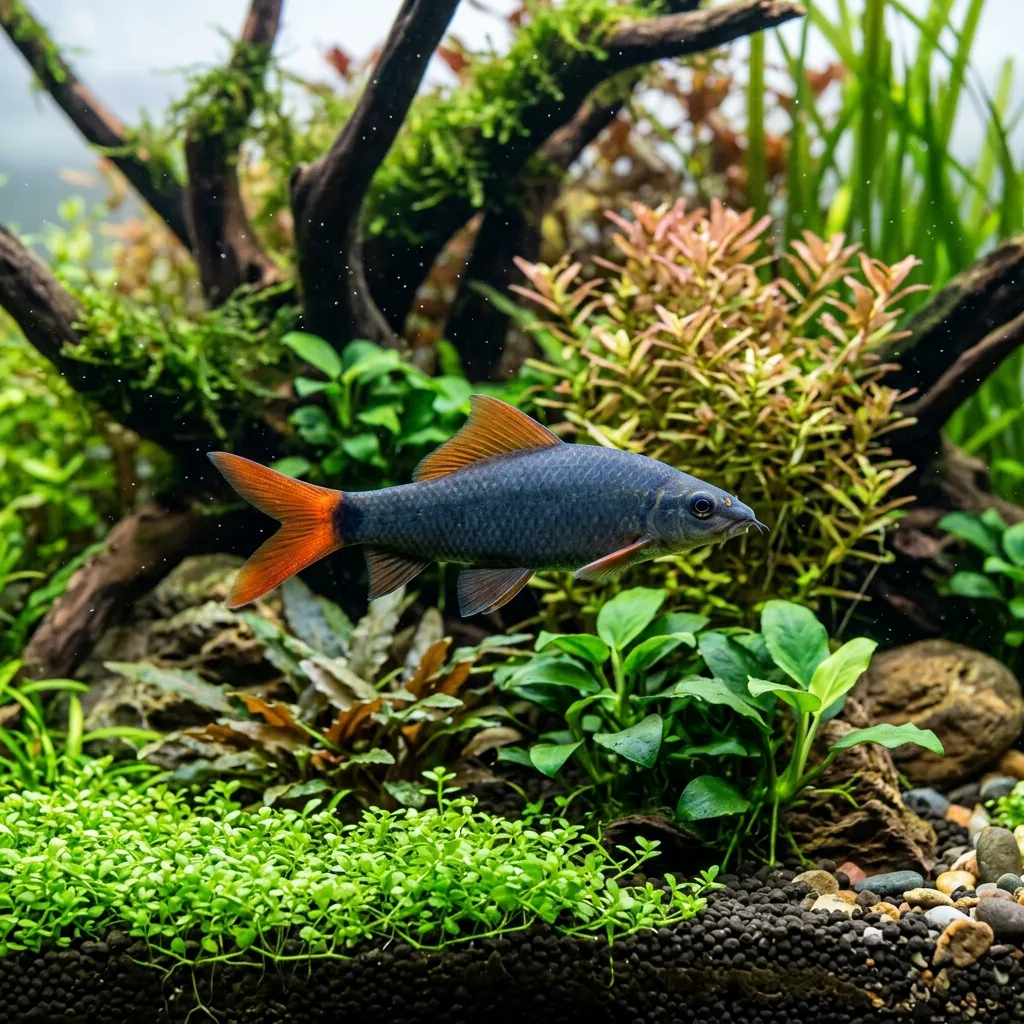
Severum (Heros efasciatus) is a large, semi-aggressive South American cichlid known as the poor man's discus due to its compressed body shape and vibrant coloration. Adults reach 8-10 inches (20-25.4 cm) and live up to 10 years. They require a minimum 55-gallon (208-liter) tank for a single adult, 75 gallons (284 liters) for a pair, with soft sand substrate, robust filtration, and weekly 25-30 percent water changes. Diet is 60 percent vegetable matter and 40 percent protein. Prone to hole-in-the-head disease if water quality or nutrition is inadequate.
Quick Facts
| Scientific Name | Heros efasciatus |
|---|---|
| Common Names | Severum |
| Family | Cichlidae |
| Genus | Heros |
| Type | Freshwater |
| Temperament | semi-aggressive |
| Care Difficulty | intermediate |
| Lifespan | 10 years |
| Maximum Size | Up to 10 in (25 cm) |
| Diet | Omnivore (Herbivore-leaning) |
| Temperature | 72–84°F (22–29°C) |
| pH | 6–7.5 |
| Hardness | 4–15 dGH |
| Minimum Size | 55 gallons |
Key Takeaways
- Large South American cichlid reaching 8-10 inches (20-25.4 cm) and living up to 10 years
- Semi-aggressive temperament; peaceful for a cichlid but territorial during breeding
- Obligate digger requiring smooth sand substrate; sharp gravel causes fatal mouth injuries
- Diet must be 60% vegetable matter to prevent hole-in-the-head disease and obesity
- Remove activated carbon permanently from all filtration to prevent trace mineral stripping
- Multiple color morphs: Green, Gold, Red Shoulder/Rotkeil, Turquoise, and Red Spotted
- Form breeding pairs by raising 5-7 juveniles together; do not buy adult male-female pairs
- Minimum 55 gallons (208 L) for single adult; 75 gallons (284 L) for pair; 100+ gallons (378+ L) for community
- Weekly 25-30% water changes are non-negotiable due to heavy bioload
- Plant-safe options limited to Anubias, Java Fern, and Cryptocoryne; all soft plants will be destroyed
Overview
Species Overview
The Severum cichlid (Heros efasciatus), formerly classified as Heros severus, is one of the most popular and visually striking large South American cichlids in the aquarium trade. Often called the poor man's discus due to its laterally compressed, oval-shaped body and brilliant coloration, the Severum offers the grandeur of a large cichlid without the extreme sensitivity of true discus. Native to the slow-moving rivers, tributaries, and floodplain lakes of the Amazon Basin across Brazil, Peru, Colombia, and Ecuador, this species has adapted to a wide range of water conditions, making it relatively hardy compared to other large cichlids.
Adult Severums reach 8-10 inches (20-25.4 cm) in standard length, with exceptional specimens occasionally stretching to 12 inches (30 cm). Their bodies are distinctly high and compressed, adorned with faint vertical barring that fades with maturity. The genus Heros encompasses several color morphs that have been developed through selective breeding: the wild-type Green Severum, the vibrant Gold Severum, the stunning Red Shoulder or Rotkeil Severum, the Turquoise Severum, and the Red Spotted Severum. Each morph shares identical care requirements but displays unique color patterns that command premium prices in the trade.
With a potential lifespan of 10 years under optimal conditions, Severums represent a significant long-term commitment. They are substrate spawners that form strong pair bonds, exhibit fascinating parental care, and display complex social behaviors. Their semi-aggressive temperament makes them suitable for community setups with similarly sized, robust tank mates, though they become territorial and defensive during breeding periods.
Care
Water Parameters
Exact Water Parameters
Severums are adaptable but thrive within specific parameters:
- Temperature: 72-84 degrees Fahrenheit (22-29 degrees Celsius). Optimal range is 75-80 degrees Fahrenheit (24-27 degrees Celsius). Maintain within a 2-degree daily range. Breeding temperature should be raised to 80-84 degrees Fahrenheit (27-29 degrees Celsius).
- pH: 6.0-7.5. Optimal range is 6.5-7.0. Wild specimens from blackwater areas prefer lower pH (6.0-6.5), while tank-bred specimens tolerate neutral pH well. Avoid pH swings greater than 0.3 units per day.
- General Hardness (GH): 4-15 dGH. Target 6-12 dGH for optimal health and coloration. Soft water enhances color vibrancy in wild-type specimens.
- Carbonate Hardness (KH): 3-10 dKH. Minimum 3 dKH required to prevent pH crashes. Higher KH (8-10 dKH) stabilizes parameters in community tanks with acidic driftwood.
- Total Dissolved Solids (TDS): 100-300 ppm. Target 150-250 ppm for general maintenance.
- Electrical Conductivity: 200-600 microSiemens per centimeter.
- Nitrates: Less than 15 ppm. Perform weekly 25-30 percent water changes. Severums are particularly sensitive to nitrate accumulation.
- Ammonia and Nitrite: 0 ppm at all times. Any detectable level causes immediate stress and immune suppression.
Note on Water Changes: Perform 25-30 percent weekly water changes without exception. Severums produce significant bioload and are highly sensitive to organic waste accumulation. Large water changes (over 40 percent) cause osmotic shock; never exceed 30 percent per change.
Diet
Health
Health and Disease Management
Common Health Issues
Severums are generally hardy when provided with clean water and proper nutrition, but several health issues are prevalent in this species.
Hole-in-the-Head Disease (HITH / HLLE)
The most serious and common ailment for Severums.
- Small pits or lesions on the head and along the lateral line
Poor water quality Nutritional deficiencies (vitamins C and D) Long-term activated carbon use Hexamita protozoan infection
Maintain nitrates below 15 ppm Feed vitamin-enriched varied diet Remove all activated carbon permanently Minimize stress
Ich (Ichthyophthirius multifiliis)
Common external parasite triggered by stress or temperature changes.
- White salt-like spots on fins and body
Temperature fluctuations Introduction of infected tank mates
Maintain stable temperatures Quarantine all new tank mates for 14 days
Fin Rot
Bacterial infection causing fin degradation.
- Tattered, receding fins with white or red edges
Bacterial infection from poor water quality Fin-nipping by tank mates
Maintain clean water Ensure compatible tank mates
Bloat / Dropsy
Internal issue often related to diet or bacterial infection.
- Swollen abdomen
- Raised scales
- Lethargy
Constipation from dry pellet-heavy diets Internal bacterial infection
Feed varied diet with sufficient vegetable matter Soak dry foods before feeding
Skin Flukes (Gyrodactylus)
Microscopic parasites affecting skin and gills.
- Flashing
- Rubbing against decor
- Excessive mucus production
Introduction of infected tank mates
Quarantine new additions
Mouth Fungus (Columnaris)
Highly contagious bacterial infection (not a true fungus).
- White or grayish patches around the mouth and gills
Poor water quality Stress Overcrowding
Maintain pristine water conditions Avoid overcrowding
Breeding
Compatible Tank Mates






Species Comparison
| Feature | Severum | Oscar | Green Terror | Firemouth Cichlid |
|---|---|---|---|---|
| Scientific Name | Heros efasciatus | Astronotus ocellatus | Andinoacara rivulatus | Thorichthys meeki |
| Max Size | 8-10 inches (20-25.4 cm) | 12-14 inches (30-36 cm) | 8-10 inches (20-25.4 cm) | 6-7 inches (15-18 cm) |
| Temperament | Semi-aggressive; peaceful for a cichlid | Semi-aggressive to aggressive; boisterous | Aggressive; highly territorial | Semi-aggressive; bluffs more than attacks |
| Minimum Tank Size (Single) | 55 gallons (208 L) | 75 gallons (284 L) | 55 gallons (208 L) | 30 gallons (114 L) |
| Minimum Tank Size (Community) | 100 gallons (378 L) | 125 gallons (473 L) | 125 gallons (473 L) | 55 gallons (208 L) |
| Diet Type | Omnivore (60% vegetable, 40% protein) | Carnivore (primarily protein) | Carnivore (primarily protein) | Omnivore (insectivore-leaning) |
| Plant Safety | Will eat soft plants; Anubias and Java Fern safest | Uproots all plants; essentially plant-free tank required | May uproot plants; moderate digger | Generally plant-safe with robust species |
| Breeding Difficulty | Moderate; pair formation is the challenge | Easy; forms strong pairs readily | Moderate; aggressive during spawning | Easy; prolific breeders |
| HITH Susceptibility | High; very prone to hole-in-the-head | High; classic HITH species | Moderate | Low to moderate |