
Pearl Gourami (Trichopodus leerii)
Quick Answer
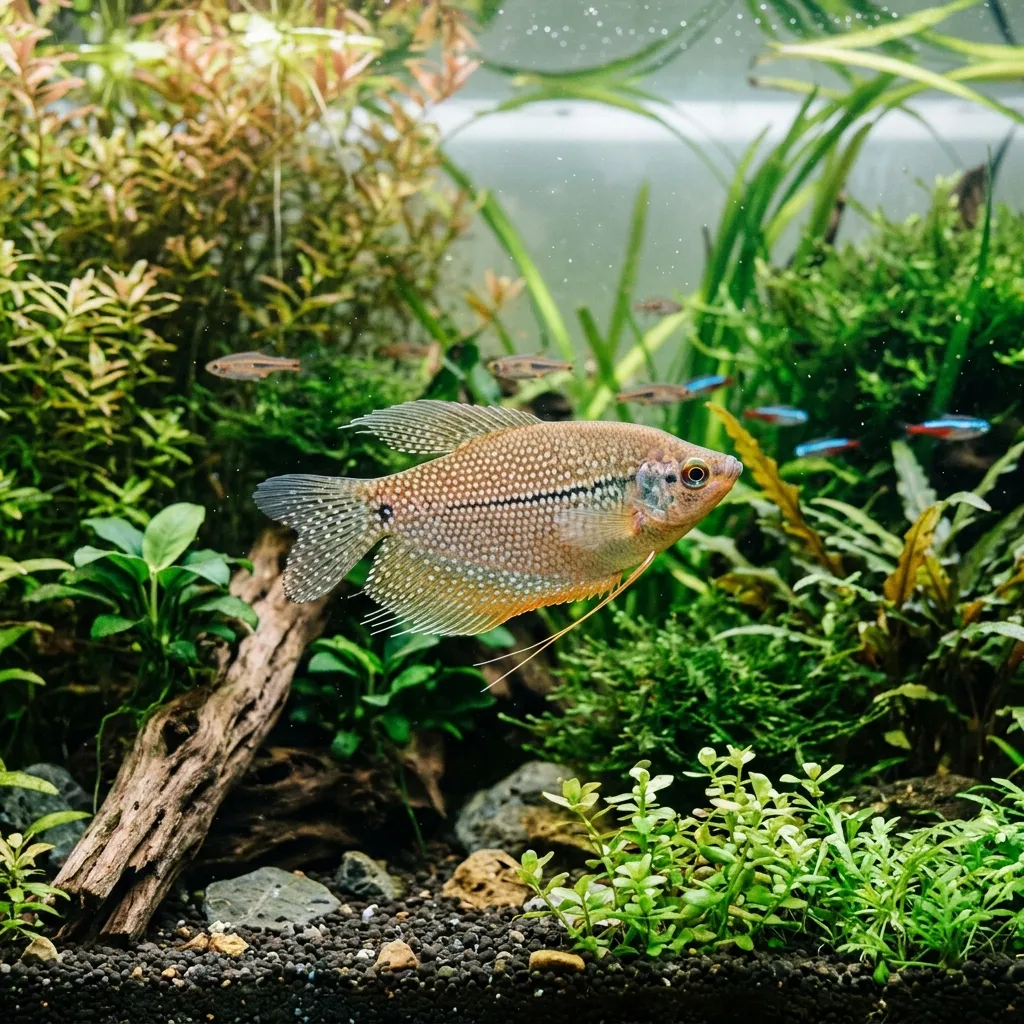
Pearl Gourami (Trichopodus leerii) is a captivating, peaceful freshwater labyrinth fish prized for its iridescent pearl-spotted body and flowing fin filaments. It requires a minimum 30-gallon (113-liter) aquarium with calm water, pH 6.0-7.5, temperature 75-82°F (24-28°C), and abundant floating plant cover. This omnivorous species occupies the middle to upper water column and thrives in peaceful community setups with tetras, rasboras, and Corydoras catfish.
Quick Facts
| Scientific Name | Trichopodus leerii |
|---|---|
| Common Names | Pearl Gourami |
| Family | Osphronemidae |
| Genus | Trichopodus |
| Type | Freshwater |
| Temperament | peaceful |
| Care Difficulty | beginner |
| Lifespan | 6 years |
| Maximum Size | Up to 4.5 in (11 cm) |
| Diet | Omnivore |
| Temperature | 75–82°F (24–28°C) |
| pH | 6–7.5 |
| Hardness | 2–18 dGH |
| Minimum Size | 30 gallons |
Key Takeaways
- Peaceful community fish ideal for planted tanks with floating cover.
- Requires minimum 30 gallons with calm water surface for labyrinth breathing.
- Resistant to Dwarf Gourami Iridovirus (DGIV) unlike Trichogaster lalius.
- Omnivorous diet requiring both protein and vegetable matter.
- Males display vivid orange-red throat; keep one male per standard tank.
- Bubble nest breeder requiring shallow water and dim lighting for spawning.
Overview
Species Overview
The Pearl Gourami (Trichopodus leerii), also known as the Lace Gourami, Mosaic Gourami, or Diamond Gourami, is widely regarded as one of the most elegant and peaceful members of the gourami family. Native to the lowland swamps, peat bogs, and slow-moving coastal waterways of Thailand, Malaysia, Sumatra, and Borneo, this species has earned a devoted following among aquarists who value both beauty and reliability.
Unlike the more commonly available Dwarf Gourami, Pearl Gouramis are notably resistant to Dwarf Gourami Iridovirus (DGIV), making them a significantly safer investment for community tanks. Their shimmering, pearl-like iridescent spots covering the entire body, combined with the male's striking deep orange-red throat and chest, create a visual display that rivals any centerpiece fish in the hobby.
Pearl Gouramis are labyrinth fish, meaning they possess a specialized suprabranchial organ that allows them to breathe atmospheric air. This adaptation requires them to have unrestricted access to the water surface at all times. They occupy the middle to upper water column and exhibit a deliberate, graceful swimming style that adds tranquility to any planted aquarium.
Quick Facts
- Scientific Name: Trichopodus leerii (formerly Trichogaster leeri)
- Common Names: Pearl Gourami, Lace Gourami, Mosaic Gourami, Diamond Gourami, Leeri Gourami
- Family: Osphronemidae (subfamily Luciocephalinae)
- Origin: Southeast Asia (Thailand, Malaysia, Indonesia)
- Adult Size: 4-5 inches (10-12 cm)
- Lifespan: 5-8 years in optimal conditions
- Temperament: Peaceful community fish
- Care Level: Beginner to Intermediate
- Tank Level: Middle to Top
Diet
Diet and Feeding
Pearl Gouramis are opportunistic omnivores with a strong preference for small invertebrates, insect larvae, zooplankton, algae, and detritus in their natural habitat. In captivity, they require a varied, balanced diet to maintain vibrant coloration, robust immune function, and breeding condition.
Health
Health and Disease Prevention
Pearl Gouramis are among the hardier community fish when sourced from reputable breeders. However, like all aquarium species, they are susceptible to specific diseases, particularly when stressed by poor water quality, inappropriate tank mates, or inadequate nutrition. Understanding their specific vulnerabilities allows for rapid diagnosis and effective treatment.
Ich (White Spot Disease)
A protozoan infection caused by Ichthyophthirius multifiliis, characterized by white salt-like spots on the body and fins.
Sudden temperature drops, introduction of infected fish without quarantine, stress from poor water quality or aggressive tank mates.
Quarantine all new fish for 3-4 weeks; maintain stable temperature at 78°F (25.5°C); avoid temperature fluctuations greater than 2°F (1°C) per day.
Fin Rot
A bacterial infection (typically Aeromonas, Pseudomonas, or Flexibacter) that erodes fin tissue, often starting at the delicate filamentous edges.
- Tattered, frayed, or receding fin edges; white or red margins on fins; lethargy; loss of appetite; in advanced cases, erosion reaches the fin base.
Poor water quality (elevated ammonia, nitrite, or nitrate), fin-nipping tank mates (tiger barbs, serpae tetras), physical damage from sharp decor, stress from overcrowding.
Maintain pristine water quality with weekly 25% water changes; remove fin-nipping tank mates; ensure all decor has smooth, rounded edges; avoid overcrowding.
Dwarf Gourami Iridovirus (DGIV)
A lethal viral infection primarily affecting Dwarf Gouramis (Trichogaster lalius) but capable of infecting other gourami species at lower rates. Pearl Gouramis show significantly higher resistance but are not completely immune.
- Lethargy, darkening coloration, loss of appetite, abdominal bloating, scale protrusion, erratic swimming, and rapid deterioration. Always fatal once symptomatic.
Introduction of infected Dwarf Gouramis or contaminated equipment; the virus is highly contagious among anabantoids.
Purchase Pearl Gouramis exclusively from reputable breeders, never from chain stores stocking Dwarf Gouramis; quarantine all new fish for 4 weeks; if DGIV is suspected, euthanize affected fish and leave the tank fallow for 3 months.
Internal Parasites (Hexamita, Capillaria)
Protozoan or nematode infections of the gastrointestinal tract, common in farm-raised fish kept in suboptimal conditions.
- Wasting despite normal appetite; stringy white or clear feces; sunken belly; lethargy; pale coloration; flashing.
Introduction of infected fish; overfeeding with contaminated live foods; poor water quality weakening immune response.
Quarantine and prophylactically treat new fish with metronidazole; source live foods from reputable suppliers; maintain excellent water quality.
Fungal Infections (Saprolegnia)
Cottony fungal growth on damaged tissue, typically secondary to physical injury or bacterial infection.
- White, cotton-like tufts on fins, mouth, or body; often appears at sites of previous injury or fin rot.
Physical injury from rough handling, sharp decor, or aggression; compromised immune system from cold water or poor nutrition.
Handle fish with soft nets only; remove sharp decor; maintain water temperature at 78°F (25.5°C); ensure balanced nutrition.
Swim Bladder Disorder
A dysfunction of the swim bladder causing buoyancy problems, often related to diet or bacterial infection.
- Inability to maintain normal position; floating at surface, sinking to bottom, or swimming at odd angles; difficulty reaching surface for air.
Overfeeding; constipation from dry foods; bacterial infection of the swim bladder; physical trauma.
Feed small portions 2-3 times daily rather than one large meal; soak dry foods before feeding; include vegetable fiber in diet; avoid high-fat foods.
Breeding
Breeding Pearl Gouramis
Breeding Pearl Gouramis is a rewarding experience that is moderately easy for aquarists who understand their specific environmental triggers. As bubble nest builders, they exhibit fascinating parental care behavior, with the male constructing and guarding the nest until hatching.
Compatible Tank Mates






Species Comparison
| Feature | Pearl Gourami | Dwarf Gourami | Honey Gourami | Three Spot Gourami |
|---|---|---|---|---|
| Adult Size | 4-5 inches (10-12 cm) | 2-3.5 inches (5-9 cm) | 2-2.5 inches (5-6 cm) | 4-6 inches (10-15 cm) |
| Temperament | Peaceful; mild male territoriality | Semi-aggressive; males fight | Very peaceful; shy | Aggressive; territorial |
| Minimum Tank Size | 30 gallons (113 L) | 20 gallons (75 L) | 20 gallons (75 L) | 40 gallons (151 L) |
| Diet | Omnivore; flakes, live, frozen, vegetables | Omnivore; prefers protein-heavy | Omnivore; small foods | Omnivore; aggressive feeder |
| pH Range | 6.0 - 7.5 | 6.0 - 7.5 | 6.0 - 7.5 | 6.0 - 8.0 |
| Disease Risk | Low; resistant to DGIV | High; prone to Iridovirus | Low; hardy | Moderate; bacterial infections |
| Ideal For | Community centerpiece in 30+ gal | Small showpiece in 20 gal | Nano community tanks | Species-only or large tanks |