
Whiptail Catfish (Rineloricaria spp.)
Quick Answer
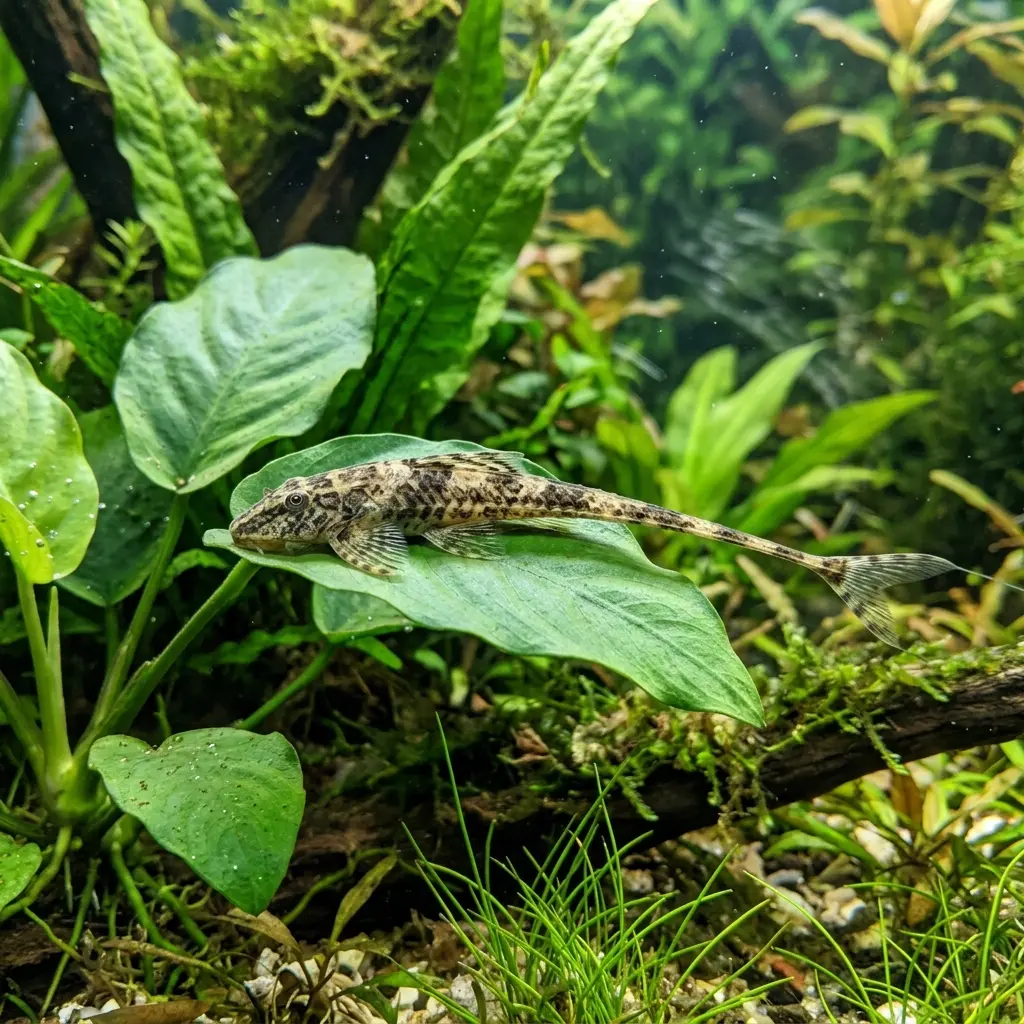
Whiptail Catfish (Rineloricaria spp.) is a unique, elongated armored catfish native to South America. It requires a minimum 30 gallon (113.6 liter) aquarium with a pH of 6.0 to 7.5 and temperature range of 68°F to 79°F (20°C to 26°C). This peaceful omnivore requires driftwood for digestive health, sandy substrate, and cave structures for breeding. Males guard eggs in caves after spawning.
Quick Facts
| Scientific Name | Rineloricaria spp. |
|---|---|
| Common Names | Whiptail Catfish |
| Family | Loricariidae |
| Genus | Rineloricaria |
| Type | Freshwater |
| Temperament | peaceful |
| Care Difficulty | beginner |
| Lifespan | 8 years |
| Maximum Size | Up to 4.5 in (11 cm) |
| Diet | Omnivore |
| Temperature | 68–79°F (20–26°C) |
| pH | 6–7.5 |
| Hardness | 2–15 dGH |
| Minimum Size | 30 gallons |
Key Takeaways
- Requires a group of 3 to 5 individuals; solitary keeping causes chronic stress and hiding.
- Requires a minimum 30 gallon aquarium with soft sand substrate and multiple driftwood pieces.
- Driftwood is mandatory for digestive health; without it, fish suffer chronic malnutrition.
- Male guards eggs in caves after spawning; fry require daily water changes and constant food access.
- Sensitive to copper and formalin medications; use heat and salt for ich treatment instead.
- Nocturnal to crepuscular; feed in the evening and provide dim lighting with shaded refuges.
Overview
Species Overview and Natural History
The Whiptail Catfish (Rineloricaria spp.) is a fascinating member of the Loricariidae family, subfamily Loricariinae, renowned for its elongated, dorsoventrally flattened body and distinctive filamentous tail. The genus Rineloricaria contains numerous species, with Rineloricaria parva, Rineloricaria lanceolata, and the line-bred Red Lizard variant (L010a) being the most common in the aquarium trade. First described in the 19th century, these fish are endemic to South America.
Physical Identification
Adult Whiptail Catfish reach 4 to 6 inches (10 to 15 cm) in total length, with the tail filament accounting for up to one-third of the total length. The body is armored with overlapping bony plates and colored in mottled shades of brown, tan, and gray that provide excellent camouflage against leaf litter. The Red Lizard variant displays a striking orange-red coloration due to selective breeding. Mature males develop tiny saw-like odontodes on the cheeks and pectoral fin rays, which are absent in females. The head is broad and flattened with a small ventral sucker mouth adapted for rasping biofilm.
Natural Habitat
In the wild, Whiptail Catfish inhabit clear and whitewater streams across Brazil, Paraguay, Argentina, and the upper Amazon basin of Peru. They are found at elevations up to 500 meters, living amongst leaf litter over sandy substrates in areas of moderate to brisk water flow. The habitat is characterized by submerged driftwood, fallen branches, and dense marginal vegetation that provides shade and cover. Water conditions are typically soft, slightly acidic to neutral, and well-oxygenated year-round.
Conservation and Availability
Rineloricaria lanceolata is listed as Least Concern by the IUCN. The species is commercially bred in Southeast Asian fish farms and by dedicated hobbyists, making it widely available. Wild-caught specimens are occasionally imported but should be quarantined for 6 weeks due to transport stress and potential parasite loads. The Red Lizard variant is exclusively tank-bred.
Care
Aquarium Setup and Maintenance
Tank Size and Dimensions
The absolute minimum tank size for a group of Whiptail Catfish is 30 gallons (113.6 liters) with a footprint of at least 36 by 12 inches (91 by 30 cm). A 40 gallon breeder or 55 gallon tank is strongly preferred for groups of 5 or more, as increased floor space allows natural territory establishment and reduces competition for cave sites. These fish are largely inactive but patrol linear territories along the bottom; tank length is more important than height.
Substrate Selection
Use smooth silica sand, pool filter sand, or very fine rounded gravel at a depth of 1 to 2 inches (2.5 to 5 cm). The substrate must be kept scrupulously clean, as these fish graze continuously along the bottom and are susceptible to bacterial infections from accumulated detritus. Avoid sharp substrates, glass gravel, crushed coral, and Eco-Complete. Crushed coral raises pH and hardness beyond their tolerance.
Hardscape: The Driftwood Imperative
Driftwood is non-negotiable for this species. Provide multiple pieces of Mopani, Malaysian driftwood, or Manzanita distributed throughout the tank. The wood must be securely anchored, as these fish exert surprising force while rasping. Add clay caves, PVC pipes of 1 to 1.5 inch (2.5 to 3.8 cm) diameter, or rock piles to provide spawning caves and daytime refuges. Flat stones can be added for grazing surfaces.
Filtration and Water Flow
Use a canister filter or hang-on-back filter rated for 1.5 to 2 times the tank volume to provide moderate to brisk linear flow. These fish require well-oxygenated water; dissolved oxygen must remain above 6 mg/L. Position filter outflows to create gentle current along the substrate without creating turbulent zones that prevent resting. Add an air stone or venturi system in tanks warmer than 76°F (24°C).
Planting and Lighting
Plant densely with Cryptocoryne, Anubias, Java Fern, and Amazon Sword. Floating plants such as Water Sprite, Frogbit, or Indian Fern diffuse overhead lighting and provide security. Lighting should be low to moderate; bright lights stress these crepuscular fish and encourage excessive algae that competes with their grazing.
Water Change Protocol
Perform 25% water changes weekly without exception. During breeding conditioning, increase to 25% every 4 days. Vacuum the substrate surface gently to remove organic detritus without removing the sand. Stir the top half-inch of sand during each water change to prevent anaerobic pocket formation.
Diet
Feeding Requirements and Nutritional Strategy
Whiptail Catfish are benthic omnivores with a dietary composition targeting 40% protein, 10% fat, and 50% plant matter, biofilm, and wood fiber. In the wild, they feed on aufwuchs, algae, microcrustaceans, and decaying plant matter sifted from leaf litter and wood surfaces. Their specialized sucker mouth is designed for continuous rasping rather than biting.
Primary Foods
- Sinking Algae Wafers and Spirulina Tabs: High-quality vegetarian wafers containing spirulina, kelp, and vegetable matter should form the dietary staple. Feed once daily in the evening when the fish are most active.
- Herbivore Pellets: Sinking pellets with a vegetable base and moderate protein content provide balanced nutrition. Offer 2 to 3 times weekly.
- Fresh Vegetables: Blanched kale, spinach, courgette, and cucumber are essential. Boil vegetables for 30 seconds to soften cellulose without destroying nutrients. Leave slices in the tank for 24 hours.
- Frozen Foods: Bloodworms, Mysis shrimp, and daphnia provide protein and stimulate natural hunting behavior. Offer once weekly. Thaw before adding.
Wood and Biofilm Grazing
Driftwood biofilm is a continuous food source that cannot be replicated by prepared foods alone. The microorganisms, algae, and detritus colonizing wood surfaces provide essential enzymes and fiber. Without this natural grazing opportunity, Whiptail Catfish develop digestive disorders and fail to thrive.
Feeding Schedule
Feed once daily in the evening, providing only what the group consumes within 12 hours for vegetable matter and 3 to 5 minutes for prepared foods. Remove uneaten perishable food after 24 hours. If housed with aggressive surface feeders, place wafers directly on driftwood after lights out.
Common Dietary Mistakes
Never feed beef heart, mammalian meat, or fatty foods. Loricariids lack the digestive enzymes to process mammalian proteins, leading to fatty liver disease. Do not rely solely on dry pellets; the lack of vegetable fiber causes constipation and intestinal blockage. Avoid feeding raw hard vegetables that the fish cannot rasp effectively.
Health
Health Management and Disease Prevention
Whiptail Catfish are generally hardy when provided with driftwood, clean substrate, and stable water parameters. However, they possess specific vulnerabilities related to their specialized digestive system, reduced body armor compared to larger Loricariids, and sensitivity to poor water quality. Preventive care through proper diet, driftwood provision, and quarantine protocols is vastly more effective than treatment. The following diseases represent the most common threats in home aquariums.
General Health Monitoring
Inspect your fish during evening feeding. Healthy Whiptail Catfish have a rounded belly when well-fed, clear eyes, and active rasping behavior on driftwood. A concave belly, clamped fins, or refusal to graze indicates immediate intervention is required. Monitor the tail filament for fraying or erosion, which indicates fin-nipping tank mates or bacterial infection.
Starvation and Malnutrition
The most common preventable condition in captive Whiptail Catfish, caused by inadequate driftwood, insufficient vegetable matter, or competition from faster tank mates.
- Concave belly, visible spine along the back, lethargy, reduced grazing activity, and pale coloration. Fish may attempt to feed but cannot compete with faster bottom dwellers. In advanced cases, the fish becomes emaciated with a hollow head and sunken eyes.
Absence of driftwood eliminates natural biofilm grazing. Diet lacking fresh vegetables and fiber causes digestive shutdown. Aggressive tank mates such as Corydoras or Plecos consume all sinking food before Whiptails can access it. Over-reliance on dry pellets without vegetable supplementation.
Provide multiple driftwood pieces for continuous grazing. Feed blanched vegetables daily. Target-feed with wafers placed directly on driftwood after lights out. Ensure tank mates do not outcompete them for food. Quarantine and observe feeding behavior in new setups.
Bacterial Fin and Tail Rot
A bacterial infection affecting the delicate tail filament and fin edges, often secondary to fin-nipping, poor water quality, or transport damage.
- Fraying, whitening, or erosion of the tail filament and fin edges. The tail may appear ragged or shortened. Redness at the fin base indicates advanced bacterial invasion. Fish may clamp fins and show reduced activity.
Remove fin-nipping tank mates immediately. Maintain nitrates below 10 ppm through weekly water changes. Use smooth substrate and avoid sharp decor. Treat with Kanamycin or Tetracycline at standard doses. Avoid copper-based medications. Ensure pristine water quality during treatment.
Ich (White Spot Disease / Ichthyophthirius multifiliis)
A protozoan parasite presenting as white salt-like grains on the skin and fins. Loricariids require modified treatment due to their scale armor and medication sensitivity.
- Small white cysts resembling grains of salt on the body, fins, and tail filament. Fish may rub against hardscape (flashing), exhibit rapid gill movement, and show reduced appetite. Advanced cases present with respiratory distress.
Introduction via new fish, plants, or equipment without quarantine. Stress from poor water quality or temperature fluctuations weakens immune response. Wild-caught specimens often carry latent parasite loads.
Quarantine all new livestock for 6 weeks. Avoid copper-based ich medications and formalin. Instead, raise temperature gradually to 86°F (30°C) and add aquarium salt at 1 gram per liter for 10 to 14 days. Increase aeration during heat treatment. Salt-sensitive tank mates must be removed.
Constipation and Intestinal Blockage
A common digestive disorder in Loricariids caused by inadequate fiber and over-reliance on dry prepared foods.
- Bloated abdomen, stringy or absent feces, lethargy, and refusal to feed. Fish may attempt to defecate but produce only clear mucus. In severe cases, the fish floats abnormally or sinks and cannot maintain position.
Diet lacking vegetable fiber and wood matter. Overfeeding of protein-rich dry pellets without vegetable supplementation. Insufficient driftwood for natural fiber intake. Low water temperature slowing digestion.
Feed blanched vegetables at least 3 times weekly. Ensure driftwood is available for natural fiber grazing. Fast the fish for 48 hours if constipation is suspected, then feed softened courgette or a cooked pea (skin removed) as a laxative. Maintain temperature above 70°F (21°C) for proper metabolic function.
Internal Parasites (Nematodes and Cestodes)
Worm infestations that compromise nutrient absorption and cause chronic wasting despite normal feeding behavior.
- Progressive weight loss with a hollow belly and visible spine. White, stringy feces that may contain visible worm segments. Lethargy and pale coloration. Fish may eat voraciously but continue to waste away over weeks.
Introduction via live foods (particularly Tubifex worms), contaminated frozen foods, or wild-caught specimens. Overcrowding and poor water quality exacerbate infestation severity. Loricariids that graze on substrate are particularly susceptible to ingesting parasite eggs.
Avoid live Tubifex worms entirely. Freeze all home-collected live foods for 48 hours to kill parasites. Quarantine new fish for 6 weeks and treat prophylactically with Praziquantel at 2.5 mg per liter for 24 hours. Levamisole is effective against nematodes at 2 ppm for 24 hours. Both medications are safe for Loricariids when dosed correctly.
Breeding
Breeding Whiptail Catfish
Whiptail Catfish breed readily in captivity when provided with suitable caves, conditioning diet, and environmental triggers. Unlike many Loricariids that require complex manipulation, Rineloricaria species often spawn with minimal intervention once established in a proper setup. The male's dedicated parental care is one of the most fascinating aspects of their reproductive biology.
Broodstock Selection
Select a group of 6 to 8 juvenile fish and allow natural pair formation. Sexing mature fish requires close examination: males develop tiny saw-like odontodes on the cheeks and along the pectoral fin spines, which are completely absent in females. Males also have broader, more muscular heads and slightly thicker bodies. When viewed from above, gravid females show a rounded abdomen.
Conditioning Diet
Feed blanched kale, spinach, and courgette daily alongside high-quality algae wafers and live or frozen bloodworms for 3 weeks prior to spawning attempts. The diet must be rich in nutrients; malnourished females will reabsorb eggs rather than spawn. Pre-softened leaves soaked in aquarium water for 48 hours are superior to blanched vegetables for conditioning.
Environmental Triggers
The critical trigger is a cool water change simulating rainy season influx. Perform a 50 to 70% water change over 2 hours using reverse osmosis water, rainwater, or melted snow at 68°F to 70°F (20°C to 21°C). The new water should be soft with pH near 6.5. Increase aeration significantly. Repeat every 3 to 4 days if spawning does not occur. Some aquarists report success after snow-melt water changes that drop pH by 0.4 and hardness by 50 ppm.
Spawning Behavior
The male selects and meticulously cleans a cave, often a PVC pipe or clay cave of 1 to 1.5 inch (2.5 to 3.8 cm) diameter. A receptive female enters and deposits 30 to 80 adhesive eggs on the interior walls and ceiling of the cave. The male fertilizes the eggs and immediately drives the female away, sometimes aggressively. He then guards the cave entrance, fanning the eggs with his pectoral fins and mouthing them to remove debris and turn them. The female plays no further role.
Egg and Fry Care
Eggs are greenish-gold to dark brown and hatch in 4 to 7 days at 75°F (24°C). The male does not eat during the guarding period, which lasts 7 to 10 days total. Once fry are free-swimming (2 to 3 days after hatching), remove the male to prevent predation. Fry are miniature versions of adults and immediately graze on soft vegetables and biofilm. Offer pre-softened lettuce leaves, cucumber slices, and infusoria. Introduce microworms and baby brine shrimp after day 5. Maintain pristine water quality with small daily 10% water changes; fry are highly sensitive to ammonia and nitrite.
Tips
Expert Tips and Common Mistakes
Expert Tips for Long-Term Success
- Driftwood Rotation: Replace or scrub driftwood every 6 months to maintain fresh biofilm colonization. Older wood becomes depleted of microorganisms and loses its nutritional value.
- Evening Feeding: Feed prepared foods after turning off the aquarium lights. Whiptail Catfish are crepuscular and feed most aggressively in dim conditions. This also prevents competition from diurnal surface feeders.
- Vegetable Softening Protocol: Soak kale and spinach leaves in aquarium water for 48 hours rather than boiling. Boiling strips nutrients; soaking softens cellulose while preserving vitamins.
- Cave Spacing: Provide one cave or driftwood hide per fish plus one extra. This prevents territorial disputes and ensures every fish has a secure refuge.
- Snow Melt Water: Collect and melt clean snow for breeding water changes. The near-zero TDS and cool temperature perfectly simulate mountain runoff and trigger spawning in stubborn pairs.
- Observation Mirror: Use a small mirror angled into caves to check for eggs without disturbing the guarding male. Disturbance during the first 48 hours of guarding often causes egg consumption.
Common Mistakes to Avoid
- No Driftwood: The single most fatal mistake is keeping Whiptail Catfish without driftwood. It causes chronic malnutrition, digestive failure, and premature death within 12 months.
- Bright Lighting: Using high-intensity LED lighting without floating plant cover or shaded caves. These fish are stressed by bright light and will hide continuously, missing feeding opportunities.
- Insufficient Caves: Providing only one cave for multiple fish. Subordinate fish become chronically stressed without refuge and may stop feeding entirely.
- Copper Medication: Treating ich or parasites with copper sulfate or formalin. These are lethal to Loricariids at standard doses. Always verify medication safety before treatment.
- Strong Bottom Current: Using powerheads that blast water directly across the substrate. While they need oxygenation, violent bottom current prevents natural resting and grazing postures.
- Ignoring Male Guarding: Failing to remove the male after fry become free-swimming. Experienced males may consume fry; first-time fathers almost always consume their first few spawns.
- Glass Gravel: Using sharp glass gravel or recycled glass substrate. These materials damage the delicate sucker mouth and ventral plates during grazing.
Compatible Tank Mates
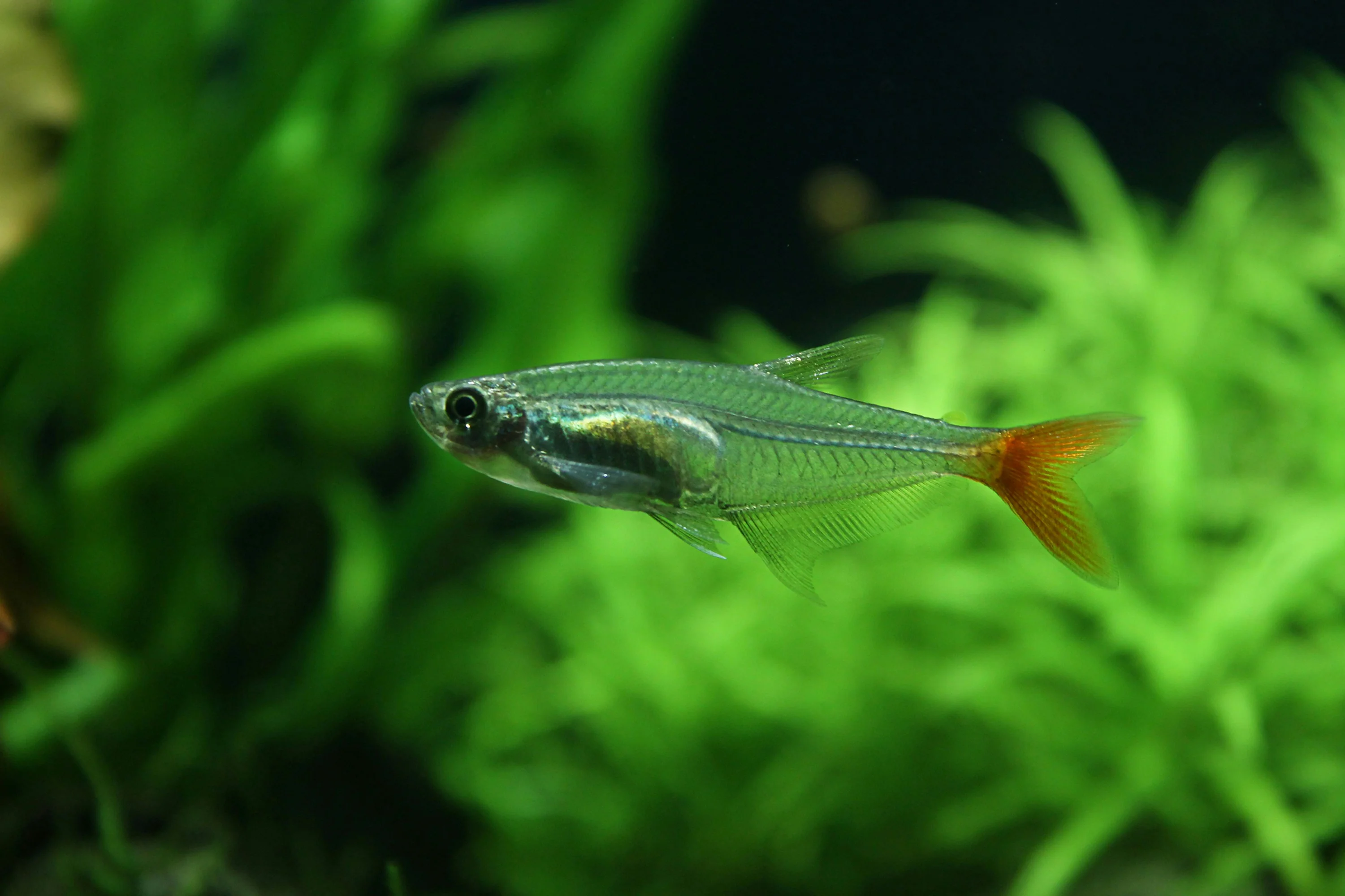
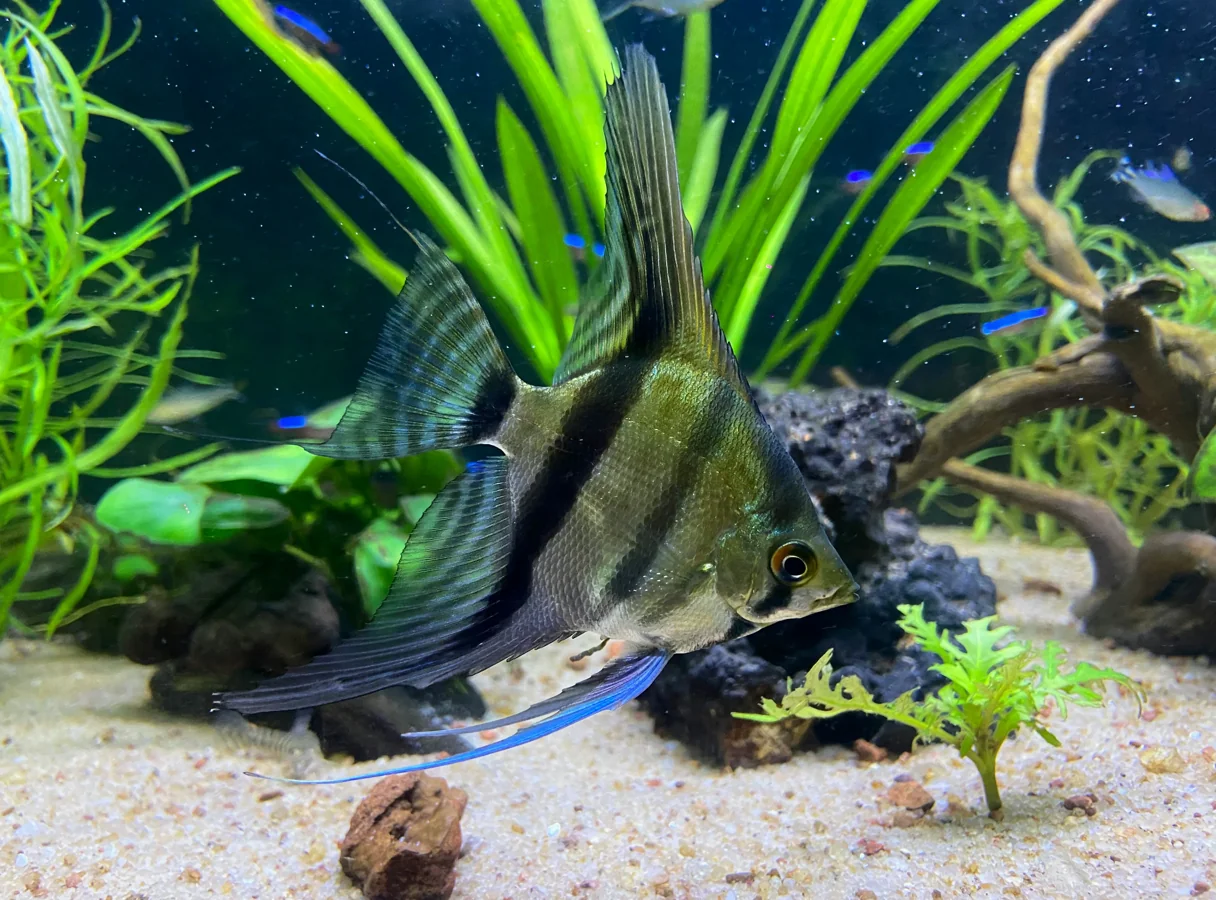
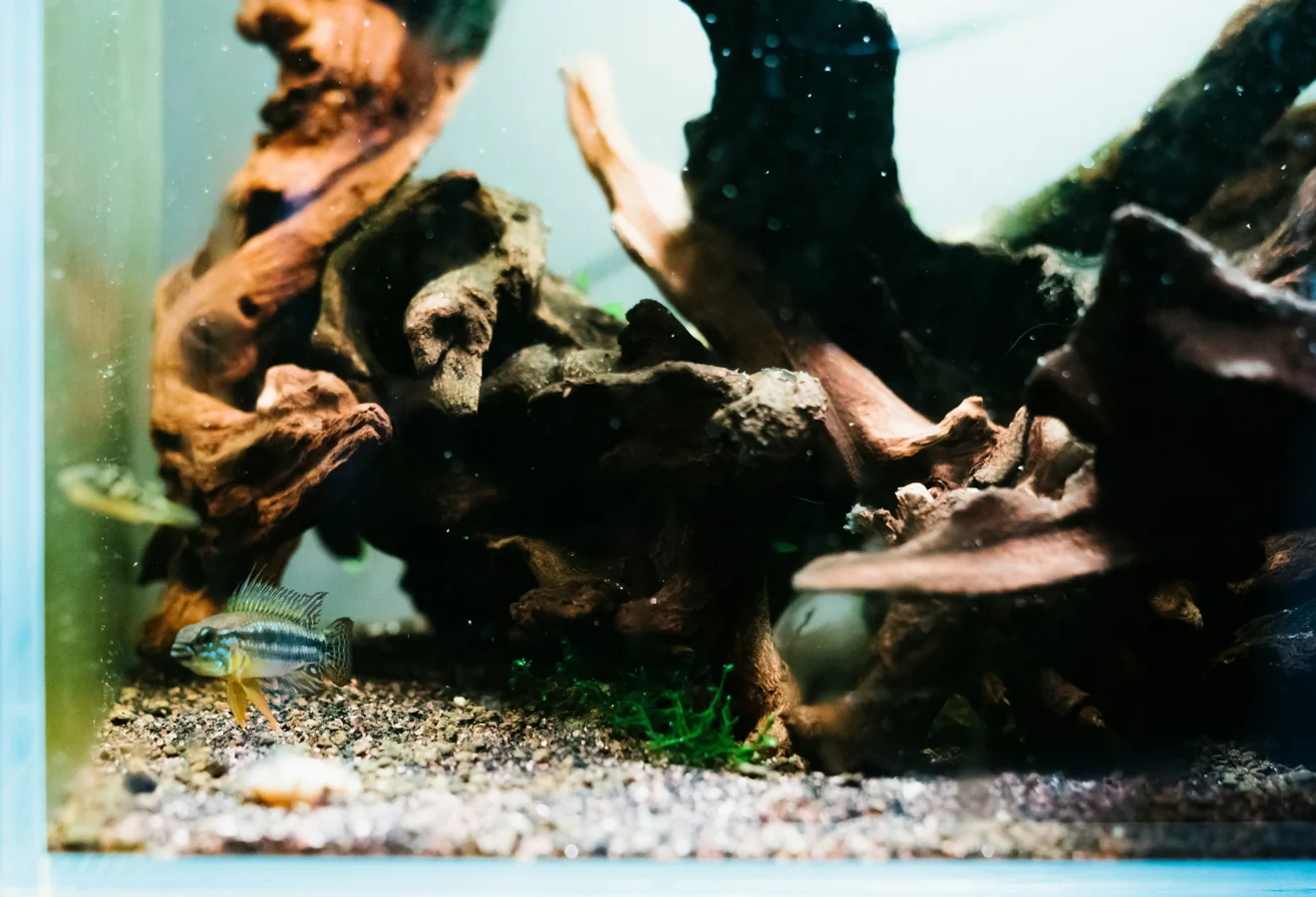
Species Comparison
| Feature | Whiptail Catfish | Bristlenose Pleco | Twig Catfish | Otocinclus |
|---|---|---|---|---|
| Scientific Name | Rineloricaria spp.,Ancistrus spp.,Farlowella acus,Otocinclus spp. | |||
| Adult Size | 4 to 6 inches (10 to 15 cm),4 to 5 inches (10 to 13 cm),6 to 8 inches (15 to 20 cm),1.5 to 2 inches (3.8 to 5 cm) | |||
| Temperament | Peaceful,Peaceful; males territorial,Peaceful,Peaceful | |||
| Minimum Tank Size | 30 gallons (113.6 L),20 gallons (75.7 L),30 gallons (113.6 L),10 gallons (37.9 L) | |||
| Temperature Range | 68°F to 79°F (20°C to 26°C),72°F to 79°F (22°C to 26°C),73°F to 79°F (23°C to 26°C),72°F to 79°F (22°C to 26°C) | |||
| pH Range | 6.0 to 7.5,6.0 to 7.5,6.5 to 7.5,6.0 to 7.5 | |||
| Diet | Omnivore (algae, biofilm, vegetables),Omnivore (algae, wood, vegetables),Herbivore (algae, biofilm),Herbivore (algae, biofilm) | |||
| Key Distinction | Elongated body with filamentous tail; male guards eggs in caves; requires driftwood for digestion; nocturnal bottom dweller,Stocky body with prominent facial bristles in males; prolific breeder; more robust and adaptable; excellent algae control,Extremely slender twig-like body; spawns on vertical glass surfaces; requires very strong current; much more delicate and sensitive,Tiny shoaling algae eater; requires groups of 6+; occupies middle water column on glass and leaves; not a bottom cave dweller |