
Bristlenose Pleco (Ancistrus cirrhosus)
Quick Answer
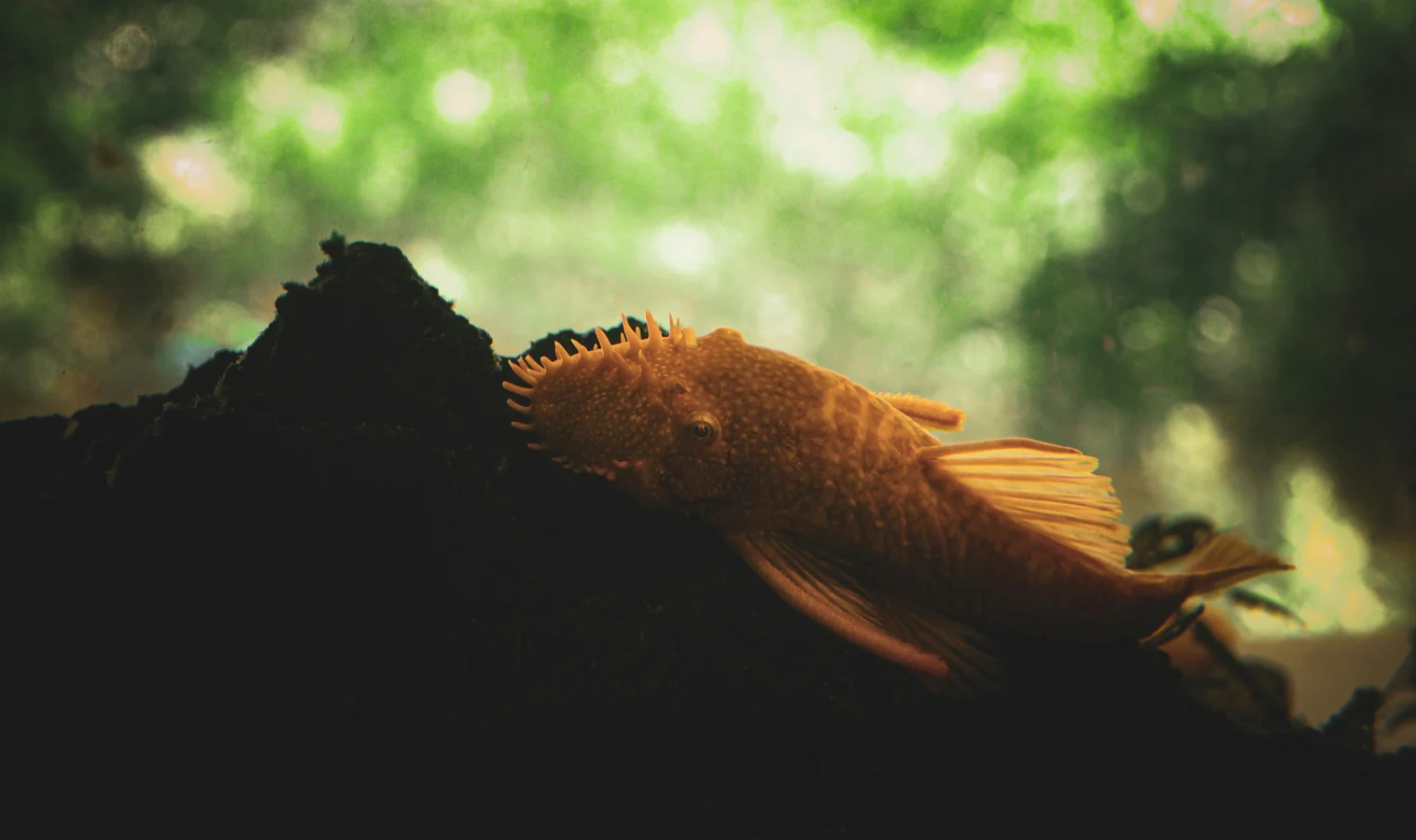
Bristlenose Pleco (Ancistrus cirrhosus) is a small, peaceful, bottom-dwelling catfish native to the Amazon basin. It requires a minimum 20-gallon (75-liter) aquarium with water parameters of pH 6.0-7.5 and temperature 72-82 degrees Fahrenheit (22-28 degrees Celsius). This primarily herbivorous omnivore reaches 4-5 inches (10-12.7 cm) and is renowned for its algae-eating abilities, distinctive facial bristles, and straightforward breeding behavior.
Quick Facts
| Scientific Name | Ancistrus cirrhosus |
|---|---|
| Common Names | Bristlenose Pleco |
| Family | Loricariidae |
| Genus | Ancistrus |
| Type | Freshwater |
| Temperament | peaceful |
| Care Difficulty | beginner |
| Lifespan | 5 years |
| Maximum Size | Up to 5 in (13 cm) |
| Diet | Omnivore |
| Temperature | 72–82°F (22–28°C) |
| pH | 6–7.5 |
| Hardness | 2–30 dGH |
| Minimum Size | 20 gallons |
Key Takeaways
- Requires a minimum 20-gallon (75-liter) aquarium for a single specimen; 30+ gallons for breeding.
- Stays small at 4-5 inches (10-13 cm), unlike the Common Pleco which reaches 18-24 inches (45-60 cm).
- Scaleless fish; extremely sensitive to copper-based medications (0.1 mg/L is lethal).
- Driftwood is mandatory for lignin digestion and long-term health, not merely decorative.
- Nocturnal; hides during the day and grazes at night. Hiding behavior is normal, not illness.
- Males develop prominent facial bristles at 6-8 months; females have smooth faces.
- Easy to breed in captivity; male guards 50-200 eggs in a cave for 4-10 days.
- Feed blanched vegetables daily; algae wafers alone are nutritionally insufficient.
Diet
Diet and Feeding Protocol
Bristlenose Plecos are omnivores with a strong herbivorous tendency. In the wild, they consume algae, biofilm, driftwood lignin, and small invertebrates. In captivity, a vegetable-heavy diet is essential for digestive health, coloration, and longevity. They cannot survive on tank algae alone.
Staple Foods
Feed sinking algae wafers or spirulina-based sinking pellets as the dietary staple once daily. The staple should be vegetable-based with moderate protein content. Place the wafer near their cave or hiding spot after lights out to ensure they receive adequate nutrition without competition from faster fish.
Supplemental Foods
- Vegetables: Blanched zucchini, cucumber, green beans, peas (shelled), romaine lettuce, and spinach. These should be offered daily. Attach vegetables to a clip or place a weighted slice on the substrate. Remove uneaten portions after 24 hours to prevent water quality degradation.
- Driftwood: They rasp directly on driftwood, consuming lignin and cellulose. This is not merely behavioral; it is a nutritional requirement.
- Protein: Offer frozen bloodworms, brine shrimp, or daphnia once weekly. Protein should constitute no more than 30% of their total diet.
Feeding Schedule
Feed once daily with a sinking wafer or vegetable, plus natural grazing on algae and driftwood. Overfeeding causes obesity and spikes nitrates. Bristlenose Plecos are continuous grazers and benefit from having a constant source of vegetable matter available.
Prohibited Foods
Never feed beef heart, pork, mammalian fats, bread, or processed human foods. These cause fatal digestive blockages. Avoid high-protein carnivore pellets as a staple, as they lead to obesity and fatty liver disease in herbivore-leaning plecos.
Health
Health and Disease Management
Bristlenose Plecos are generally hardy and disease-resistant when maintained in clean water with appropriate diet and driftwood. However, their scaleless nature (they possess bony plates but lack true scales) makes them exceptionally sensitive to certain medications, particularly copper-based treatments. Additionally, their constant bottom-foraging behavior makes them vulnerable to barbel damage from rough substrate or poor water quality.
Critical Sensitivity: As scaleless fish, Bristlenose Plecos cannot tolerate copper concentrations above 0.1 mg/L, which is lethal. They also have reduced tolerance for salt and formalin. Always verify medication safety for scaleless fish before treatment. When in doubt, treat in a dedicated hospital tank at reduced dosage.
Ichthyophthirius multifiliis (Ich / White Spot Disease)
A protozoan parasite that presents as white salt-like grains on the fins, body, and gills. Scaleless fish require modified treatment protocols.
- White cysts visible on skin and fins, flashing against substrate, rapid breathing, clamped fins, rubbing against decor, loss of appetite.
Introduced via new fish or plants; triggered by temperature fluctuations or stress. Plecos are susceptible when water quality declines or when introduced to uncycled tanks.
Quarantine all new additions for 14 days. Maintain stable temperatures between 75-78 degrees Fahrenheit (24-25.5 degrees Celsius). Avoid sudden temperature drops during water changes.
Barbel Erosion and Mouth Fungus
Physical erosion of the barbels around the mouth and fungal colonization, caused by poor water quality, rough substrate, or bacterial infection.
- Shortened, frayed, or missing barbels, white cottony growth around the mouth, difficulty feeding, lethargy, refusal to eat.
Maintain ammonia and nitrite at 0 ppm at all times. Use sand or smooth gravel substrate. Remove uneaten vegetables after 24 hours. Perform weekly 25 percent water changes with thorough gravel vacuuming.
Fin Rot (Aeromonas / Pseudomonas)
Bacterial infection causing frayed, receding, or discolored fins with possible red streaking at the fin base.
- Fins appear torn or melted at the edges, redness or inflammation at the fin base, lethargy, loss of appetite.
Poor water quality (elevated nitrates above 40 ppm), fin-nipping tank mates, or physical damage from territorial disputes with other plecos.
Maintain nitrates below 20 ppm through weekly water changes. Remove fin-nipping species. Provide adequate caves to prevent territorial fighting. Treat promptly with broad-spectrum antibiotics safe for scaleless fish.
Bloat / Constipation
A common condition in plecos caused by insufficient dietary fiber, overfeeding of protein, or ingestion of indigestible materials.
- Severely swollen abdomen, lethargy, refusal to eat, stringy white feces, floating or sinking abnormally.
Diet lacking vegetable fiber and driftwood lignin. Overfeeding of protein-rich foods. Ingestion of aquarium silicone or plastic decor in the absence of proper driftwood.
Ensure driftwood is always available. Feed a vegetable-heavy diet with daily blanched vegetables. Limit protein to once weekly. Remove uneaten food promptly.
Hole in the Head / Head and Lateral Line Erosion (HITH/HLLE)
A chronic condition characterized by pits and lesions on the head, associated with poor water quality, vitamin deficiencies, and activated carbon dust.
- Small pits or craters on the head and face, erosion along the lateral line, faded coloration, lethargy, weight loss.
Vitamin C and B deficiencies, poor diet lacking vegetable variety, use of low-quality activated carbon that releases dust, and chronic elevated nitrates above 30 ppm.
Feed a varied vegetable diet including zucchini, spinach, and green beans. Use high-quality activated carbon in a media bag. Maintain nitrates below 20 ppm with regular water changes.
Breeding
Breeding Bristlenose Plecos
Bristlenose Plecos are widely regarded as one of the easiest catfish to breed in captivity and make an excellent first breeding project for aspiring aquarists. Their straightforward cave-spawning behavior, easy sexing, and dedicated paternal care remove much of the guesswork associated with breeding other species.
Sexual Maturity and Sexing
Sexual maturity is reached at 6-8 months of age, when males begin developing their characteristic facial bristles. Sexing is remarkably easy: males possess large, branched, fleshy protuberances on their snout and forehead, while females have much smaller, smoother faces with only tiny bristles if any. Females are slightly smaller, with a rounder, fuller abdomen when gravid. Males also tend to have longer, more extensive fins.
Conditioning Breeders
Select a sexually mature male and 2-3 females. Condition them with daily feedings of spirulina wafers, blanched zucchini, and green beans for 2 weeks. Well-conditioned females will become visibly round with eggs, and males will darken in color and begin obsessively cleaning potential cave sites.
Breeding Tank Setup
Use a tank of at least 30 gallons (113 liters) with a bare bottom or thin layer of smooth gravel. Provide at least 2 caves per male, positioned at opposite ends of the tank. Caves should be tight-fitting; the male must be able to block the entrance with his body. Ceramic pleco caves, PVC pipes with end caps (1.5 inches / 3.8 cm diameter), coconut shells, or driftwood hollows all work well. Maintain temperature at 76-78 degrees Fahrenheit (24.5-25.5 degrees Celsius) with moderate to strong aeration and filtration.
Environmental Triggers
Trigger spawning by performing a 30-50 percent water change with slightly cooler water (70 degrees Fahrenheit / 21 degrees Celsius) to simulate the Amazon rainy season. Some breeders report that feeding canned French-cut green beans (no salt added) consistently triggers spawning behavior.
Spawning Process
The male claims a cave, cleans it obsessively, and darkens to near-black. When a gravid female approaches, the male lures or traps her inside the cave. They twist and roll together, and the female lays 50-200 bright orange adhesive eggs on the ceiling or walls of the cave. The male fertilizes them and then chases the female out, assuming sole guard duty. He fans the eggs with his pectoral fins continuously and blocks the cave entrance with his body. He does not eat during this 4-10 day guarding period.
Egg and Fry Development
Eggs hatch in 4-10 days at 75-78 degrees Fahrenheit (24-25.5 degrees Celsius). Newly hatched fry measure approximately 0.25 inches (6 mm) and remain in the cave for 2-3 days, absorbing their yolk sacs. Once free-swimming, they immediately accept blanched zucchini, algae wafers, and crushed spirulina flakes. Remove the male after hatching to prevent him from eating the fry. Alternatively, remove the cave with eggs to a dedicated 10-gallon (38-liter) grow-out tank with an air stone and sponge filter. Perform daily 20 percent water changes. Fry grow rapidly and reach 1 inch (2.5 cm) within 6-8 weeks. Survival rates are high when fry are raised separately from the community tank.
Compatible Tank Mates
Species Comparison
| Feature | Bristlenose Pleco | Common Pleco | Clown Pleco | Rubber Lip Pleco |
|---|---|---|---|---|
| Adult Size | 4-5 in (10-13 cm) | 18-24 in (45-60 cm) | 3-4 in (7.5-10 cm) | 4-5 in (10-13 cm) |
| Temperament | Peaceful; territorial with own kind | Peaceful; grows too large for most tanks | Peaceful; shy; nocturnal | Peaceful; shy; nocturnal |
| Minimum Tank Size | 20 gal (75 L) for one | 125+ gal (473+ L) | 20 gal (75 L) for one | 25 gal (95 L) for one |
| Temperature Range | 72-82 degrees F (22-28 degrees C) | 72-86 degrees F (22-30 degrees C) | 73-82 degrees F (23-28 degrees C) | 72-78 degrees F (22-25.5 degrees C) |
| Diet | Herbivore-leaning; algae, vegetables, driftwood | Omnivore; large quantities of all foods | Herbivore; driftwood essential | Herbivore; algae, vegetables |
| pH Range | 6.0 - 7.5 (highly adaptable) | 6.5 - 7.5 | 6.5 - 7.5 | 6.5 - 8.0 |
| Special Requirements | Driftwood mandatory; caves for breeding; scaleless | Massive tank; enormous bioload; not suitable for home aquariums | Driftwood mandatory; caves; shy | Driftwood beneficial; cooler water preferred |