
Banjo Catfish (Bunocephalus coracoideus)
Quick Answer
Banjo Catfish (Bunocephalus coracoideus) is a cryptic, scaleless South American catfish from the Aspredinidae family. It reaches 6 inches (15 cm) and lives 8 to 12 years. This nocturnal, obligate burrower requires fine sand substrate, dim lighting, and a minimum 20-gallon (75 liter) aquarium with pH 6.0 to 7.5 and temperature 72 to 79 degrees F (22 to 26 degrees C). It is peaceful but scaleless, making it extremely sensitive to copper and standard aquarium medications.
Quick Facts
| Scientific Name | Bunocephalus coracoideus |
|---|---|
| Common Names | Banjo Catfish |
| Family | Aspredinidae |
| Genus | Bunocephalus |
| Type | Freshwater |
| Temperament | peaceful |
| Care Difficulty | intermediate |
| Lifespan | 10 years |
| Maximum Size | Up to 6 in (15 cm) |
| Diet | Omnivore |
| Temperature | 72–79°F (22–26°C) |
| pH | 6–7.5 |
| Hardness | 5–15 dGH |
| Minimum Size | 20 gallons |
Key Takeaways
- Entirely scaleless with highly permeable skin; NEVER use copper, malachite green, or standard formalin doses
- Requires fine smooth sand substrate with minimum 2 inches (5 cm) depth for natural burying behavior
- Strictly nocturnal; feed sinking foods after lights extinguish and install moon lighting for observation
- Peaceful and non-aggressive; equally content singly or in small groups
- Exhibits unique water-jet propulsion and periodic skin shedding behaviors
- Not ideal for standard brightly lit community tanks; requires dim, heavily scaped biotope environments
Overview
Species Overview
The Banjo Catfish, scientifically known as Bunocephalus coracoideus, is one of the most unusual and morphologically specialized catfishes in the aquarium hobby. A member of the family Aspredinidae, this species has evolved a flattened, leaf-like body form, reduced eyes, and cryptic coloration that makes it virtually invisible when resting on a dark substrate covered in leaf litter. Its common name derives from its banjo-like shape when viewed from above, while its native South American name, Guitarrita, translates to little guitar.
Taxonomy & Classification
Bunocephalus coracoideus belongs to the order Siluriformes and the family Aspredinidae, commonly known as the banjo catfishes. The genus Bunocephalus is the largest genus within Aspredinidae and contains several undescribed species. B. coracoideus is the most commonly encountered member in the aquarium trade, though misidentification with congeners is frequent. The species was first described by Cope in 1874 from specimens collected in the Amazon Basin.
Distribution & Habitat
This species is widespread throughout the lowland drainages of the Amazon and Orinoco River basins, occurring in Brazil, Peru, Colombia, Venezuela, Bolivia, and Uruguay. It inhabits slow-moving, shallow waters including ponds, creeks, and floodplain lakes characterized by soft, silty substrates, dense accumulations of plant debris, submerged wood, and thick leaf litter. The water is typically tannin-stained, acidic to neutral, and extremely dim due to overhead canopy cover.
Physical Adaptations
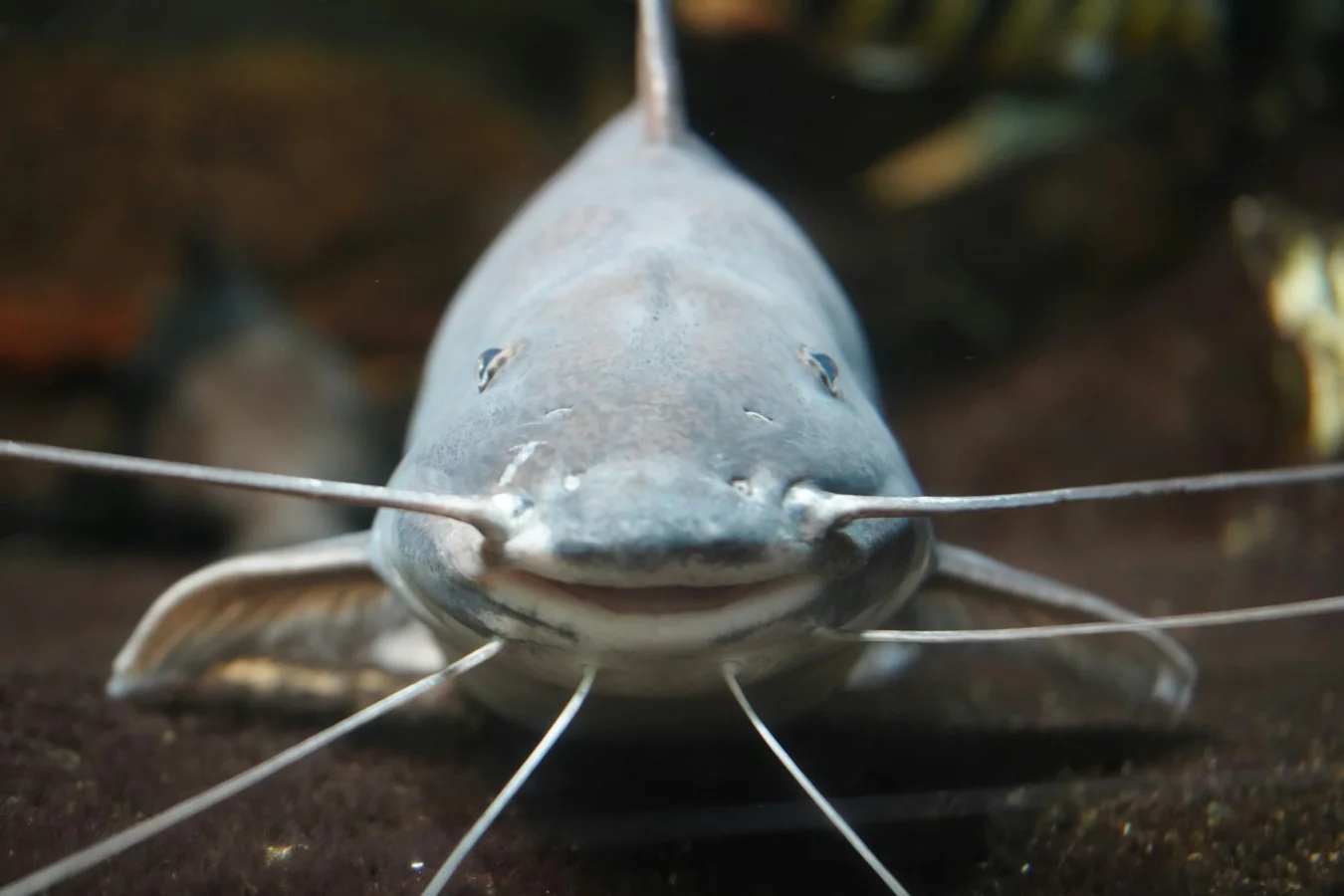
The Banjo Catfish exhibits extreme morphological specialization for benthic crypsis. The body is strongly depressed and dorsoventrally flattened, with a broad, triangular head and minute, dorsally positioned eyes adapted only to low-light detection. Three pairs of barbels surround the ventral mouth, with maxillary barbels extending approximately one-third the body length. The pectoral fins bear strongly serrated spines used for anchoring in substrate. Coloration ranges from dark chocolate brown to pale tan, overlaid with irregular dark blotches and scattered pale speckles that precisely mimic dead leaves. The underside is lighter with brown mottling. When disturbed, this fish does not swim away rapidly; instead, it relies on immobility and camouflage, often drifting with the current until contacting the bottom, where it immediately buries itself.
Conservation Status
The IUCN lists Bunocephalus coracoideus as Not Evaluated. The species has a broad distribution across the Amazon Basin and is not currently threatened by the aquarium trade, which relies almost entirely on wild collection. Habitat degradation from deforestation and dam construction in the Amazon basin represents the primary long-term conservation concern.
Care
Aquarium Care Requirements
Banjo Catfish care is straightforward in terms of water chemistry but demanding in terms of environmental design and maintenance discipline. Success depends on replicating their dim, soft-substrate, leaf-litter habitat as closely as possible.
Minimum Tank Specifications
The absolute minimum tank volume for a single adult is 20 gallons (75 liters). For a group of 3 to 4 specimens, provide 30 gallons (113 liters) or larger. The critical consideration is not volume but footprint: the tank must offer adequate bottom surface area for burrowing and territory establishment. A 20-gallon long (30 inches by 12 inches, or 76 cm by 30 cm) is superior to a 20-gallon high. For groups, a 40-gallon breeder (36 inches by 18 inches, or 90 cm by 45 cm) provides ideal dimensions. Tall, narrow tanks are completely unsuitable.
Water Parameters
Maintain the following parameters with absolute zero tolerance for ammonia and nitrite:
- Temperature: 72 degrees F to 79 degrees F (22 degrees C to 26 degrees C); optimal at 75 degrees F to 78 degrees F (24 degrees C to 26 degrees C)
- pH: 6.0 to 7.5 (tolerance range 5.8 to 7.8)
- General Hardness (GH): 5 to 15 dGH (tolerance range 4 to 20 dGH)
- Carbonate Hardness (KH): 3 to 8 dKH
- Total Dissolved Solids (TDS): 100 to 250 ppm
- Nitrates: Less than 20 ppm
- Ammonia and Nitrite: 0 ppm
Note on water chemistry: This species is highly adaptable to a wide range of conditions, which contributes to its reputation as a hardy fish. However, sudden parameter swings of more than 0.3 pH units or 2 degrees F (1 degree C) per day trigger stress responses including skin shedding and immunosuppression. Stability is more important than precision.
Substrate: The Non-Negotiable Requirement
Fine, smooth sand is the single most critical element of Banjo Catfish husbandry. The sand must be:
- Grain size: 0.5 mm to 1.5 mm
- Depth: Minimum 2 inches (5 cm); 3 inches (7.5 cm) preferred
- Texture: Rounded, polished grains with no sharp edges
- Color: Dark brown or black to enhance camouflage and encourage daytime visibility
Recommended products include pool filter sand, thoroughly washed play sand, CaribSea Super Naturals Torpedo Beach, or Seachem Flourite Dark. Avoid crushed coral, quartz gravel, pebble substrates, and any substrate with particles exceeding 3 mm. Coarse substrates abrade the ventral skin and barbels during burying, creating entry points for bacterial pathogens. The substrate must be kept clean through gentle surface vacuuming during water changes; decaying organic matter trapped in sand produces hydrogen sulfide pockets that are lethal to burrowing fish.
Filtration and Water Flow
Provide filtration rated at 4 to 6 times the tank volume per hour. Canister filters or hang-on-back units with adjustable outflow are ideal. Water movement must be gentle to moderate; these fish inhabit stagnant backwaters and cannot tolerate high-velocity currents. Position filter outflow to create broad, diffuse circulation rather than concentrated jets. Because this species is scaleless and has reduced gill surface area relative to body mass, oxygen demand is moderate but water must be well-oxygenated. Use air stones or sponge filters as supplemental aeration, particularly in tanks above 78 degrees F (26 degrees C).
Aquascaping and Decor
Design a South American blackwater biotope. Use driftwood roots, smooth river stones, and rock caves to create broken sight lines and shaded zones. Plant density should be moderate to heavy along the rear and sides, with an open central area of at least 50 percent of the substrate surface left clear for burrowing. Floating plants such as Water Sprite, Amazon Frogbit, or Salvinia are highly beneficial for light diffusion.
Leaf litter is strongly recommended. Add 3 to 5 layers of dried Indian Almond leaves, Oak leaves, or Magnolia leaves across the substrate surface. These provide additional hiding cover, introduce beneficial tannins and humic acids, support microorganism colonies that fry feed upon, and create the exact microhabitat this species occupies in nature. Replace decaying leaves every 4 to 6 weeks.
Lighting Requirements
Dim to very dim lighting on an 8 to 10 hour photoperiod. Bright overhead lighting causes chronic stress and suppresses all daytime activity. Use floating vegetation to create dappled shade zones. For nocturnal observation, install blue moon LED strips or very dim red lighting that does not disrupt the fish's circadian rhythm. Never use actinic or white moon lighting, which is too intense.
Diet
Diet and Nutrition
Banjo Catfish are opportunistic benthic omnivores with a strong preference for animal protein. Their feeding ecology in nature consists of small invertebrates, insect larvae, worms, crustaceans, carrion, and detritus scraped from the substrate surface.
Natural Feeding Behavior
In their native Amazonian habitats, Banjo Catfish emerge from burial at night to forage across the substrate using their barbels to detect chemical trails. They are not active pursuit predators but rather slow-moving scavengers that consume whatever protein sources they encounter. Their small, ventral mouths are adapted to sucking food from the substrate surface rather than taking food in mid-water.
Captive Diet Recommendations
For long-term health, provide a varied diet consisting of:
- High-quality sinking carnivore pellets or wafers (Hikari Sinking Carnivore Pellets, Tetra Pro Bottom Feeder Tablets, Omega One Shrimp Pellets) as the staple food
- Frozen foods including bloodworms, blackworms, Mysis shrimp, and brine shrimp, offered 3 times weekly
- Live foods such as blackworms, small earthworms, and brine shrimp for conditioning and immune stimulation
- Fresh foods including finely chopped shrimp, fish fillet, or clam meat once weekly
- Vegetable matter is not required but occasional blanched zucchini or cucumber provides digestive fiber
Flake foods are completely inadequate. They float or dissolve before reaching the bottom, lack the protein density required by this species, and create water quality problems when uneaten particles decay in the substrate.
Feeding Schedule
Feed adult fish 3 to 4 times weekly, always after the main aquarium lights extinguish. Place food directly onto the substrate in a consistent location near the fish's primary hiding area. Feed only what is consumed within 15 to 20 minutes. Overfeeding is a primary cause of substrate pollution and nitrate spikes in Banjo Catfish tanks. Juveniles under 3 inches (7.5 cm) require daily feeding to support their slow growth rate. Fast the tank one day per week to clear digestive systems.
Foods to Avoid
Never offer beef heart, pork, or other mammalian proteins. These lack the correct lipid profile for catfishes and cause fatty liver degeneration. Avoid oversized pellets that cannot fit into the small ventral mouth. Freeze-dried foods should be pre-soaked for 5 minutes to prevent intestinal expansion and blockage. Tubifex worms should be avoided due to parasite transmission risk unless commercially sterilized.
Breeding
Breeding Guide
Breeding Bunocephalus coracoideus in home aquariums is rarely documented but achievable with meticulous preparation. The reproductive biology of Aspredinids is unusual and not fully understood in captivity.
Conditioning and Selection
Select a group of at least 6 mature specimens that have reached sexual maturity at approximately 4.5 inches (11 cm) in length. Sexing is difficult; mature females are generally larger, deeper-bodied, and slightly darker in coloration than males. Condition the group in a 40-gallon (150 liter) species-only tank for 3 to 4 weeks. The conditioning diet must include daily live blackworms, bloodworms, and chopped fresh shrimp to trigger gonadal development. Maintain pristine water with nitrates below 10 ppm.
Spawning Setup
The breeding tank should replicate their natural habitat precisely:
- Water: pH 6.5, 5 dGH, temperature 77 degrees F (25 degrees C)
- Substrate: 3 inches (7.5 cm) of fine dark sand
- Decor: Abundant driftwood caves, rock crevices, and a thick layer of Indian Almond leaf litter
- Filtration: Gentle air-driven sponge filter only
- Lighting: Extremely dim; simulate moon phases with blue LED strips
Some Aspredinid species exhibit egg-carrying behavior where eggs attach to the female's ventral surface, but this has not been reliably documented for B. coracoideus. Most captive spawnings involve egg scattering across the substrate.
Spawning and Egg Management
Spawning occurs nocturnally, typically within 2 hours of complete darkness. The fish scatter adhesive eggs across the sand and leaf litter. Egg counts range from several hundred to over 1,000 per female. The adults are voracious egg predators and must be removed immediately after spawning is observed. Alternatively, prepare a separate 10-gallon (40 liter) tank with identical parameters and transfer eggs as they are discovered, using a soft turkey baster to avoid damage.
Fry Rearing
Eggs hatch in approximately 3 days at 77 degrees F (25 degrees C). Newly hatched fry measure 0.12 inch (3 mm) and remain attached to the substrate for 24 hours while absorbing the yolk sac. Once free-swimming, typically day 4 to 5, feed infusoria or commercial liquid fry food for the first 72 hours. Transition to microworms, vinegar eels, and crushed sinking pellets by day 7. Introduce baby brine shrimp nauplii from day 10. Growth is notably slow; fry reach 1 inch (2.5 cm) at 3 months and sexual maturity at 18 to 24 months. Maintain daily 10 percent water changes and gentle sponge filtration. Pristine water quality is the determining factor between success and total fry mortality.
Tips
Expert Tips and Common Mistakes
Decades of collective experience with Aspredinid catfishes reveal consistent patterns of success and failure. The following insights will separate keepers who thrive with this species from those who struggle.
Pro Tips from Experienced Keepers
Tip 1: The Burial Test. A healthy Banjo Catfish buries itself within 30 minutes of being added to a tank with suitable substrate. If the fish remains exposed on the substrate surface for more than 2 hours, immediately verify sand depth, grain size, and water parameters. This is the single most reliable health indicator for newly acquired specimens.
Tip 2: Nocturnal Observation Setup. Install a dedicated blue or red LED strip on a timer that activates 1 hour after main lights extinguish. Position it to illuminate the front glass without flooding the tank. This transforms the aquarium into a nocturnal viewing station where you can observe natural foraging, burial behavior, and body condition assessment. Without this, you are essentially keeping a tank of sand and hoping a fish is alive.
Tip 3: Substrate Maintenance Protocol. Use a gravel vacuum with a modified tip or a pipette to remove surface detritus without disturbing buried fish. Never deep-vacuum sand in a Banjo Catfish tank; anaerobic pockets are less dangerous than the stress of exposing a buried fish. Stir only the top 0.5 inch (1 cm) of sand during water changes.
Tip 4: Leaf Litter Rotation. Maintain a rotation schedule: add 3 to 5 new Indian Almond leaves every 3 weeks while removing the most decomposed leaves. This maintains consistent tannin levels, provides fresh hiding cover, and prevents ammonia spikes from excessive decomposition.
Critical Mistakes to Avoid
Mistake 1: Gravel Substrate. Using gravel or pebble substrate is the most common fatal error. The fish will attempt to bury, abrade its ventral surface, develop bacterial infections, and die within weeks. Fine sand is not a recommendation; it is a requirement.
Mistake 2: Bright Community Tank Lighting. Housing Banjo Catfish in a brightly lit tank with high-activity fish such as Tiger Barbs or Danios causes chronic stress. The fish will never display natural behavior, will refuse food, and will waste away over months. Either dim the lighting significantly or select this species for a dedicated biotope tank.
Mistake 3: Medicating the Display Tank. Treating Ich or bacterial infections in the main display tank with standard copper or formalin doses kills Banjo Catfish through substrate-mediated chemical absorption. Always use a bare-bottom hospital tank for any medication.
Mistake 4: Assuming Death When Buried. New keepers frequently assume their Banjo Catfish has died when it disappears for days. Do not disturb the substrate searching for the fish. Instead, place a small amount of food on the surface at night and check for consumption by morning. A missing fish that eats is a healthy fish.
Mistake 5: Inadequate Quarantine. Because this species is scaleless and sedentary, it is highly vulnerable to parasites introduced by active tank mates. A 21-day quarantine for all new livestock, not the standard 14 days, is mandatory before introducing companions to a Banjo Catfish tank.
Biotope Authenticity
For the dedicated enthusiast, a South American blackwater biotope featuring Banjo Catfish, Pencilfish, Dwarf Cichlids, and floating vegetation represents one of the most visually and behaviorally rewarding aquarium designs possible. The dim lighting, tannin-stained water, and leaf-litter substrate create an environment where this species displays its full repertoire of natural behaviors, from complete burial to nocturnal foraging expeditions. This is not a fish for a generic community tank; it is a species for the aquarist who appreciates subtlety, patience, and ecological authenticity.
Compatible Tank Mates






Species Comparison
| Feature | Banjo Catfish | Corydoras Catfish | Bristlenose Pleco | Kuhli Loach |
|---|---|---|---|---|
| Scientific Name | Bunocephalus coracoideus | Corydoras spp. | Ancistrus cirrhosus | Pangio kuhlii |
| Max Size | 6 inches (15.2 cm) | 2 to 3 inches (5 to 7.5 cm) | 4 to 5 inches (10 to 12.5 cm) | 4 inches (10 cm) |
| Temperament | Peaceful; cryptic and inactive by day | Very peaceful; active bottom foragers | Peaceful; territorial with conspecifics | Peaceful; social and active at night |
| Minimum Tank Size | 20 gallons (75 L); 30 gal (113 L) for groups | 10 gallons (37 L); 20 gal (75 L) for schools | 20 gallons (75 L) | 15 gallons (56 L); 20 gal (75 L) for groups |
| Diet | Omnivore; sinking pellets, worms, shrimp. Nocturnal feeder | Omnivore; scavenges flakes, pellets, and live foods | Herbivore; requires driftwood and algae wafers | Omnivore; scavenges and accepts sinking pellets |
| Substrate Requirement | Fine smooth sand mandatory; burrows completely | Sand or smooth gravel; sifts through substrate | Any substrate; primarily adheres to glass and decor | Fine sand mandatory; burrows completely |
| Scaleless / Medication Sensitivity | Entirely scaleless; extremely sensitive to copper and formalin | Scaleless; sensitive to copper and some antibiotics | Armored with bony plates; moderately sensitive | Scaleless; sensitive to copper and malachite green |
| Special Notes | Dead-leaf camouflage; sheds skin; jerky water-jet propulsion | Must be kept in schools of 6+; air-breathing labyrinth organ | Excellent algae control; requires driftwood in diet | Eel-like appearance; must be kept in groups of 5+ |