
Red Tail Shark (Epalzeorhynchos bicolor)
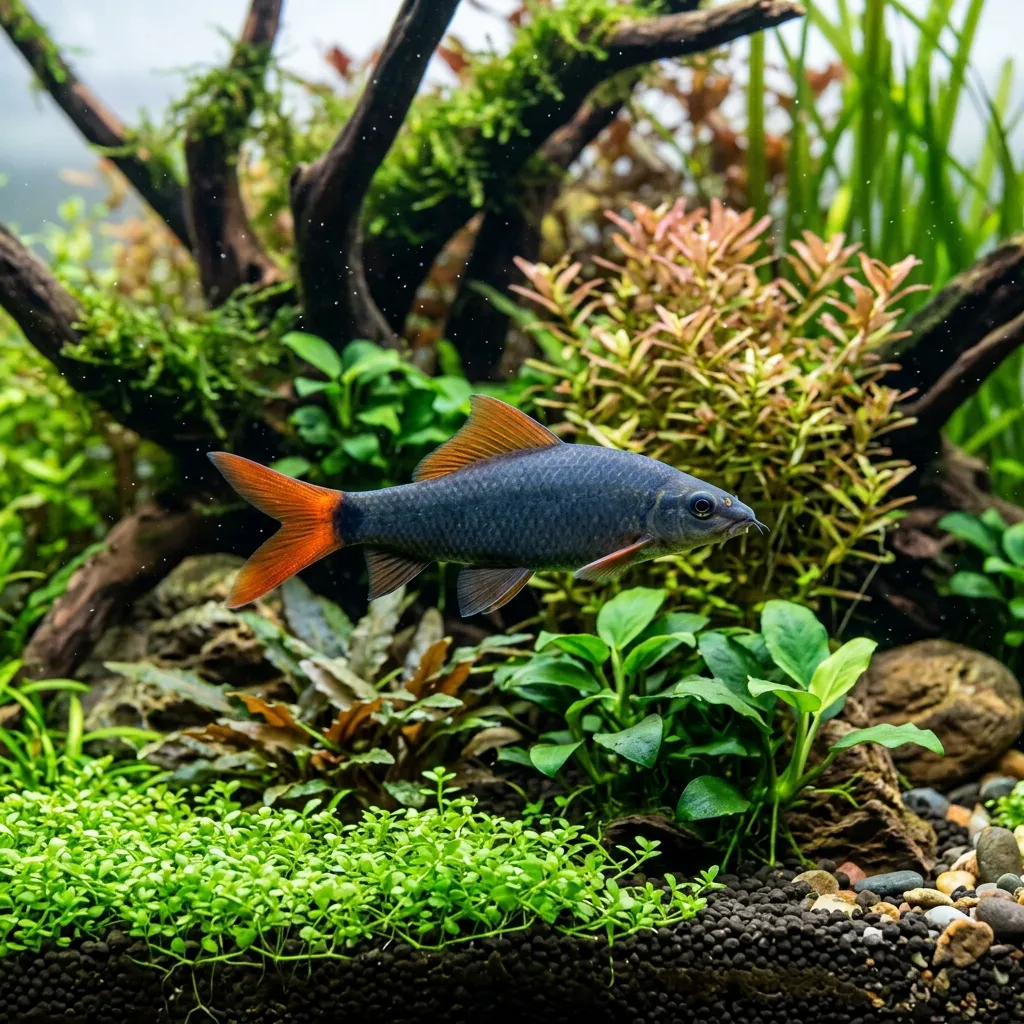
Quick Answer
Red Tail Shark (Epalzeorhynchos bicolor) is a striking cyprinid native to Thailand, critically endangered in the wild but widely available through commercial aquaculture. It requires a minimum 55-gallon (208 liter) aquarium with a pH of 6.5 to 7.5 and a temperature range of 72°F to 79°F (22°C to 26°C). This 6-inch omnivore is intensely territorial and must be kept as a single specimen per tank with fast mid-water tank mates.
Quick Facts
| Scientific Name | Epalzeorhynchos bicolor |
|---|---|
| Common Names | Red Tail Shark |
| Family | Cyprinidae |
| Genus | Epalzeorhynchos |
| Type | Freshwater |
| Temperament | aggressive |
| Care Difficulty | intermediate |
| Lifespan | 6 years |
| Maximum Size | Up to 6 in (15 cm) |
| Diet | Omnivore |
| Temperature | 72–79°F (22–26°C) |
| pH | 6.5–7.5 |
| Hardness | 5–12 dGH |
| Minimum Size | 55 gallons |
Key Takeaways
- Critically endangered in the wild; commercially bred for the aquarium trade
- Requires minimum 55-gallon (208 liter) tank; 75+ gallons strongly recommended
- Grows to 4 to 6 inches (10 to 15 cm) and lives 5 to 8 years with proper care
- One shark per tank only; never with Rainbow Sharks, Flying Foxes, or similar species
- Scaleless fish; sensitive to formalin and standard-dose copper medications
- Heavy herbivore bias requiring vegetables, algae, and plant-based staple foods
- Notorious jumper; tight-fitting lid with no gaps is mandatory
- Add last to stocking sequence to minimize territorial aggression
Overview
Species Overview
The Red Tail Shark (Epalzeorhynchos bicolor), also known as the Red Tailed Black Shark, Red Tail Labeo, or Fire Tail, is one of the most visually striking freshwater fish in the aquarium hobby. Despite its common name, it is not a true shark but a cyprinid closely related to barbs and minnows. Native to the streams and floodplains of Thailand, this species is now critically endangered in the wild, having been declared extinct in its natural habitat in 1996 before a tiny remnant population was rediscovered. Fortunately, it is bred in massive numbers through commercial aquaculture and remains widely available to hobbyists worldwide.
Red Tail Sharks are defined by their jet-black body contrasted with a brilliantly red, forked caudal fin. Juveniles sold in pet stores at 1.5 to 2 inches (3.8 to 5 cm) appear deceptively peaceful, but they mature into 6-inch (15 cm) territorial predators that command the bottom of the aquarium. They are intermediate-level fish not because they are delicate, but because their aggression and territorial demands require careful tank mate selection, adequate space, and strategic stocking order. When housed correctly, a single Red Tail Shark becomes a dynamic, interactive centerpiece that patrols its domain with shark-like confidence.
Appearance
Appearance and Sexual Dimorphism
Adult Red Tail Sharks reach 4 to 6 inches (10 to 15 cm) in standard length, with exceptional specimens occasionally growing to 7 inches (18 cm). The body is elongated and torpedo-shaped with a high, triangular dorsal fin that gives them their shark-like silhouette. The base coloration is a velvety jet black that extends across the entire body and fins, with the exception of the caudal fin, which is a vivid, iridescent red to orange-red. The intensity of the red tail is directly linked to diet quality, water conditions, and stress level; faded or pinkish tails indicate poor health or chronic stress.
Sexual dimorphism is subtle. Females tend to have a slightly grayer or less intensely black stomach area and a fuller, rounder abdomen when gravid. Males are generally more intensely black with a slimmer profile. There are no reliable external sexing characteristics in juveniles under 3 inches (7.5 cm). Albino variants exist in the trade, displaying a cream or pale pink body with a red tail, though these are less common than the classic black morph.
Natural Habitat
Natural Habitat and Distribution
The Red Tail Shark is endemic to Thailand, where it historically inhabited clear, flowing streams, rivers, and seasonal floodplains with sandy or muddy substrates, submerged roots, and dense riparian vegetation. The water was typically warm, moderately hard, and slightly acidic to neutral. Seasonal monsoon flooding expanded their range into temporary pools and forested wetlands. Decades of habitat destruction, pollution, and collection for the aquarium trade devastated wild populations, leading to their classification as critically endangered.
In the aquarium, they require conditions that replicate these flowing, well-oxygenated waters with plenty of hiding structures and open swimming lanes. They are active fish that patrol territory rather than hiding passively, so the aquascape must accommodate both security and movement.
Diet
Diet and Nutrition
Red Tail Sharks are omnivores with a pronounced herbivorous bias. In the wild, they graze extensively on algae, periphyton, and plant matter, supplementing with small invertebrates and insect larvae. In captivity, a plant-heavy diet supports their digestive health, immune function, and color intensity.
Health
Health and Disease Management
Red Tail Sharks are physically hardy but medication-sensitive due to their reduced scale covering. Their health is directly tied to water quality stability, diet variety, and stress levels. Preventive care is far more effective than reactive treatment, particularly given their sensitivity to common aquarium medications.
Ich (White Spot Disease)
Ichthyophthirius multifiliis is a ciliated protozoan that causes white salt-like granules on the skin, fins, and gills. It is the most common external parasite in Red Tail Shark aquariums, often triggered by temperature fluctuations or stress from harassment.
- White cysts resembling salt grains on body, fins, and tail
- Excessive scratching against rocks, driftwood, and substrate (flashing)
- Labored breathing and clamped fins
- Loss of appetite and hiding in caves
- Faded red tail coloration
Introduced via contaminated water, plants, or new fish. Triggered by temperature drops below 70°F (21°C), ammonia or nitrite spikes, or chronic stress from territorial harassment. The parasite burrows into the skin and gill epithelium, causing irritation and secondary bacterial infection.
Quarantine all new stock for 14 days. Maintain temperature at 74°F to 76°F (23°C to 24°C). At the first sign of ich, raise temperature to 86°F (30°C) for 72 hours with vigorous surface agitation to maintain oxygen saturation. This heat-only method avoids medication stress. If chemical treatment is required, use malachite green at half-dose (0.05 mg/L) only. Avoid formalin completely, as it causes severe gill damage in scaleless fish. Increase water changes to 20% daily during treatment.
Fin Rot (Bacterial and Fungal)
Fin rot manifests as frayed, discolored, or receding fin tissue caused by opportunistic bacteria such as Pseudomonas and Aeromonas, often secondary to physical damage from chasing, rough decor, or fin-nipping tank mates. Fungal involvement presents as white, cottony growth on damaged tissue.
- Frayed or ragged fin edges, particularly on the red tail and dorsal fin
- White or red margins indicating bacterial colonization
- Progressive fin tissue loss exposing fin rays
- White cotton-like fungal growth on fin edges
- Lethargy and reduced patrol behavior
Physical injury from territorial chasing, abrasive substrate, sharp rock edges, or aggressive tank mates. Bacterial colonization occurs when water quality deteriorates or nitrates exceed 20 ppm. Immunosuppression from stress, poor nutrition, or temperature swings accelerates progression.
Perform 25% water changes every 48 hours until parameters stabilize. Treat bacterial fin rot with erythromycin or kanamycin in a hospital tank. Treat fungal involvement with methylene blue baths at 3 mg/L for 30 minutes daily. Remove sharp or abrasive decor. Smooth all rock edges. Reduce aggression by increasing tank size, adding visual barriers, or rehoming incompatible tank mates. Never treat the main display tank with antibiotics as this destroys biological filtration.
Stress-Related Immune Collapse
Chronic stress from inadequate tank size, incompatible tank mates, or incorrect stocking order suppresses the immune system, leading to a cascade of secondary infections including bacterial septicemia, fungal outbreaks, and parasitic infestations. This is the leading cause of premature death in Red Tail Sharks.
- Progressive color fading, particularly the red tail turning pink or gray
- Loss of appetite and weight loss
- Hiding constantly and refusing to patrol territory
- Clamped fins and lethargy
- Secondary infections appearing simultaneously (ich, fin rot, fungus)
Tanks under 55 gallons (208 liters), presence of other shark-shaped fish, addition of the shark before tank mates, housing with slow or bottom-dwelling species, poor water quality with nitrates above 20 ppm, and inadequate hiding structures. Chronic stress elevates cortisol levels, suppressing immune response and opening the door to opportunistic pathogens.
Prevention is the only effective cure. Upgrade to a minimum 55-gallon tank with a 4-foot (120 cm) length. Remove all shark-shaped competitors immediately. Rehome incompatible tank mates. Add the shark last in the stocking sequence. Provide multiple caves and visual barriers. Maintain nitrates below 15 ppm through weekly 25% water changes. Feed a varied diet including vegetables and protein. If secondary infections have developed, treat the specific pathogen in a hospital tank while correcting the underlying environmental stressors in the main tank.
Skin and Gill Flukes (Dactylogyrus and Gyrodactylus)
Monogenean flukes are external parasites that attach to the skin and gills, causing irritation, tissue damage, and respiratory distress. Scaleless fish such as Red Tail Sharks are particularly vulnerable because flukes can attach directly to the skin surface without navigating scale barriers.
- Excessive flashing and scratching against decor
- Labored breathing and gill hyperplasia
- Excess mucus production giving a cloudy or slimy appearance
- Clamped fins and reduced activity
- Visible worms on skin or gills under magnification
Introduced via contaminated live foods, new fish, or plants. Flukes reproduce rapidly in warm water above 78°F (25.5°C) and proliferate when water quality is marginal. Scaleless fish lack the physical barrier that scaled fish possess, making them more susceptible to heavy infestations.
Treat with praziquantel at 2.5 mg/L in a hospital tank for 24 hours, followed by a 50% water change and a second dose 5 days later. Praziquantel is safe for scaleless fish. Avoid copper-based treatments and formalin. Increase water changes to 25% every 48 hours during treatment. Quarantine all new live foods and plants. Maintain temperature at 74°F to 76°F (23°C to 24°C) to slow fluke reproduction.
Breeding
Breeding Guide
Breeding Red Tail Sharks in home aquariums is not a realistic goal for hobbyists. These fish require hormonal stimulation, massive tanks, and precise environmental triggers that are nearly impossible to replicate outside of commercial facilities. The following information is provided for educational purposes only.
Tips
Common Mistakes to Avoid
- Buying two sharks: The single most common fatal mistake is purchasing two Red Tail Sharks or mixing a Red Tail with a Rainbow Shark. The aggression is immediate, relentless, and lethal.
- Undersized tanks: Keeping an adult in a 20-gallon or 29-gallon tank guarantees chronic stress, faded colors, and death within months. The 2-inch juvenile in the store bag is not the 6-inch territorial adult it will become.
- Adding the shark first: Introducing the shark before other fish causes it to claim the entire aquarium as its territory, making every subsequent addition a target for elimination.
- Bottom-dwelling tank mates: Housing with Corydoras, loaches, or other substrate fish in tanks under 75 gallons results in relentless harassment and stress death. The shark views the entire bottom as its domain.
- No lid or loose lid: An uncovered tank or a lid with gaps around the filter is a death sentence. These fish are expert jumpers and will escape during the night or during chasing episodes.
- Meat-only diets: Feeding exclusively protein foods causes digestive issues, vitamin deficiencies, and faded tail coloration. Vegetable matter and algae must constitute at least 50% of the diet.
- Full-strength medications: Treating ich or parasites with standard formalin or malachite green doses kills scaleless Red Tail Sharks. Always use half-dose or heat-only treatments.
Pro Aquarist Tips
- Add the shark last: Always introduce the Red Tail Shark after all other tank mates have established territories. A shark added to an established community recognizes existing boundaries and is less likely to claim the entire tank as its own.
- Use a temporary divider: When introducing the shark to an existing tank, use a tank divider or breeding box for 24 to 48 hours to allow visual acclimation before physical contact. This dramatically reduces initial aggression.
- Feed in multiple zones: Place sinking pellets and wafers at opposite ends of the tank to ensure subordinate fish can eat without entering the shark's core territory.
- Pack the hardscape: This is one species where a cluttered tank is better than a clean one. Dense rock piles, driftwood tunnels, and PVC caves create visual barriers that shorten chases and reduce stress for all inhabitants.
- Buy smaller than tank mates: When adding a shark to an established tank, select a juvenile slightly smaller than the existing fish. Established residents are less intimidated and more likely to stand their ground, teaching the shark acceptable boundaries.
- Monitor for jumping: Check lid fitment weekly. These fish test boundaries constantly and will find gaps you thought were sealed.
Compatible Tank Mates
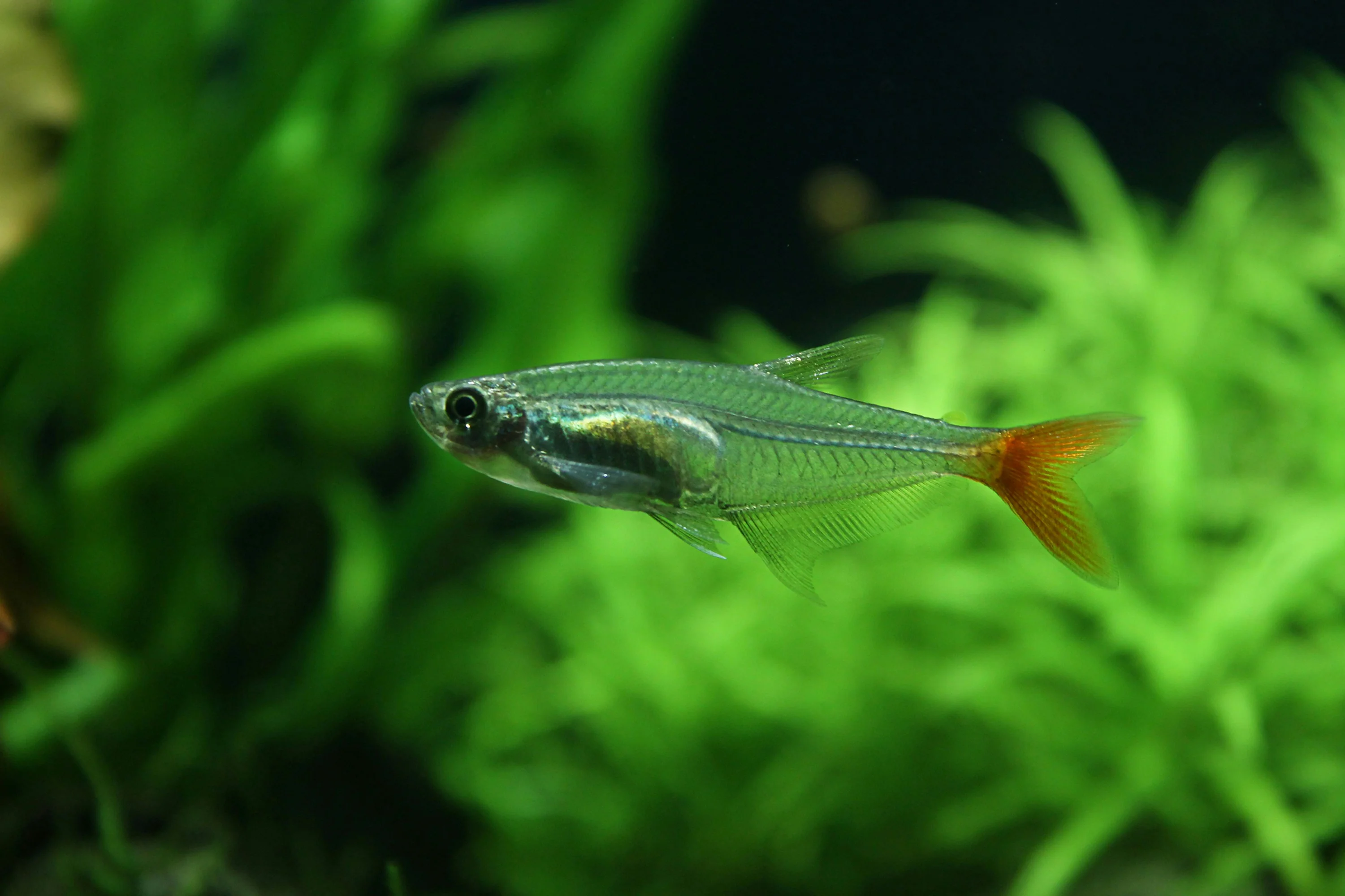
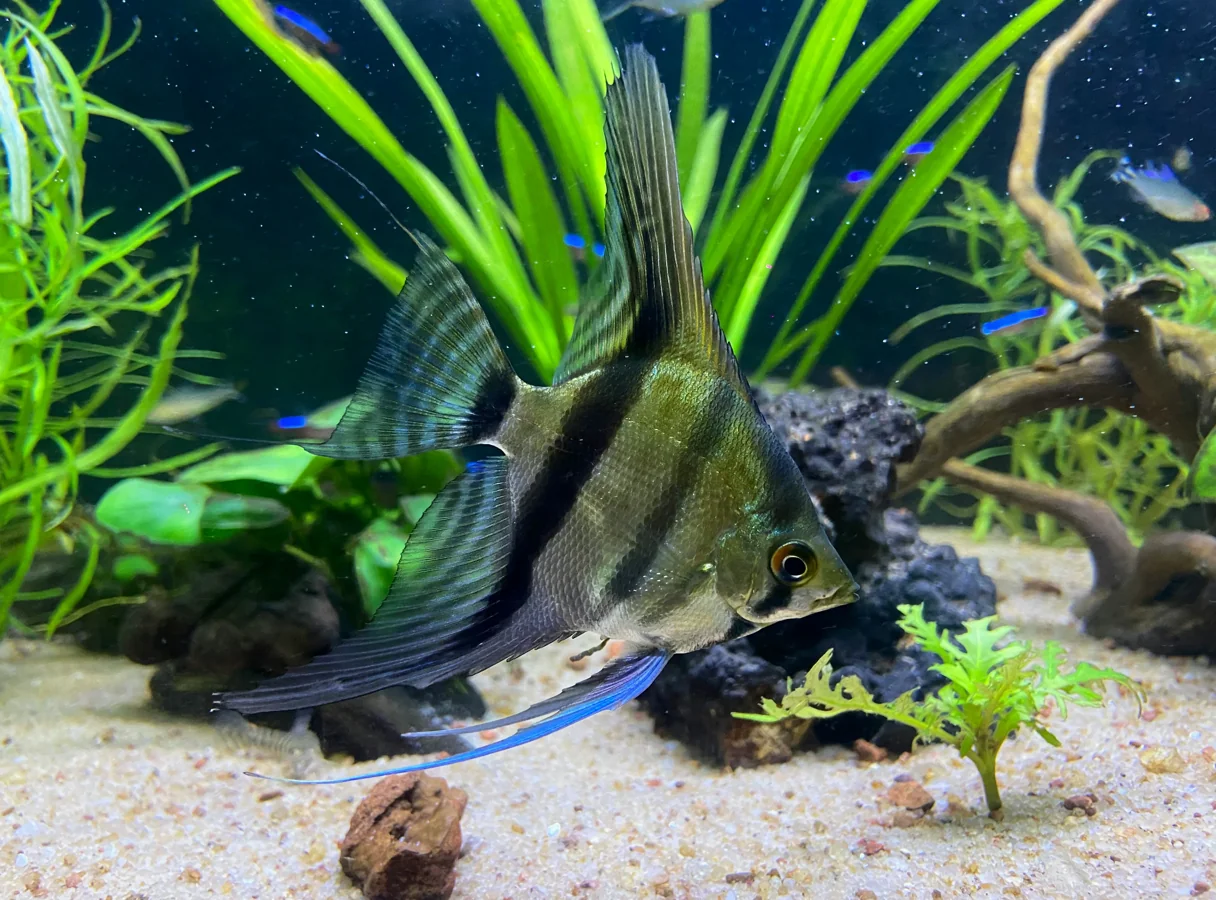
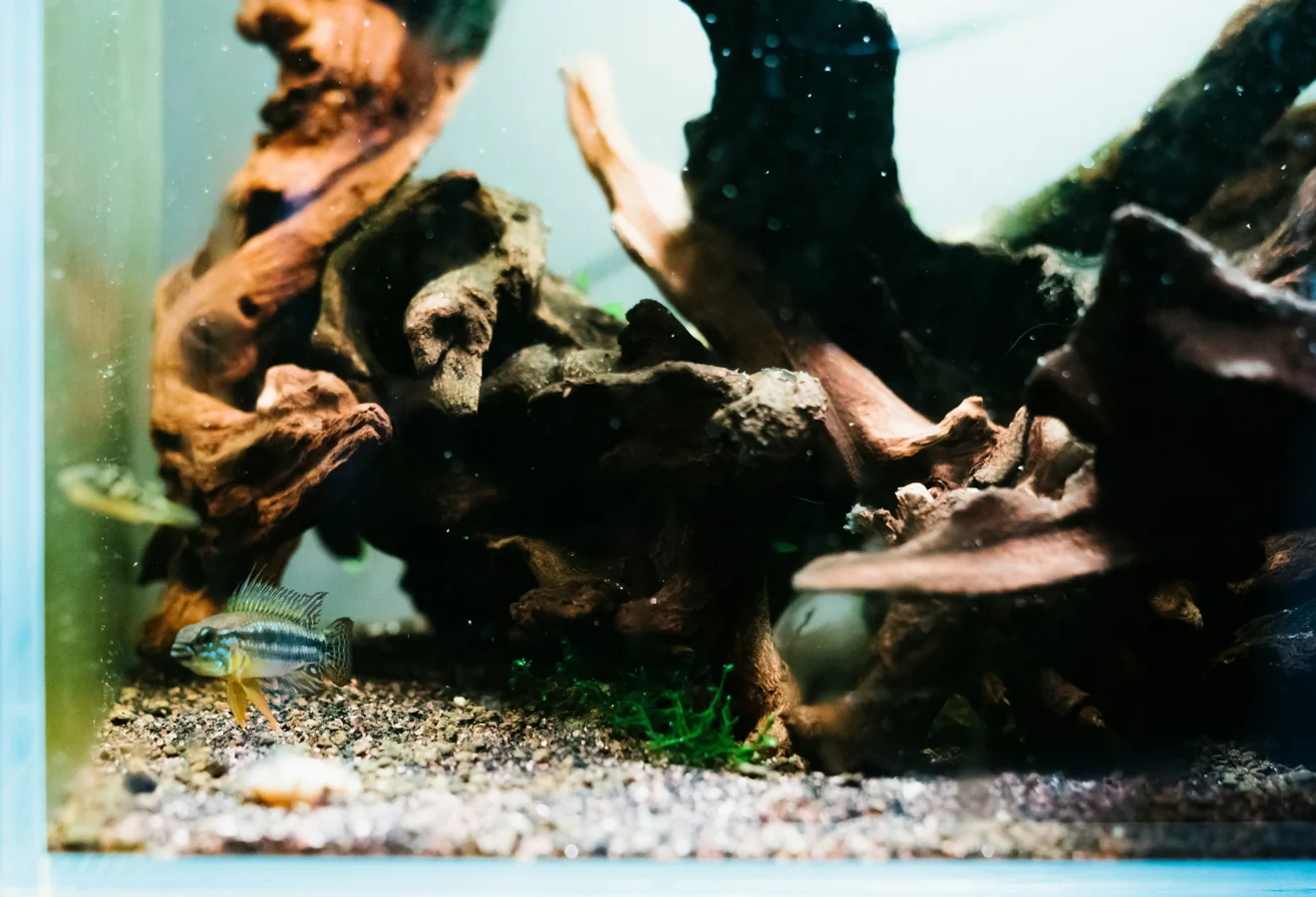
Species Comparison
| Feature | Red Tail Shark | Rainbow Shark | Flying Fox | Siamese Algae Eater |
|---|---|---|---|---|
| Adult Size | 4 - 6 inches (10 - 15 cm) | 5 - 7 inches (13 - 18 cm) | 4 - 5 inches (10 - 13 cm) | 5 - 6 inches (13 - 15 cm) |
| Temperament | Highly aggressive; territorial bottom-dweller | Aggressive; territorial but slightly less so | Peaceful to semi-aggressive | Peaceful; community-safe |
| Minimum Tank Size | 55 gallons (208 liters) | 55 gallons (208 liters) | 30 gallons (114 liters) | 30 gallons (114 liters) |
| Diet Type | Omnivore; heavy herbivore bias | Omnivore; heavy herbivore bias | Omnivore; algae grazer | Omnivore; dedicated algae eater |
| Optimal pH Range | 6.5 - 7.5 | 6.5 - 7.5 | 6.0 - 7.5 | 6.5 - 7.5 |
| Temperature Range | 72°F - 79°F (22°C - 26°C) | 72°F - 79°F (22°C - 26°C) | 72°F - 79°F (22°C - 26°C) | 72°F - 79°F (22°C - 26°C) |
| Sharks per Tank | One only; never with other sharks | One only; never with other sharks | Can keep multiple with adequate space | Can keep multiple; forms loose groups |