
Cherry Barb (Puntius titteya)
Quick Answer
Cherry Barb (Puntius titteya) is a peaceful, colorful schooling fish endemic to Sri Lanka. It requires a minimum 20 gallon (75 liter) planted aquarium with stable parameters (pH 6.0-7.5, temperature 73-81°F / 23-27°C). Keep in schools of 8 to 10 with a 1 male to 2-3 female ratio. As an omnivore, it thrives on flakes, spirulina, and frozen foods. Dark substrate and subdued lighting are essential for males to develop deep cherry-red coloration.
Quick Facts
| Scientific Name | Puntius titteya |
|---|---|
| Common Names | Cherry Barb |
| Family | Cyprinidae |
| Genus | Puntius |
| Type | Freshwater |
| Temperament | peaceful |
| Care Difficulty | beginner |
| Lifespan | 5 years |
| Maximum Size | Up to 2 in (5 cm) |
| Diet | Omnivore |
| Temperature | 73–81°F (23–27°C) |
| pH | 6–7.5 |
| Hardness | 5–15 dGH |
| Minimum Size | 20 gallons |
Key Takeaways
- Maintain a minimum school of 8 to 10 individuals; groups under 6 cause chronic stress and color loss.
- Keep a 1 male to 2-3 female ratio to prevent harassment and ensure natural behavior.
- Use dark substrate and subdued lighting; bright environments cause washed-out coloration.
- Add Indian almond leaves or driftwood for tannins that enhance color and replicate natural habitat.
- Mandatory 2- to 4-week quarantine for all new specimens.
- Never house with Tiger Barbs or other aggressive fin-nipping species.
- IUCN Vulnerable status; virtually 100% captive-bred in the aquarium trade.
- Lifespan of 4 to 5 years in captivity; up to 6+ years with optimal care.
Overview
Species Overview
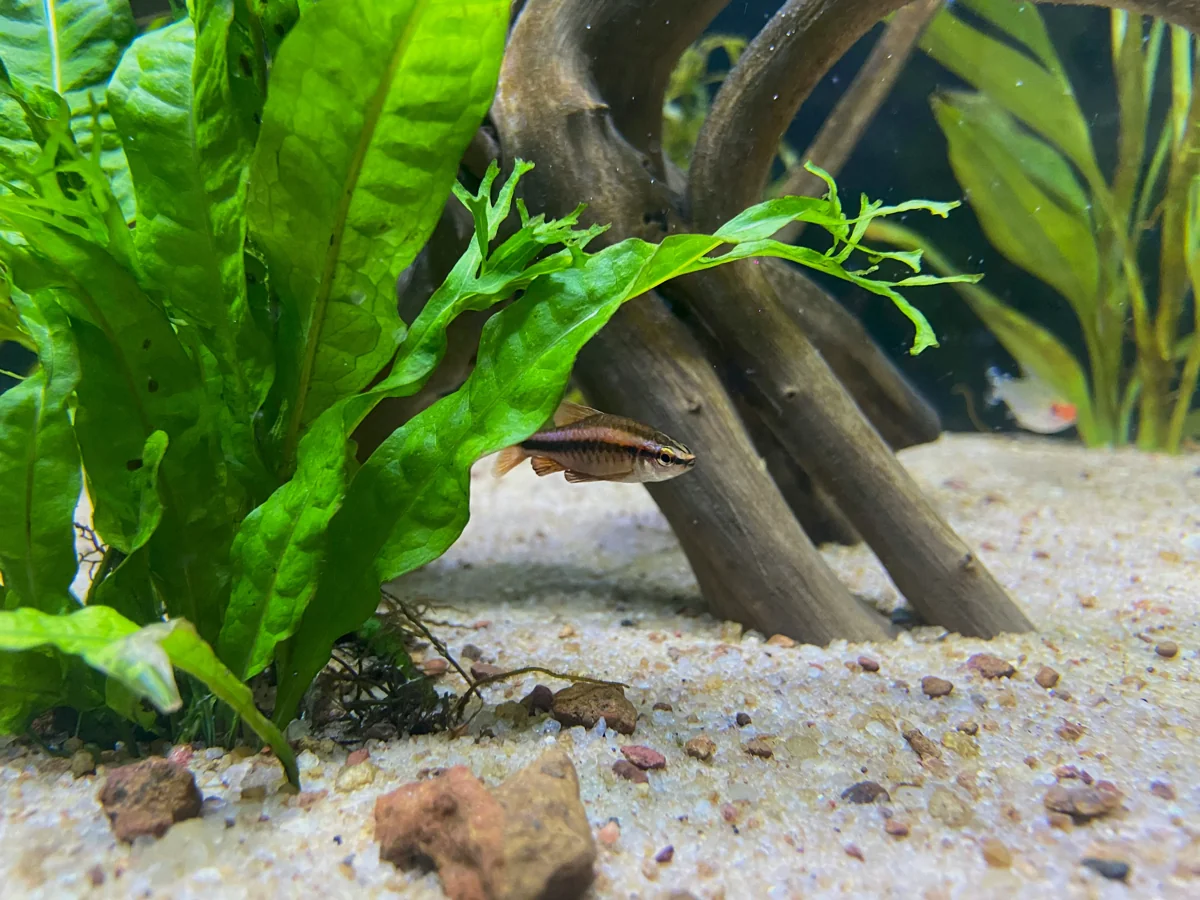
The Cherry Barb, scientifically known as Puntius titteya, is one of the most beloved and peaceful freshwater fish in the aquarium hobby. Endemic to the southwestern lowlands of Sri Lanka, this small cyprinid displays remarkable sexual dimorphism: males develop a breathtaking deep cherry-red coloration during breeding condition, while females exhibit a more subdued fawn or silver body with a prominent black lateral stripe running from snout to tail. A thin metallic stripe often traces just above the dark lateral line, adding subtle iridescence.
Also commonly called the Crimson Barb, this species belongs to the family Cyprinidae and the order Cypriniformes. Its natural range is restricted to the Kelani, Gin, and Kalu river basins in Sri Lanka's southwestern wet zone, where it inhabits shallow, heavily shaded forest streams with silty bottoms and abundant leaf litter. In 2019, the IUCN reclassified the Cherry Barb as Vulnerable (VU) due to habitat destruction from hydroelectric projects, deforestation, agricultural pollution, and overcollection for the ornamental trade. Since 1996, export of wild specimens from Sri Lanka has been restricted, and virtually all specimens in the aquarium trade are now captive-bred.
With proper care, captive specimens routinely reach 4 to 5 years of age, with exceptional individuals living 6 or more years. They are often called the anti-Tiger Barb because they possess all the color and activity of barbs without any of the aggression or fin-nipping behavior.
Diet
Diet and Feeding Protocol
Cherry Barbs are opportunistic omnivores with a strong natural inclination toward plant matter, algae, and small invertebrates. In their native Sri Lankan streams, they graze on green algae, diatoms, detritus, dipteran larvae, and aquatic insect matter. In captivity, they readily accept prepared foods but require dietary variety to maintain coloration, immune function, and digestive health.
Health
Health, Disease, and Quarantine Protocols
Cherry Barbs are robust and generally hardy when provided with stable water parameters, varied nutrition, and low-stress environments. However, they are highly sensitive to sudden water parameter changes and can succumb to common freshwater parasites when stressed by poor conditions or inadequate acclimation. Prophylactic quarantine is mandatory for all new specimens.
Ich (Ichthyophthirius multifiliis)
The most common parasitic infection in freshwater aquariums, caused by the ciliate Ichthyophthirius multifiliis.
- Tiny white salt-like spots on skin, gills, and fins; flashing against rocks and decor; rapid breathing; clamped fins; loss of appetite; rubbing against substrate.
Introduction via infected fish, plants, or contaminated equipment. Stress from poor water quality, temperature fluctuations, or inadequate acclimation weakens immunity and allows infestation.
Quarantine all new fish for 2 to 4 weeks. Treat with heat (gradually raise to 86°F / 30°C over 24 hours, hold for 10 days) combined with increased aeration and daily 25% water changes. Alternatively, use malachite green or formalin-based medications per manufacturer instructions. Remove carbon during treatment.
Freshwater Velvet (Piscinoodinium)
A dinoflagellate parasite that is far more lethal than ich in freshwater systems. Often called the freshwater aquarist’s nightmare due to rapid progression.
- Fine gold or rust-colored dust on the body; lethargy; heavy or labored breathing; clamped fins; refusal to eat; rapid death within 48 to 72 hours if untreated.
Introduction via infected livestock. The free-swimming dinospore stage is highly infectious and can survive short periods without a host. Poor water quality and stress accelerate outbreaks.
Quarantine immediately. Treat with copper-based medications (0.15 to 0.20 mg/L Cupramine) or acriflavine in a bare hospital tank. Increase aeration significantly. Remove carbon during treatment. Never skip quarantine for new specimens.
Fin Rot (Bacterial)
A common bacterial infection affecting the fins, caused by opportunistic bacteria such as Aeromonas, Pseudomonas, or Flexibacter.
- Frayed, receding, or discolored fin edges; often starting at the tail and progressing inward; red streaks at fin bases in advanced cases; lethargy and loss of appetite.
Poor water quality with elevated nitrates above 20 ppm; physical damage from aggressive tank mates or sharp decor; stress from overcrowding or inadequate nutrition.
Maintain nitrates below 20 ppm with weekly 25% water changes. Treat with broad-spectrum antibiotics such as kanamycin or erythromycin in a hospital tank. Remove carbon during medication. Address underlying water quality issues immediately.
Columnaris (Flavobacterium columnare)
A highly contagious bacterial disease that progresses rapidly and is fatal if untreated within 48 hours. Often mistaken for fungal infection due to its cotton-like appearance.
- White, gray, or yellowish patches on skin, mouth, or fins resembling cotton or mold; frayed fins; ulcers; rapid deterioration; lethargy; refusal to eat.
Stress from temperature fluctuations above 4°F (2°C) in 24 hours; poor water quality; overcrowding; inadequate nutrition. The bacteria are always present in aquarium water but attack stressed fish.
Treat immediately with kanamycin combined with nitrofurazone in a hospital tank. Maintain temperature stability. Perform daily 25% water changes during treatment. This disease is a medical emergency; delay in treatment results in mass mortality.
Swim Bladder Disorder
A physical condition affecting buoyancy, common in cyprinids fed improper diets or kept in poor water conditions.
- Difficulty maintaining position in the water column; floating upside down or sinking to the bottom; swimming at odd angles; bloated abdomen; refusal to eat.
Overfeeding; constipation from low-fiber diets; rapid temperature fluctuations; bacterial infection of the swim bladder; physical trauma.
Fast the fish for 24 to 48 hours. Offer blanched, shelled peas as a laxative. Maintain stable temperatures. Feed smaller, more frequent meals with adequate plant fiber. If bacterial infection is suspected, treat with broad-spectrum antibiotics in quarantine.
Fungal Infections (Saprolegnia)
Secondary fungal infections that occur following skin damage, parasite infestation, or in systems with poor water quality.
- Cotton-like white or gray growths on skin, fins, or mouth; lethargy; loss of appetite; often appearing at sites of previous injury or parasite damage.
Fungal spores entering through wounds or abrasions. Elevated organic waste, low water flow, and poor water quality create favorable conditions.
Maintain excellent water quality with weekly water changes. Treat with malachite green or methylene blue baths. Remove carbon during medication. Address underlying injuries or parasite infestations that created entry points.
Breeding
Breeding Cherry Barbs in Captivity
Cherry Barbs are prolific egg scatterers and one of the easiest cyprinids to breed in captivity. They are batch spawners, meaning a single female releases successive clutches of eggs over multiple days rather than depositing all eggs at once. This reproductive strategy makes them ideal for beginner breeders.
Tips
Common Mistakes to Avoid
- Keeping Too Few: Groups of 3 to 5 produce stressed, colorless fish that hide constantly. This is the single most common mistake and the primary reason hobbyists are disappointed with Cherry Barbs.
- Wrong Male-to-Female Ratio: All-male groups result in relentless chasing. Single-female groups cause the female to be harassed to death. Maintain 2 to 3 females per male minimum.
- Light Substrate and Bright Lighting: White gravel and unshaded high-intensity LEDs produce washed-out, pinkish fish. Use dark substrate and floating plants.
- Housing with Tiger Barbs: Tiger Barbs will bully, nip, and stress Cherry Barbs to death. Never mix these species regardless of tank size.
- Skipping Quarantine: Retail systems often harbor ich and velvet. Introducing unquarantined fish risks infecting the entire community tank.
- Overfeeding Protein: Excessive bloodworms and brine shrimp cause bloating and fatty liver disease in small cyprinids. Limit high-protein foods to once or twice weekly.
- Sudden Parameter Changes: Cherry Barbs are hardy but extremely sensitive to rapid pH or temperature swings. Always match new water to tank parameters during water changes.
Advanced Husbandry Tips
- The 8-to-10 Rule: Generic guides state a minimum of 6 fish. This is insufficient. You need 8 to 10 Cherry Barbs minimum to trigger natural social behavior and full male color expression. In a 29-gallon tank, a group of 12 to 15 produces the most dynamic display.
- Dark Substrate Color Benchmarking: Switching from light gravel to dark sand can transform washed-out pink fish into deep crimson specimens within 2 to 3 weeks. The change is dramatic and immediate.
- Tannin Addition Protocol: Add 2 to 3 Indian almond leaves per 10 gallons (38 liters). Replace every 2 to 3 weeks as they decompose. The tannins darken water, lower pH slightly, and trigger richer coloration. This replicates their native leaf-litter stream habitat.
- Parameter Stability Over Perfection: Cherry Barbs tolerate a wide range of parameters (pH 6.0 to 7.5, dGH 5 to 15) but are extremely sensitive to sudden swings. A stable pH of 7.2 is far better than a fluctuating pH of 6.8. Use drip acclimation for all new fish and water changes.
- Feeding Rotation Calendar: Establish a weekly feeding schedule: Monday-Wednesday-Friday (flakes/pellets), Tuesday (spirulina), Thursday (frozen brine shrimp), Saturday (bloodworms or daphnia), Sunday (fast). This ensures nutritional variety and prevents overfeeding.
- Plant Pruning for Open Lanes: As plants grow, they can choke swimming space. Prune background plants monthly to maintain at least 40% open water column. Cherry Barbs need both cover and swimming room.
Compatible Tank Mates






Species Comparison
| Feature | Cherry Barb | Tiger Barb | Rosy Barb | Odessa Barb |
|---|---|---|---|---|
| Scientific Name | Puntius titteya | Puntigrus tetrazona | Pethia conchonius | Pethia padamya |
| Max Size | 2 inches (5.1 cm) | 3 inches (7.6 cm) | 6 inches (15 cm) | 2 inches (5.1 cm) |
| Temperament | Peaceful; ideal community fish | Semi-aggressive; notorious fin-nipper | Peaceful to semi-aggressive when mature | Peaceful to semi-aggressive in small groups |
| Minimum Tank Size | 20 gallons (75 L) for school of 8-10 | 30 gallons (113 L) for school of 8+ | 30 gallons (113 L); 55+ gallons (208+ L) for adults | 20 gallons (75 L) for school of 8+ |
| Diet | Omnivore: flakes, spirulina, brine shrimp, veggies | Omnivore: flakes, pellets, live/frozen foods | Omnivore: flakes, vegetables, live foods | Omnivore: flakes, small pellets, frozen foods |
| Schooling Behavior | Loose social groups; 8-10 minimum | Tight schooling; 8+ required to reduce nipping | Loose groups; less dependent on schooling | Moderate schooling; 6+ recommended |
| Coloration | Deep cherry-red males; fawn/silver females with black stripe | Silver with four black vertical stripes; orange fins | Pinkish-red males; silver-gold females | Metallic silver with red-black lateral stripe |
| Beginner Suitability | Excellent; hardy and peaceful | Moderate; aggression requires careful stocking | Good; hardy but grows large | Good; hardy and colorful |