
Rosy Barb (Pethia conchonius)
Quick Answer
The Rosy Barb (Pethia conchonius) is a hardy, active subtropical cyprinid native to South Asia. It requires a minimum 30-gallon (113-liter) aquarium for proper schooling, with water parameters of pH 6.0-7.5 and temperature 64°F-72°F (18°C-22°C). As an omnivorous semi-aggressive species, it demands large groups of 8 or more to suppress fin-nipping behavior and thrives in cooler-water community setups or seasonal outdoor ponds.
Quick Facts
| Scientific Name | Pethia conchonius |
|---|---|
| Common Names | Rosy Barb |
| Family | Cyprinidae |
| Genus | Pethia |
| Type | Freshwater |
| Temperament | semi-aggressive |
| Care Difficulty | beginner |
| Lifespan | 5 years |
| Maximum Size | Up to 6 in (15 cm) |
| Diet | Omnivore |
| Temperature | 60–75°F (16–24°C) |
| pH | 6–7.5 |
| Hardness | 5–15 dGH |
| Minimum Size | 30 gallons |
Key Takeaways
- Requires schools of 8-12 individuals to suppress fin-nipping behavior
- Thrives in cooler water (64°F-72°F) suitable for unheated indoor tanks
- Adult size reaches 6 inches (15 cm); minimum 30-gallon (113 L) tank required
- Excellent dither fish for medium-sized cichlid tanks due to speed and hardiness
- Seasonal outdoor pond viable in temperate climates with proper temperature management
- Diet must include 50% vegetable matter to prevent constipation and maintain coloration
Overview
Species Overview
The Rosy Barb (Pethia conchonius) is a subtropical freshwater cyprinid native to the Indian subcontinent, ranging from Afghanistan and Pakistan through northern India, Nepal, and Bangladesh. First described by Francis Buchanan-Hamilton in 1822 and originally classified under Cyprinus, this species has undergone multiple taxonomic revisions, most recently moving from Puntius to Pethia following molecular phylogenetic studies by Pethiyagoda et al. (2012).
Natural History and Distribution
In the wild, Rosy Barbs inhabit a diverse array of freshwater ecosystems including fast-flowing hill streams, sluggish tributaries, lakes, ponds, and swamps. Their remarkable adaptability to varying flow rates and temperatures explains their exceptional hardiness in captivity. Feral populations have established in Singapore, Australia, Mexico, Puerto Rico, and Colombia following ornamental trade releases. The IUCN Red List classifies Pethia conchonius as Least Concern due to its wide distribution and absence of major population threats.
Physical Characteristics
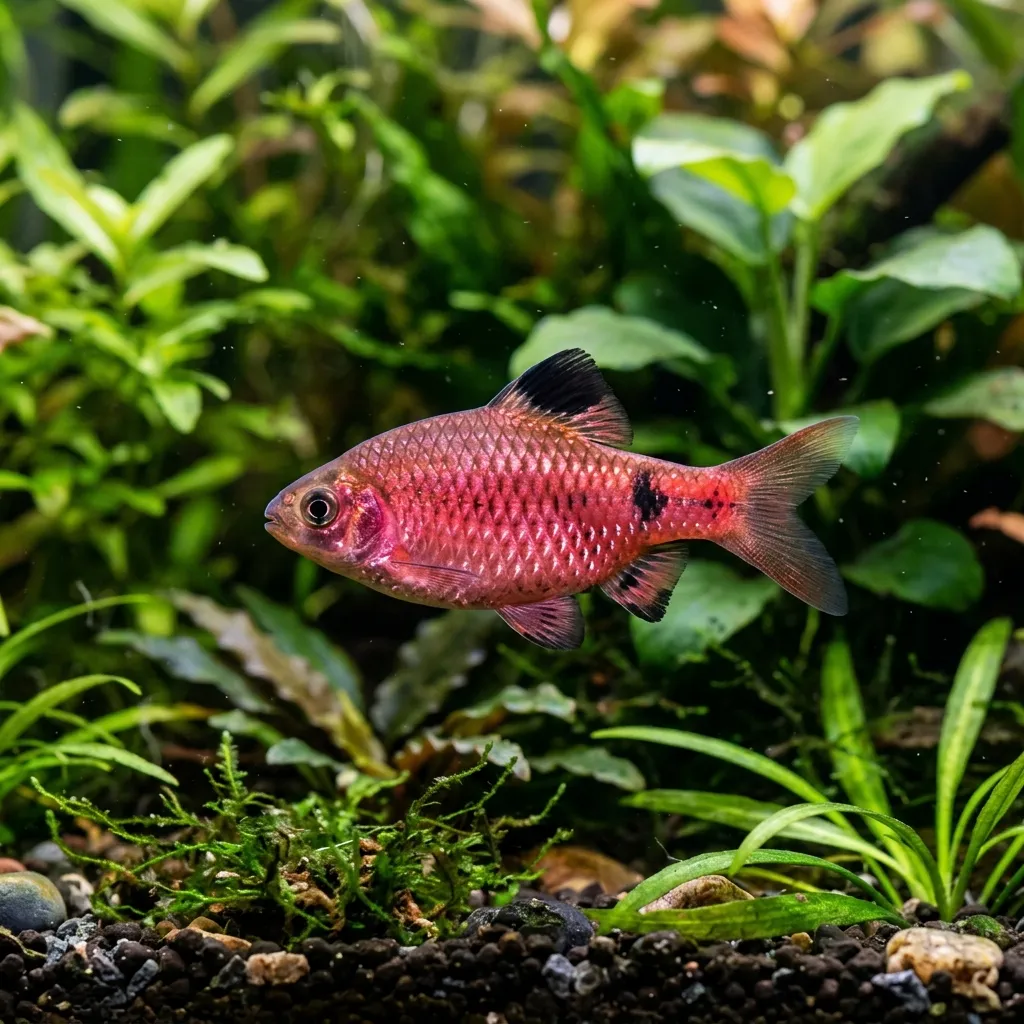
Rosy Barbs possess a classic torpedo-shaped cyprinid body with a forked caudal fin and a single dorsal fin. Like all cyprinids, they lack an adipose fin. Wild specimens display a silvery base coloration with a distinct black blotch at the caudal peduncle. Selective breeding has produced ornamental variants including the long-finned Rosy Barb and the permanently red 'Neon Rosy Barb' (also marketed as 'Glowlight Chilli Barb'). Males develop intense red-pink coloration during breeding condition, while females remain more luminous gold or silver with a fuller body profile.
Aquarium Suitability
This species represents one of the most forgiving entry points into serious fishkeeping. Their tolerance for cooler temperatures, higher nitrate levels during tank cycling, and broad dietary acceptance makes them ideal for beginners. However, their active nature and potential for fin-nipping demand proper tank sizing and schooling numbers. When housed correctly, they provide constant movement and brilliant coloration that anchors the middle water column of community aquariums.
Care
Housing and Environmental Requirements
Tank Size and Dimensions
The absolute minimum tank size for a small school of Rosy Barbs is 20 gallons (75 liters), but you must provide 30 gallons (113 liters) or larger for long-term health. The critical dimension is tank length: the footprint must measure at least 36x12 inches (90x30 cm) to accommodate their active swimming behavior. A 40-gallon breeder (36x18x16 inches / 90x45x40 cm) is the ideal starting point for a group of 8-10 individuals. Height is less important than horizontal swimming space.
Filtration and Water Flow
Rosy Barbs originate from both still and flowing waters, making them adaptable to moderate filtration flow. Use a hang-on-back filter rated for 40-50 gallons or a canister filter with adjustable flow. They appreciate gentle current but will avoid areas with strong turbulent outflow. Maintain filter media in established tanks; these fish tolerate the slightly elevated nitrates common in newly cycled aquariums, but you must perform weekly 25% water changes to keep nitrates below 20 ppm.
Substrate and Hardscape
Use dark fine gravel or sand substrate to enhance the perception of male coloration. Rosy Barbs constantly forage along the bottom, so avoid sharp-edged substrates that could damage their barbels. Incorporate smooth river rocks, driftwood, and caves to create territorial boundaries and break lines of sight. Ensure all hardscape is stable; these fish may bump into decorations during active swimming.
Plant Recommendations
Provide dense planting along the rear and sides of the aquarium while leaving a central open swimming lane. Use hardy species such as java fern, anubias, cryptoryne, and vallisneria. Avoid soft-leaved plants such as ambulia or delicate cryptocoryne varieties, as Rosy Barbs will nip at tender foliage. Floating plants such as water sprite, salvinia, or frogbit provide essential shade and reduce skittishness.
Cover and Security
Rosy Barbs are proficient jumpers. You must install a tight-fitting lid with no gaps larger than 0.5 inches (1.25 cm). Jumping typically occurs during water changes, feeding, or when startled by sudden light changes. Dim the room lights before turning on aquarium lights to prevent panic-induced leaping.
Diet
Feeding and Nutritional Requirements
Dietary Composition
Rosy Barbs are opportunistic omnivores with a digestive tract adapted for varied intake. In captivity, you must provide a diet comprising approximately 40% protein, 10% fat, and 50% plant matter and fiber. This balance supports their high activity level, maintains brilliant coloration, and prevents digestive disorders common in protein-heavy feeding regimens.
Staple Foods
Feed high-quality tropical flakes or small sinking granules as the dietary base. Select products containing spirulina, krill meal, and astaxanthin for color enhancement. Offer two small meals daily, with each portion consumed within 60 seconds. Overfeeding causes bloat and rapidly degrades water quality in their active, high-metabolism systems.
Protein Supplements
Rotate frozen or live foods including bloodworms, brine shrimp, daphnia, and mosquito larvae 3-4 times weekly. These provide essential amino acids and trigger natural hunting behavior. Live blackworms are particularly valuable for conditioning breeding stock. Avoid tubifex worms from unreliable sources due to parasite transmission risk.
Vegetable Matter
Plant fiber is non-negotiable for long-term health. Offer spirulina flakes, blanched spinach, zucchini, cucumber, or peas twice weekly. Vegetable matter prevents constipation, supports gut flora, and supplies carotenoids for red pigment synthesis. You must never feed beef heart, mammalian meat, or bread products; cyprinids lack the digestive enzymes to process these materials, leading to fatty liver disease and organ failure.
Feeding Schedule
- Morning: Small pinch of high-quality flakes or granules
- Evening: Frozen or live protein supplement, or vegetable matter on alternate days
- Fast day: Skip feeding once weekly to clear digestive systems
Special Considerations
Rosy Barbs are enthusiastic feeders that will outcompete slower tank mates during feeding. When housed with sedentary species such as corydoras or dwarf cichlids, use feeding rings or target feeding to ensure all inhabitants receive adequate nutrition. Their constant grazing behavior makes them excellent algae consumers, though they will not eliminate established algae problems.
Health
Health Management and Disease Prevention
Rosy Barbs are exceptionally hardy but not immune to common aquarium pathogens. Their cool-water preference actually provides an advantage: many parasites and bacteria proliferate more slowly at 64°F-72°F (18°C-22°C) than at standard tropical temperatures. However, their active metabolism and schooling behavior mean diseases spread rapidly through the group. Quarantine all new specimens for a minimum of 14 days before introduction to the display tank.
General Health Maintenance
Maintain stable water parameters with weekly 25% water changes. Monitor for clamped fins, color fading, or reduced appetite as early indicators of stress or illness. Rosy Barbs tolerate mild salt concentrations (1-3 ppt) well, making salt a valuable prophylactic treatment during quarantine. Avoid sudden temperature fluctuations greater than 2°F (1°C) per day.
Ichthyophthirius multifiliis (Ich / White Spot Disease)
A protozoan parasite causing white cysts on skin, fins, and gills. Highly contagious in schooling species.
- White salt-like spots across body and fins, flashing against substrate, labored breathing, clamped fins
Stress from temperature fluctuations, introduction of infected fish or plants, poor water quality weakening immune response
Quarantine all new additions for 14 days; maintain stable temperature; raise temperature gradually to 78°F-80°F (25.5°C-26.5°C) for 4 days combined with formalin or copper treatment at 0.2 mg/L
Fin Rot (Aeromonas / Pseudomonas bacterial infection)
Bacterial degradation of fin tissue, often secondary to fin-nipping injuries or poor water quality.
- Frayed or receding fin edges, white or red margins on fins, lethargy, loss of appetite
Maintain nitrates below 20 ppm; treat with broad-spectrum antibiotics such as Seachem KanaPlex or API Triple Sulfa; add 1 teaspoon aquarium salt per gallon to hospital tank; improve water change frequency
Camallanus Worm Infection (Nematode)
Internal parasitic nematode visible as red threads protruding from the vent. Common in wild-caught or farm-raised barbs.
- Red worm-like structures visible at anal opening, wasting despite normal appetite, bloated abdomen, stringy feces
Introduction of infected live food or new fish; intermediate crustacean hosts in outdoor ponds
Treat with levamisole at 2 ppm for 24 hours, repeat after 14 days; thoroughly clean substrate to remove expelled worms; quarantine live food sources; avoid feeding wild-caught invertebrates
Swim Bladder Disorder
Buoyancy dysfunction causing abnormal floating or sinking. Often dietary in cyprinids rather than bacterial.
- Inability to maintain neutral buoyancy, floating upside down or sinking to bottom, difficulty reaching food at surface
Constipation from dry flake-heavy diets, overfeeding, rapid temperature changes affecting gas gland function, physical trauma from jumping or collision
Feed blanched peas with skins removed as a natural laxative; fast for 48 hours; maintain stable temperature; increase vegetable matter in diet; verify tank lid prevents jumping injuries
Mycobacteriosis (Fish TB)
Chronic wasting disease caused by Mycobacterium species. Incurable and zoonotic to humans via open wounds.
- Progressive weight loss with normal appetite, skin ulcers, popeye, spinal deformities, erratic swimming, pale coloration
Introduction of asymptomatic carriers, poor quarantine protocols, immunosuppression from chronic stress or poor water quality
No effective treatment exists; euthanize affected individuals immediately; disinfect entire system with bleach solution; always wear gloves when performing maintenance on tanks with suspected cases; maintain rigorous quarantine for 4 weeks
Breeding
Captive Breeding Protocol
Broodstock Selection and Conditioning
Select sexually mature fish aged 9-12 months with a minimum size of 2 inches (5 cm). Condition 10-12 individuals (1 male per 2 females) in a 20-gallon (75 liter) conditioning tank for 14 days. Feed live blackworms, brine shrimp, and high-protein granules three times daily. Males will develop intense red coloration and display continuously to females.
Spawning Tank Setup
Configure a dedicated 20-gallon (75 liter) breeding aquarium with 5 inches (12 cm) of water depth—shallow water concentrates hormones and triggers spawning. Set parameters to pH 6.8, dGH 6, temperature 70°F (21°C). Install a spawning mop, java moss, or fine-leaf hornwort as egg receptors. Use a gentle sponge filter to prevent egg suction. Add methylene blue at 3 drops per gallon to prevent egg fungus.
Spawning Trigger and Process
Spawning is triggered by a combination of cool water influx and morning light. Perform a 30% water change with water 2°F (1°C) cooler than tank water the evening before expected spawning. The following morning, direct gentle light onto the tank. Males will chase females through the plants, stimulating egg release. Females scatter 200-300 adhesive eggs among the vegetation over 2-3 hours.
Post-Spawning Management
Remove all adults within 4 hours of spawning completion. Rosy Barbs are notorious spawn-robbers and will consume every egg if permitted. Eggs hatch in 24-36 hours at 68°F-70°F (20°C-21°C). Fry remain attached to surfaces for 2-3 days while absorbing their yolk sacs.
Fry Rearing
Feed infusoria or commercially available liquid fry food for the first 72 hours. Transition to microworms or vinegar eels on day 4. Introduce baby brine shrimp nauplii and powdered fry food from day 7 onward. Perform daily 10% water changes with aged, matched-temperature water. Grow-out tanks require cool water (68°F-70°F / 20°C-21°C) to prevent developmental deformities. Sexual maturity occurs at 9-12 months under optimal conditions.
Tips
Expert Tips and Common Mistakes
Critical Success Factors
- School Size is Non-Negotiable: Groups smaller than 8 guarantee behavioral problems. This is the most common mistake made by novice keepers.
- Temperature Management: Their tolerance for cool water is an asset, not a license for neglect. Unheated tanks in climate-controlled rooms are ideal, but protect against drafts and temperature swings.
- Dither Fish Applications: Use Rosy Barbs as dither fish for medium-sized cichlids such as convicts, firemouths, or blue acara. Their speed and alertness make them nearly impossible targets while encouraging shy cichlids to display natural behavior.
- Pond Season Extension: In temperate zones, add a pond heater set to 60°F (15.5°C) to extend the outdoor season by 3-4 weeks in both spring and autumn.
Common Mistakes to Avoid
- Undersized Tanks: Housing 6 Rosy Barbs in a 10-gallon (38 liter) tank causes stunting, aggression, and premature death. Their adult size demands respect.
- Long-Finned Tank Mates: Despite claims of peacefulness, individual Rosy Barbs will nip flowing fins. Betta splendens, veil angelfish, and fancy guppies are incompatible.
- Overfeeding Protein: Exclusively flake-based diets lacking vegetable matter cause constipation, fatty liver, and faded coloration within 3 months.
- Skipping Quarantine: Rosy Barbs frequently carry subclinical camallanus worm infections from commercial farms. Always quarantine and treat prophylactically with levamisole.
- Ignoring Jump Behavior: Open-top tanks result in dried specimens on the floor. Secure lids are mandatory equipment, not optional accessories.
Advanced Techniques
- Color Enhancement: Dark substrate combined with tannin-stained water from Indian almond leaves intensifies male red coloration by increasing contrast and reducing ambient light stress.
- Controlled Nipping Reduction: If persistent nipping occurs despite adequate group size, add 2-3 additional males to dilute aggression across a larger social network.
- Algae Control Squad: In established planted tanks, Rosy Barbs effectively control hair algae and brush algae without damaging hardy plant species.
Compatible Tank Mates






Species Comparison
| Feature | Rosy Barb | Tiger Barb | Cherry Barb | Odessa Barb |
|---|---|---|---|---|
| Scientific Name | Pethia conchonius | Pethia tetrazona | Pethia titteya | Pethia padamya |
| Adult Size | Up to 6 inches (15 cm) | Up to 3 inches (7.5 cm) | Up to 2 inches (5 cm) | Up to 3 inches (7.5 cm) |
| Temperament | Semi-aggressive / Boisterous | Aggressive / Highly nippy | Peaceful | Semi-aggressive |
| Minimum Tank Size | 30 gallons (113 L) | 30 gallons (113 L) | 25 gallons (95 L) | 30 gallons (113 L) |
| Temperature Range | 64°F - 72°F (18°C - 22°C) | 72°F - 82°F (22°C - 28°C) | 72°F - 81°F (22°C - 27°C) | 68°F - 77°F (20°C - 25°C) |
| Diet | Omnivore (40% protein, 50% plant matter) | Omnivore | Omnivore | Omnivore |
| Schooling Requirement | 8+ individuals strongly recommended | 6+ individuals minimum | 6+ individuals | 6+ individuals |
| Coloration | Males: Brilliant red-pink; Females: Gold-silver | Silver with four vertical black stripes; red fins | Males: Deep red; Females: Dull brown-pink | Males: Black body with red-orange stripe; Females: Duller |