
Kissing Gourami (Helostoma temminckii)
Quick Answer
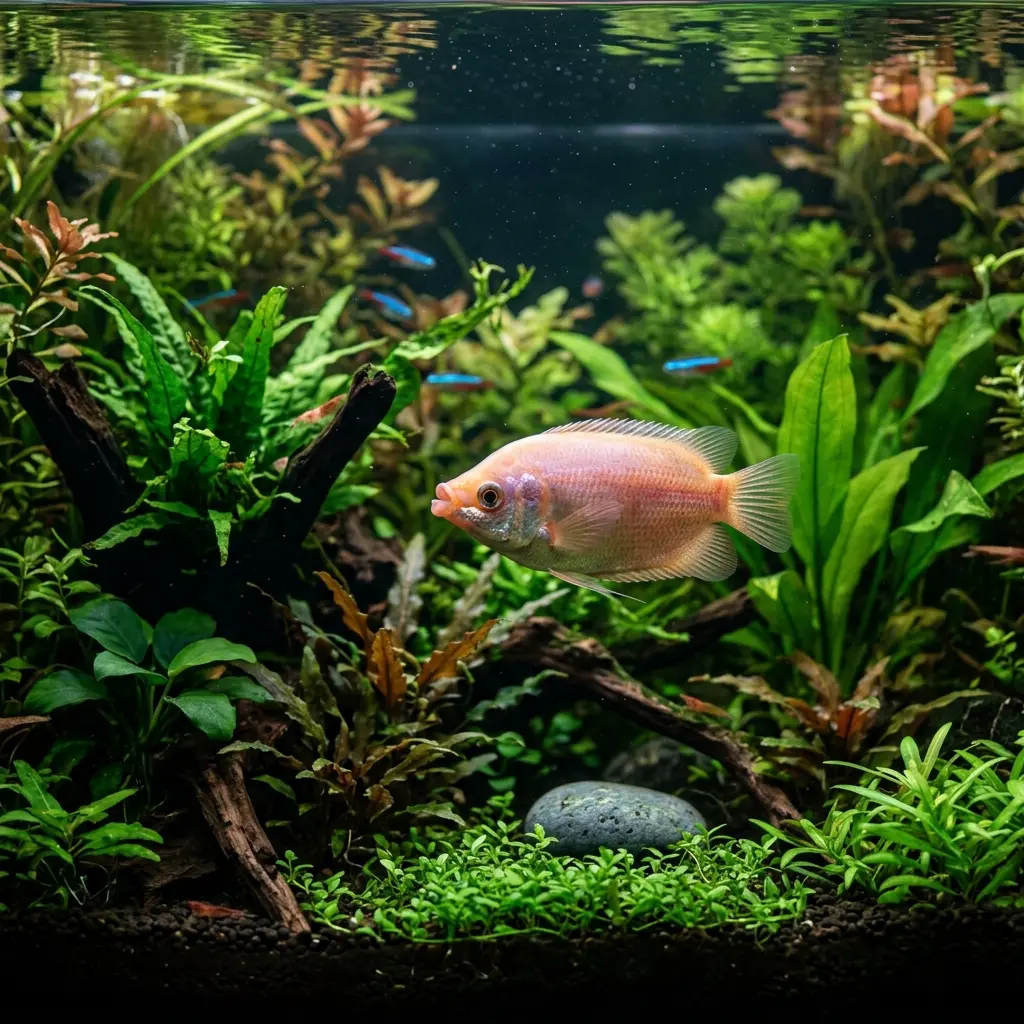
Kissing Gourami (Helostoma temminckii) is a large, unique labyrinth fish from Southeast Asia (Thailand, Malaysia, Indonesia). It requires a minimum 75-gallon (284-liter) aquarium with pH 6.0-8.0 and temperature 72-82F (22-28C). As a semi-aggressive omnivore that grows to 12 inches (30 cm), careful tank mate selection and a single-specimen-per-tank policy are essential.
Quick Facts
| Scientific Name | Helostoma temminckii |
|---|---|
| Common Names | Kissing Gourami |
| Family | Helostomatidae |
| Genus | Helostoma |
| Type | Freshwater |
| Temperament | semi-aggressive |
| Care Difficulty | intermediate |
| Lifespan | 15 years |
| Maximum Size | Up to 12 in (30 cm) |
| Diet | Omnivore |
| Temperature | 72–82°F (22–28°C) |
| pH | 6–8 |
| Hardness | 5–20 dGH |
| Minimum Size | 75 gallons |
Key Takeaways
- Maximum size of 12 inches (30 cm) with rapid juvenile growth
- Requires minimum 75 gallons (284 L); 100+ gallons strongly recommended
- Only one per tank - lip-locking is territorial combat, not affection
- Lifespan of 15-25 years - a significant long-term commitment
- Heavy herbivore that grazes algae; will eat soft-leaved plants
- Can suck slime coat off slow-moving fish like angelfish and discus
- Active jumper requiring a tight-fitting lid at all times
Overview
Species Overview
Helostoma temminckii, commonly known as the Kissing Gourami, Kissing Fish, or Pink Kissing Gourami, is one of the most distinctive and misunderstood fish in the aquarium trade. Native to Southeast Asia, this species is famous for its puckering lips and the lip-locking behavior that gives it its common name. However, this behavior is territorial combat, not affection, and it is the single most important factor in understanding this fish's care requirements.
Natural History and Distribution
This species is naturally found across Thailand, Malaysia, Indonesia, Sumatra, Borneo, and Java. It inhabits sluggish or standing waters of tropical lakes, canals, swamps, ponds, and slow-moving rivers. During the rainy season, they migrate through rivers to shallow lakes and floodplains to spawn. They are typically found near the water surface due to their labyrinth organ, which allows them to breathe atmospheric air in oxygen-depleted waters.
Physical Characteristics
Adults reach a maximum length of 12 inches (30 cm) in aquariums, with wild specimens occasionally exceeding this. The most notable feature is the protruding, fleshy lips with an extra joint that allows them to extend forward. Hundreds of small, enamel-covered teeth line the lips for scraping algae and food from surfaces. Wild forms are gray to green with a dark bar along the base of the caudal fin. The aquarium trade primarily offers artificially produced pink and balloon morphs; the balloon morph has a shortened body length and is generally considered less hardy than the standard form.
Conservation Status
The IUCN lists Helostoma temminckii as Not Evaluated. While not currently threatened, habitat destruction, pollution, and agricultural expansion in Southeast Asia pose risks to wild populations. The species has been introduced to Florida but is not yet established. The aquarium trade relies on both wild-caught and farm-raised specimens.
Diet
Diet and Feeding
Kissing Gouramis are omnivores with a strong herbivorous lean. Their specialized lips are adapted for scraping algae, biofilm, and detritus from surfaces. In the aquarium, you must provide a diet that satisfies both their grazing instinct and their protein requirements.
Health
Health and Disease Management
Kissing Gouramis are generally hardy when their basic needs are met, but their large size and grazing habits make them susceptible to specific health issues. Prevention through proper water quality, diet, and tank size is far more effective than treatment.
Ich (White Spot Disease)
A parasitic infection caused by Ichthyophthirius multifiliis, appearing as tiny white salt-like dots on fins and body.
- Small white cysts (0.5-1 mm) covering body and fins; fish rubbing against substrate or decor; rapid gill movement; clamped fins; reduced appetite.
Introduction via new fish, plants, or equipment. Stress from poor water quality, temperature fluctuations, or inadequate tank size lowers immunity and allows the parasite to proliferate.
Quarantine all new additions for 2-4 weeks. Maintain stable temperature between 72-82F (22-28C). Treat with Ich-X at standard dose. Gradually raise temperature to 86F (30C) to accelerate parasite life cycle. Ensure tank is fully cycled before adding fish.
Fin Rot
A bacterial infection causing progressive deterioration of fin tissue, often secondary to fin nipping or poor water quality.
- Fraying, shredding, or receding fin edges; red or inflamed fin bases; white or cloudy edges on fins; lethargy.
Gram-negative bacterial infection (Aeromonas, Pseudomonas) triggered by poor water quality, fin nipping from tank mates, or injury from rough decor. High nitrate levels accelerate the condition.
Perform immediate 50% water change at first sign. Treat with antibacterial medication (Maracyn or KanaPlex) at standard dose. Remove carbon from filter during treatment. Address underlying cause such as aggressive tank mates or inadequate filtration.
Fungal Infection (Saprolegnia)
Cotton-like fungal growth on body or fins, typically secondary to an existing injury, lip damage from fighting, or bacterial infection.
- Fluffy white or gray cotton-ball patches on body, fins, mouth, or lips; patches grow outward from a central point; fish may rub against objects.
Saprolegnia species opportunistically infecting wounds from lip-locking combat, fin nipping, or untreated bacterial infections. Poor water quality and low temperature favor fungal growth.
Treat with API Pimafix or Maracyn Oxy at standard dose. Address the underlying injury or infection first. Maintain water temperature above 72F (22C). Ensure decor is smooth and tank size is adequate to prevent territorial fighting.
Internal Parasites
Worm or protozoan infections in the digestive tract causing chronic wasting despite normal appetite, common in farm-raised specimens.
- Sunken belly; stringy white or clear feces; visible wasting over 2-4 weeks; lethargy; loss of color; bloating in advanced cases.
Introduction via farm-raised stock or contaminated live foods. Common culprits include nematodes (Camallanus, Capillaria) and protozoans (Hexamita). Farm-raised kissing gouramis are particularly prone due to high-density rearing conditions.
Treat with Praziquantel (for flukes and tapeworms) or Metronidazole (for protozoans) mixed into food. Use a 3-day course, followed by a 25% water change, then repeat. Quarantine all new fish for 2-4 weeks. Source fish from reputable breeders when possible.
Obesity and Fatty Liver Disease
A diet-related condition caused by overfeeding and excessive protein intake, leading to hepatic lipidosis and reduced lifespan.
- Distended, rounded belly disproportionate to body size; lethargy; reduced activity; pale feces; loss of appetite in advanced stages.
Overfeeding, excessive protein-rich foods (bloodworms, beef heart), lack of vegetable matter, and insufficient grazing opportunities. Kissing gouramis are enthusiastic eaters that will consume food beyond their metabolic needs.
Feed twice daily with portions consumed in 2-3 minutes. Ensure 50% of the diet is plant matter (spirulina, vegetables, algae wafers). Implement a weekly fasting day. Provide algae-covered surfaces for natural grazing. Monitor body condition weekly.
Breeding
Breeding Kissing Gouramis
Breeding Helostoma temminckii in captivity is very difficult and impractical for home aquarists. While the species breeds readily in aquaculture facilities, the massive tank requirements, enormous number of eggs, and lack of parental care make home breeding a challenge suited only to dedicated enthusiasts with substantial resources.
Tips
Common Mistakes to Avoid
- Buying for a small tank: The most common mistake is purchasing a juvenile for a 20- or 30-gallon tank with plans to upgrade later. This causes irreversible stunting and organ damage.
- Keeping more than one: Two kissing gouramis in any tank under 200 gallons will fight continuously. The lip-locking is not cute; it is territorial combat.
- Soft-leaved plants: Planting Cabomba, Elodea, or delicate Cryptocoryne is a waste of money. These will be consumed within days.
- Overfeeding protein: A diet of bloodworms and brine shrimp causes obesity and fatty liver. Plant matter must comprise 50% of the diet.
- No lid: Kissing gouramis are powerful jumpers. An open tank is a death sentence.
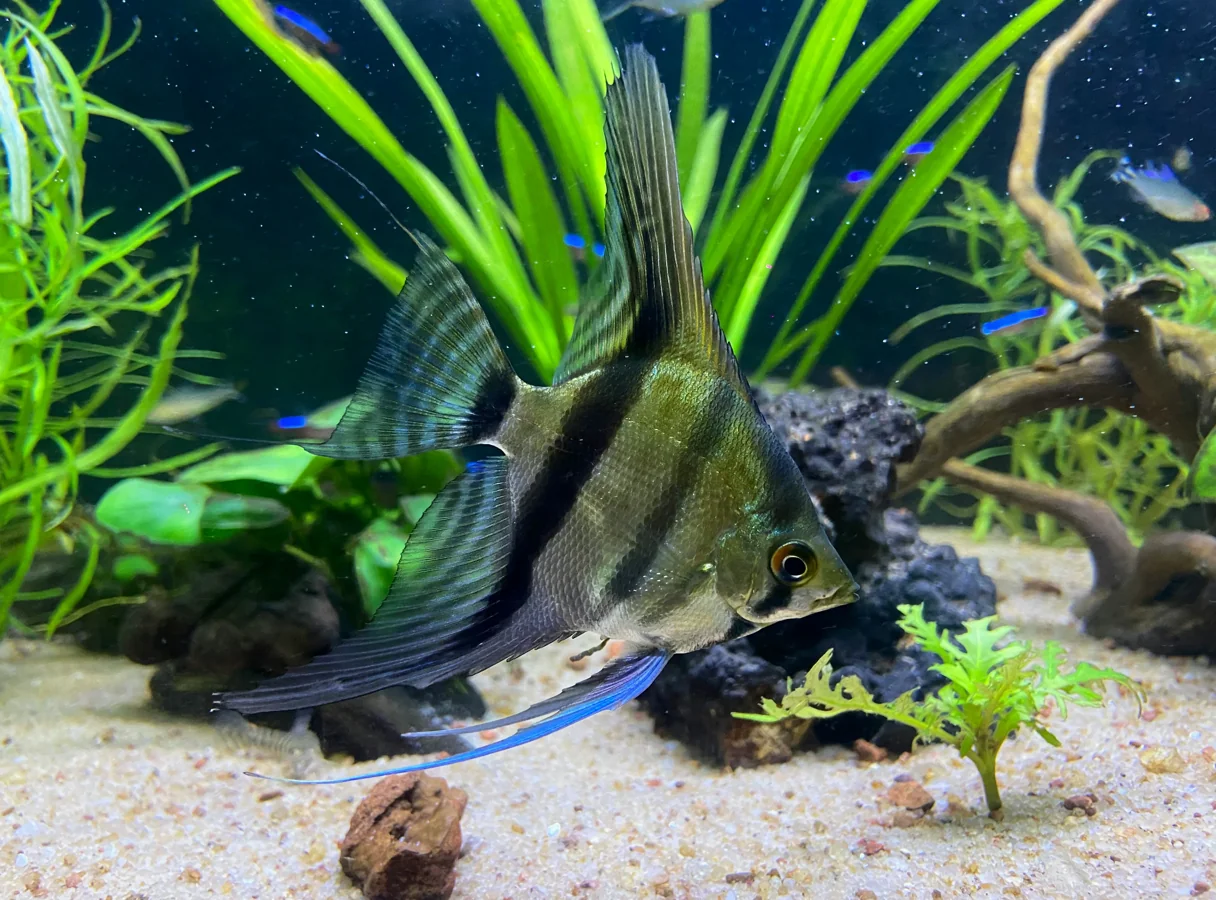
- Housing with slow fish: Angelfish, discus, and bettas will have their slime coat sucked off, leading to open sores and death.
- Inadequate filtration: A hang-on-back filter on a 75-gallon kissing gourami tank is insufficient. Use a canister filter rated for 150+ gallons.
Expert Tips for Success
- Plan for the adult size from day one: A 2-inch juvenile will reach 12 inches within 18-24 months. Purchase the final tank size, not a grow-out tank.
- Let algae grow on the back glass: This is a free, natural food source that provides enrichment and supplements their herbivorous diet. Only clean the front and side viewing panels.
- Use a canister filter: Kissing gouramis are heavy waste producers. A canister filter rated for 2x tank volume is the minimum for maintaining water quality.
- Provide air space at the surface: These fish gulp air frequently. Ensure 2-3 inches (5-7 cm) of clearance between the water line and the lid to prevent lip and head injuries.
- Source from reputable breeders: Farm-raised specimens often carry internal parasites. Quarantine for a full 4 weeks and perform preventive deworming.
- Monitor for slime coat feeding: If tank mates develop raw patches or open sores, the kissing gourami is likely sucking their slime coat. Remove the victim immediately.
Compatible Tank Mates
Species Comparison
| Feature | Kissing Gourami | Pearl Gourami (Trichopodus leerii) | Blue Gourami (Trichopodus trichopterus) | Giant Gourami (Osphronemus goramy) |
|---|---|---|---|---|
| Adult Size | 12 in (30 cm) | 4.5 in (11 cm) | 6 in (15 cm) | 28 in (70 cm) |
| Temperament | Semi-aggressive, territorial | Peaceful, shy | Semi-aggressive | Peaceful but boisterous |
| Minimum Tank Size | 75 gal (284 L) for one | 30 gal (114 L) | 35 gal (132 L) | 200 gal (757 L) |
| Diet | Omnivore - heavy herbivore; algae grazer | Omnivore - accepts flakes and live foods | Omnivore - accepts most prepared foods | Omnivore - vegetables, pellets, live foods |
| Ideal pH Range | 6.0 - 8.0 | 6.5 - 8.0 | 6.0 - 8.0 | 7.0 - 8.0 |
| Social Behavior | Solitary; one per tank only | Pairs or small groups | Pairs or small groups | Solitary or pairs in very large tanks |
| Plant Compatibility | Eats soft-leaved plants; needs tough species | Plant-safe; appreciates planted tanks | May nibble soft plants | Will uproot and eat most plants |
| Breeding Difficulty | Very difficult; 100+ gal required | Moderate; bubble nest builder | Moderate; bubble nest builder | Difficult; mouthbrooder |