
YoYo Loach (Botia almorhae)
Quick Answer
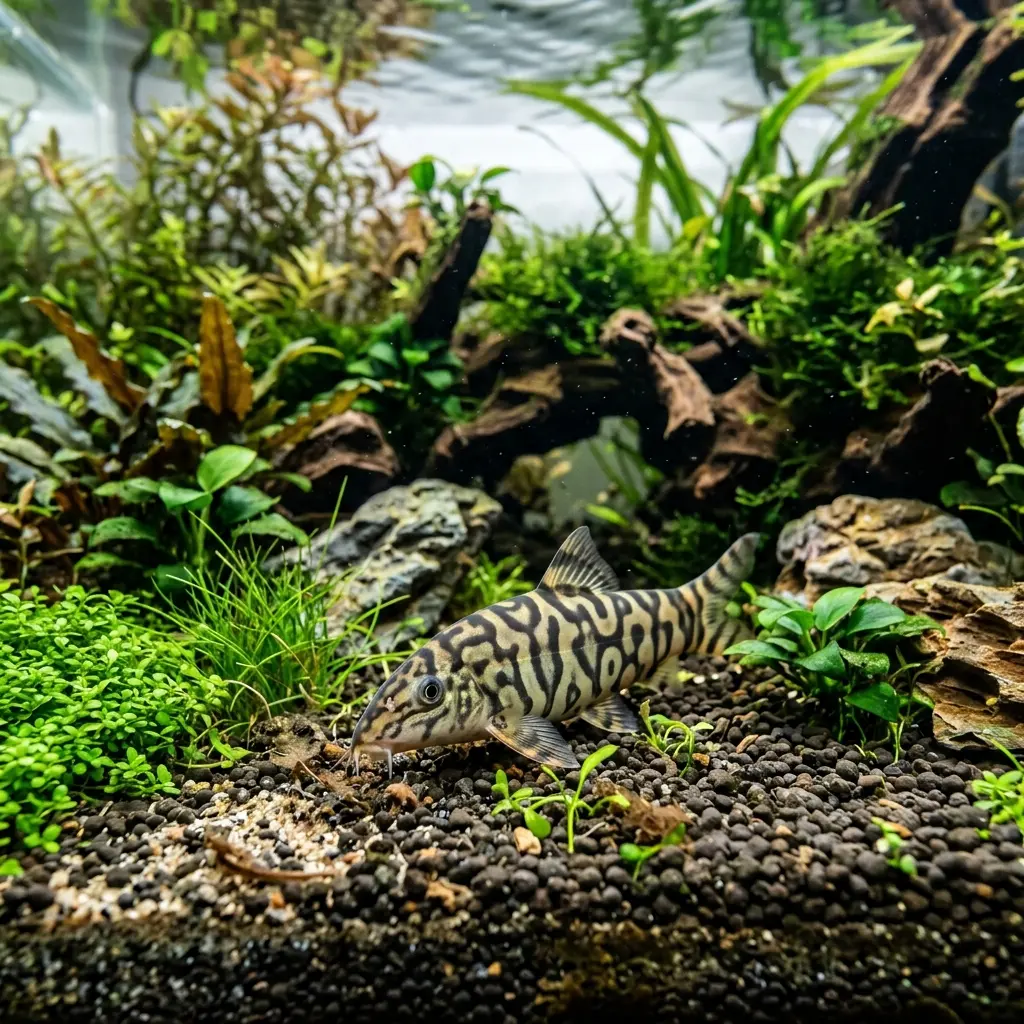
YoYo Loach (Botia almorhae) is an active, social bottom-dwelling freshwater fish renowned for its snail-hunting prowess and playful behavior. It requires a minimum 40-gallon (151 liter) breeder aquarium with a group of 4 to 6 individuals, pH 6.5 to 7.5, temperature 75F to 82F (24C to 28C), and fine sand substrate. This scaleless omnivore needs high dissolved oxygen, subdued lighting, and specific medication dosing to thrive.
Quick Facts
| Scientific Name | Botia almorhae |
|---|---|
| Common Names | YoYo Loach |
| Family | Cobitidae |
| Genus | Botia |
| Type | Freshwater |
| Temperament | peaceful |
| Care Difficulty | intermediate |
| Lifespan | 8 years |
| Maximum Size | Up to 6 in (15 cm) |
| Diet | Omnivore |
| Temperature | 75–82°F (24–28°C) |
| pH | 6.5–7.5 |
| Hardness | 3–12 dGH |
| Minimum Size | 40 gallons |
Key Takeaways
- Requires a minimum 40-gallon (151 liter) breeder tank with 36x18 inch (91x46 cm) footprint for a group of 4 to 6.
- Mandatory fine sand substrate; sharp gravel causes barbel erosion, the most common preventable ailment.
- Functionally scaleless; copper, malachite green, and formalin must be dosed at half strength. Hikari Ich-X is the exception at full label rate.
- High dissolved oxygen is non-negotiable; calm water surfaces indicate insufficient aeration.
- Excellent biological snail control; extracts snails from shells using specialized pharyngeal teeth.
- Skinny disease from internal parasites is common in wild-caught specimens; quarantine for 4 to 6 weeks with prophylactic antiparasitic treatment.
- Not reliably bred in home aquaria; focus on long-term care rather than breeding projects.
- Tight-fitting lid is mandatory; powerful jumpers that will escape through the smallest gap.
Diet
Nutritional Requirements
YoYo loaches are opportunistic omnivores with a strong preference for protein-rich foods. In the wild, they consume snails, insect larvae, small crustaceans, detritus, and algae. In captivity, their diet must be varied to maintain health, coloration, and immune function.
Macronutrient Profile
Target a dietary composition of approximately 45% protein, 10% fat, and 45% plant matter and fiber. Their high protein requirement reflects their carnivorous-leaning omnivory and active metabolism.
Recommended Foods
- Staple: High-quality sinking pellets or granules formulated for bottom-feeders. Choose brands containing fish meal, shrimp meal, and spirulina as primary ingredients. The food must sink; YoYos rarely feed from the surface.
- Protein supplement (daily): Frozen or live bloodworms, brine shrimp, Mysis shrimp, daphnia, and chopped earthworms. These provide essential amino acids and stimulate natural hunting behavior.
- Plant matter (3 times weekly): Spirulina wafers, algae wafers, blanched zucchini, cucumber, or spinach. Plant fiber supports digestive health and prevents constipation.
- Snails (natural live food): If pest snails are present, YoYos will actively hunt them. This is their preferred natural food source and provides excellent enrichment. They extract snails from shells using specialized pharyngeal teeth.
- Occasional treats: Chopped cocktail shrimp, thawed frozen Mysis, and blackworms. Avoid overfeeding these rich foods as YoYos are greedy and prone to obesity.
Feeding Schedule
Feed twice daily in the evening or just after lights are turned off, as YoYos are most active during crepuscular and nocturnal periods. Offer portions consumed within 2 to 3 minutes. They will also scavenge leftover food from other tank inhabitants. Fast the tank for 24 hours once weekly. Overfeeding causes obesity and water quality degradation; these fish are voracious and will beg continuously.
Critical Dietary Restrictions
Never feed beef heart, chicken, pork, or any mammalian protein. Loaches lack the digestive enzymes to process mammalian muscle tissue, which causes intestinal blockages, bloat, and premature mortality. Avoid tubifex worms from questionable sources, as they are common vectors for internal parasites.
Breeding
Breeding YoYo Loaches in Captivity
YoYo loaches have not been reliably bred in home aquaria. While mature females regularly fill with spawn and males display courtship behavior, successful captive breeding is exceptionally rare and typically requires hormonal stimulation or accidental triggers in very large, mature systems.
Sexual Maturity
YoYos reach sexual maturity at approximately 12 months under optimal conditions. Females become noticeably plumper and round-bodied when gravid. Males may develop reddish coloration around the barbels and mouth. Spawning behavior includes increased chasing, dorsal fin displays, and lateral posturing.
Documented Breeding Triggers
The few documented successes have occurred in tanks of 75 gallons (284 liters) or larger with established colonies of 6 to 8 fish aged 2 years or more. The reported trigger is simulation of the monsoon rainy season:
- Lower temperature gradually to 70F to 72F (21C to 22C) over 3 days.
- Perform a 50% water change with slightly cooler, soft water over 4 hours.
- Increase water flow significantly to simulate flooded stream conditions.
- Increase feeding with high-protein live foods for 2 weeks prior.
Spawning and Egg Care
YoYos are egg-scatterers. Females may release 1,000 to 3,000 adhesive eggs over fine-leaf plants such as java moss or cabomba. Parents must be removed immediately after spawning because they will consume the eggs. Eggs hatch in 24 to 36 hours at 75F (24C). The fry are extremely small and require green water (suspensions of microscopic algae) for the first 5 days, followed by infusoria and then newly hatched brine shrimp.
Home Aquarium Reality
Do not purchase YoYo loaches with the intention of breeding them. Focus on providing excellent long-term care. Commercial breeding occurs primarily in large outdoor ponds in Southeast Asia where temperature and water chemistry can be manipulated on a massive scale. If accidental spawning occurs in your tank, remove the eggs or parents promptly and be prepared for extremely difficult fry rearing with high mortality rates.
Compatible Tank Mates






Species Comparison
| Feature | YoYo Loach | Clown Loach | Kuhli Loach | Zebra Loach | Dojo Loach |
|---|---|---|---|---|---|
| Scientific Name | Botia almorhae | Chromobotia macracanthus | Pangio kuhlii | Botia striata | Misgurnus anguillicaudatus |
| Adult Size | 4 to 6 inches (10 to 15 cm) | 12 to 16 inches (30 to 41 cm) | 3 to 4 inches (7.6 to 10 cm) | 3.5 to 4 inches (9 to 10 cm) | 6 to 8 inches (15 to 20 cm) |
| Temperament | Peaceful; boisterous and active | Peaceful; gentle giant | Peaceful; extremely shy | Peaceful; moderately active | Peaceful; weather-sensitive |
| Minimum Tank Size | 40 gallons (151 L) breeder | 75 gallons (284 L) | 20 gallons (76 L) | 30 gallons (114 L) | 55 gallons (208 L) |
| Temperature Range | 75F to 82F (24C to 28C) | 78F to 86F (26C to 30C) | 75F to 82F (24C to 28C) | 73F to 79F (23C to 26C) | 65F to 75F (18C to 24C) |
| Scale Type | Very small embedded scales; functionally scaleless | Very small embedded scales; functionally scaleless | Scaleless | Very small embedded scales; functionally scaleless | Very small embedded scales; functionally scaleless |
| Snail Control | Excellent; primary diet component | Excellent; primary diet component | Poor; too small and timid | Good; moderate snail consumption | Moderate; occasional snail eating |