
Blue Gourami (Trichopodus trichopterus)
Quick Answer
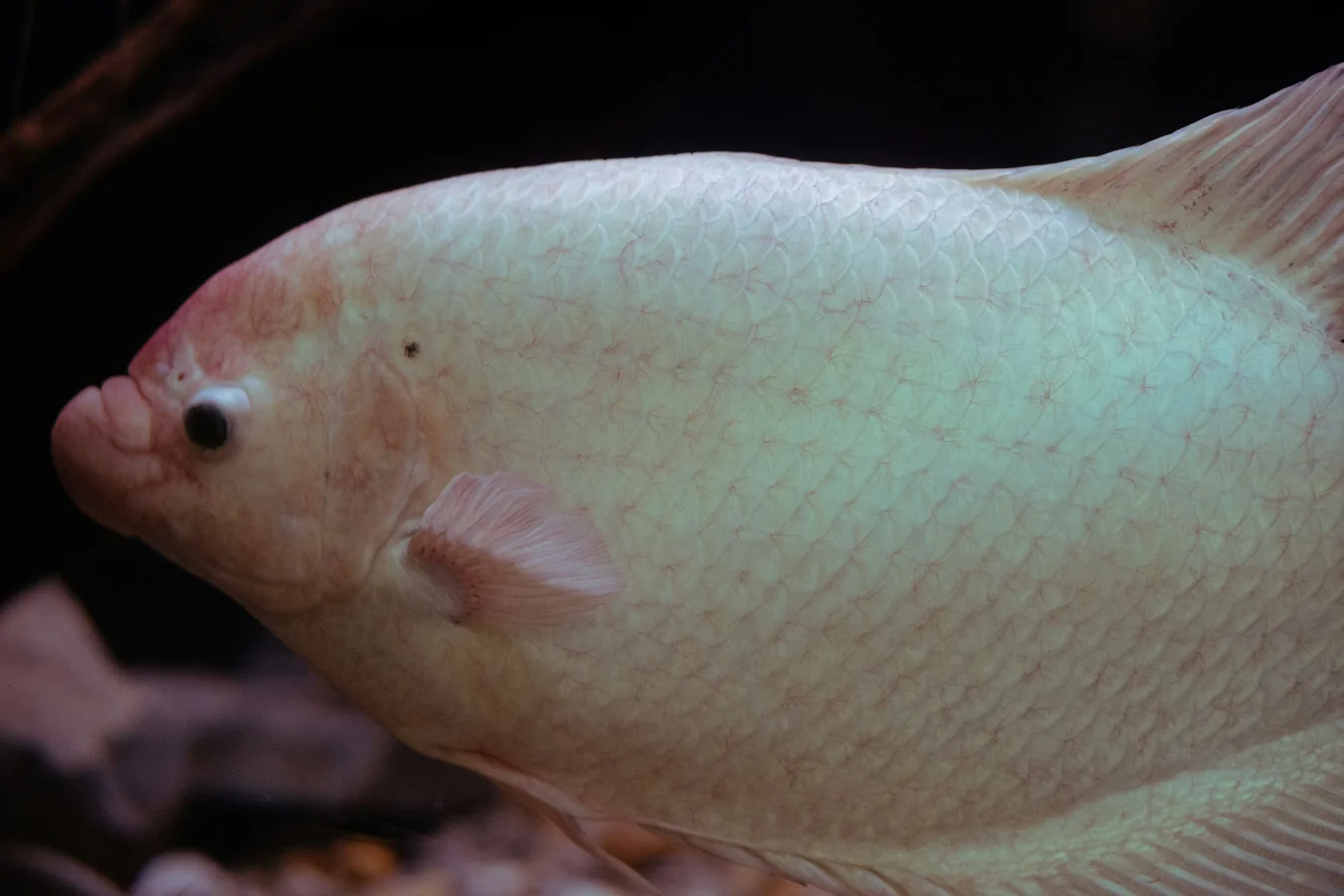
Blue Gourami (Trichopodus trichopterus), also known as the Three Spot Gourami, is a hardy labyrinth fish native to Southeast Asia. It requires a minimum 35 gallon (132 liter) aquarium with a pH of 6.0 to 8.0 and temperature range of 72 to 82 degrees Fahrenheit (22 to 28 degrees Celsius). As a semi-aggressive omnivore with a labyrinth organ, careful tank mate selection, surface access, and gentle water flow are essential.
Quick Facts
| Scientific Name | Trichopodus trichopterus |
|---|---|
| Common Names | Blue Gourami |
| Family | Osphronemidae |
| Genus | Trichopodus |
| Type | Freshwater |
| Temperament | semi-aggressive |
| Care Difficulty | beginner |
| Lifespan | 6 years |
| Maximum Size | Up to 5 in (13 cm) |
| Diet | Omnivore |
| Temperature | 72–82°F (22–28°C) |
| pH | 6–8 |
| Hardness | 5–20 dGH |
| Minimum Size | 35 gallons |
Key Takeaways
- Requires a minimum 35 gallon (132 liter) aquarium for a single adult; 55 gallons (208 liters) for a pair or community setup
- Possesses a labyrinth organ requiring constant access to atmospheric air at the water surface
- Semi-aggressive and territorial; keep one male per tank or one male with 2 to 3 females in 55+ gallons
- Known to actively hunt and consume hydra and planaria, providing natural pest control
- Builds bubble nests for breeding; males guard eggs and fry aggressively
- Sensitive to strong currents and surface agitation; use gentle filtration only
Overview
Species Overview
Natural History and Origin
The Blue Gourami (Trichopodus trichopterus), also commonly called the Three Spot Gourami or Opaline Gourami, is one of the most popular and widely distributed ornamental fish in the aquarium trade. Native to the shallow lowland marshes, swamps, peatlands, slow-moving streams, canals, ditches, ponds, and flooded forests of Southeast Asia, their range extends from the Mekong River basin in southern China through Vietnam, Laos, Cambodia, Thailand, Myanmar, Malaysia, Sumatra, Java, and Kalimantan. Introduced populations have established themselves in Sulawesi, the Philippines, Taiwan, Papua New Guinea, Trinidad, and even the Caribbean and South America, testament to their remarkable adaptability.
Physical Description
Adult Blue Gouramis reach a maximum length of 5 inches (12.7 cm), with females often growing slightly larger and rounder-bodied than males. The body is laterally compressed and elongated with large, rounded fins. The scientific name trichopterus derives from the Greek words trichiasis (hairy) and pteron (wing), referring to their long, hair-like pelvic fins that contain touch-sensitive cells used for tactile exploration. The species displays two distinct dark blue to black spots over their silver-blue bodies: one at the center of the body and a second at the base of the caudal fin. The third spot that gives them their common name is their eye. Males are more vibrantly colored with longer, pointed dorsal and anal fins, while females have shorter, rounded fins and a fuller body profile. Body color can shift dramatically depending on mood, health, dominance status, and breeding condition, ranging from pale silver to deep iridescent blue.
The Labyrinth Organ
Blue Gouramis possess a specialized suprabranchial organ known as the labyrinth organ, located in a chamber above the gills. This organ consists of folded, vascularized bony plates (lamellae) that allow the fish to extract oxygen directly from atmospheric air. This adaptation evolved to survive in stagnant, oxygen-depleted waters such as swamps and marshes where dissolved oxygen levels regularly drop below survivable thresholds for gill-breathing fish. In the aquarium, this means they must have constant, uninterrupted access to calm air at the water surface. Strong surface agitation, airstones, or spray bars that break the surface tension prevent proper labyrinth breathing and cause chronic stress. Furthermore, the air above the water must be warm and humid; cold or dry drafts damage the delicate labyrinth tissue, leading to irreversible respiratory failure.
Conservation and Trade
Wild populations are listed as Not Evaluated by the IUCN. The vast majority of specimens in the aquarium trade are commercially bred in Southeast Asian fish farms and Florida aquaculture facilities. Their hardiness, wide parameter tolerance, and striking appearance make them a staple in the hobby. However, mass production has led to some color strain dilution, with less vivid specimens entering the market. Serious aquarists should select fish with bold spot contrast and bright blue iridescence.
Care
Aquarium Care Requirements
Tank Size and Dimensions
The absolute minimum tank size for a single adult Blue Gourami is 35 gallons (132 liters) with a footprint of at least 36 by 15 inches (91 by 38 cm). For a pair or a community setup, you must provide 55 gallons (208 liters) or larger with a footprint of 48 by 18 inches (122 by 46 cm). These are active, roaming fish that establish and patrol territories. Inadequate space triggers severe aggression, chronic stress, and stunted growth. Tank height is secondary to length and width; a standard 12 to 16 inch (30 to 41 cm) water column is sufficient, though they appreciate some vertical swimming space.
Filtration and Water Flow
Use a sponge filter, hang-on-back filter with an adjustable flow baffle, or a canister filter with a spray bar directed at the glass to dissipate current. Strong surface agitation is detrimental to labyrinth fish. Airstones and bubble wands should be positioned away from the primary surface area or avoided entirely. The filter should turn over the tank volume 4 to 6 times per hour, but flow must be gentle. Add an air stone near the surface in one corner to create gentle water movement that enhances oxygenation without disturbing the main surface area where gouramis breathe. Always ensure filter intakes are covered with coarse foam to protect their long, flowing fins from being drawn in.
Substrate and Hardscape
Use dark fine gravel or sand substrate to enhance their blue coloration and reduce stress. Bright substrates cause washed-out coloration. Add driftwood, caves, rock piles, and tall plants to create at least 3 distinct visual barrier zones. Breaking lines of sight is critical for reducing territorial aggression. Smooth rocks and rounded driftwood are preferred; sharp edges can tear their delicate ventral fin filaments.
Plant Recommendations
Plant densely with Cryptocoryne, Anubias, Java fern, Amazon sword, Vallisneria, and Cryptocoryne balansae. Floating plants are mandatory: Amazon frogbit, water lettuce, duckweed, and hornwort provide surface cover, reduce overhead light intensity, and give subordinate fish refuge from dominant individuals. Stem plants such as Rotala wallichii, Bacopa, and Ludwigia add mid-level cover. Fast-growing plants are recommended as Blue Gouramis may nibble on soft leaves; hardy species withstand this grazing behavior.
Lighting
Maintain moderate lighting intensity for 8 to 10 hours daily. Bright, unfiltered light suppresses their natural blue iridescence and increases stress. Use dimmable LED fixtures or rely on floating plants to create dappled light patterns. A photoperiod with a gradual dawn and dusk simulation reduces stress and encourages natural behavior.
Tank Lid Requirements
A tight-fitting lid or canopy is non-negotiable for Blue Gouramis. They are moderate jumpers, especially when startled, excited, or during breeding. More critically, the lid traps warm, humid air above the water surface, which is essential for healthy labyrinth organ function. Cold room air entering an open-top tank damages labyrinth tissue. Ensure the lid has minimal gaps and maintain room temperature above 68 degrees Fahrenheit (20 degrees Celsius) to prevent cold air from chilling the surface microclimate.
Common Care Mistakes
- Keeping two males in under 55 gallons (208 liters): Results in severe fighting, injury, and death.
- Strong surface agitation from airstones or spray bars: Prevents labyrinth breathing and causes chronic stress.
- Open-top tanks in cold or dry rooms: Damages labyrinth organ tissue irreversibly.
- Housing with long-finned fish: Blue Gouramis are notorious fin nippers.
- Inadequate hiding spots: Subordinate fish become chronically stressed and pale.
- Skipping quarantine: Commercially bred fish may carry internal parasites and bacterial infections.
Diet
Diet and Feeding Protocol
Nutritional Requirements
Blue Gouramis are omnivores with large appetites and an active hunting instinct. Their dietary composition should target 40 percent protein, 10 percent fat, and 50 percent plant matter and fiber. In the wild, they consume insects, insect larvae, small crustaceans, zooplankton, algae, and detritus. In captivity, their upward-facing mouths are adapted for surface and mid-water feeding; they struggle to consume food that sinks rapidly to the substrate.
Recommended Foods
- Staple: High-quality floating flakes or pellets formulated for omnivorous tropical fish. Look for products containing fish meal, shrimp meal, spirulina, and wheat germ.
- Protein supplement (4 to 5 times weekly): Freeze-dried or frozen bloodworms, brine shrimp, daphnia, and tubifex worms. Live blackworms and white worms are excellent conditioning foods for breeding pairs.
- Plant matter (weekly): Blanched zucchini, spinach, peas (shelled), and spirulina wafers. These provide essential fiber and prevent constipation.
- Live prey (occasional): Small insects such as fruit flies, pinhead crickets, or wingless fruit flies stimulate natural hunting behavior and provide enrichment.
Feeding Schedule
Feed small portions twice daily, offering only what the fish can consume within 3 minutes. Their large appetites make them prone to overeating and obesity. Fast the tank one day per week to clear digestive tracts and reduce waste accumulation. Spread food across the surface to allow subordinate fish access; dominant individuals will monopolize a single feeding zone.
Natural Pest Control
Blue Gouramis are one of the few aquarium fish that actively hunt and consume hydra and planaria. If your tank develops a hydra infestation, introducing a Blue Gourami often eliminates the problem within 2 to 3 weeks without chemical intervention. This biological control capability is rarely mentioned by competitors and represents a significant practical benefit for planted tank enthusiasts.
Foods to Avoid
- Beef heart and mammalian proteins: Gouramis cannot metabolize mammalian lipids effectively, leading to fatty liver disease.
- Large pellets: Food particles exceeding 3 mm are difficult for them to consume and will foul the water.
- Exclusively flake diets: Low-quality flakes lacking plant matter and fiber cause constipation and nutritional deficiencies.
- Sinking tablets intended for bottom feeders: Their upward-facing mouths are not adapted for substrate feeding.
Expert Tip: Color Enhancement
To maximize blue iridescence and spot contrast, provide foods rich in carotenoids and astaxanthin, such as krill-based pellets, color-enhancing flakes, and cyclops. Maintain stable water parameters and provide surface cover; stress causes rapid color fading and spot disappearance regardless of diet quality.
Health
Health, Disease, and Treatment Protocols
General Health Considerations
Blue Gouramis are among the hardiest fish in the aquarium hobby, tolerating a wide range of water parameters and surviving in conditions that would kill more sensitive species. However, their hardiness should not breed complacency. Poor water quality, inadequate surface access, and improper medication dosing remain the leading causes of illness. Their labyrinth organ is particularly vulnerable to ammonia damage and cold air exposure. Additionally, their long, flowing ventral fins are susceptible to tearing from sharp decor, aggressive tank mates, and strong filter intakes.
Medication Sensitivity
Blue Gouramis tolerate copper-based medications up to 0.2 mg per liter, making them more resilient than tetras or scaleless fish. However, they are sensitive to formalin and malachite green; these should be dosed at half-strength if used at all. Praziquantel is safe for internal parasites. Salt baths up to 5 ppt effectively treat ich and external parasites but should not exceed 14 days. Metronidazole is safe for internal flagellates and hexamita. Always prefer medicated foods over water-borne treatments for freshwater fish, as they do not drink water and absorb dissolved medications poorly through the skin and gills.
Labyrinth Organ Health
The labyrinth organ is the single most critical structure for Blue Gourami health. Ammonia levels above 0.25 ppm damage the vascularized lamellae, causing irreversible respiratory impairment. Cold air drafts or dry room conditions above the tank dry out labyrinth tissue, leading to chronic gasping and eventual death. Ensure the tank has a tight-fitting lid and maintain room temperature above 68 degrees Fahrenheit (20 degrees Celsius). Never move labyrinth fish in open containers during cold weather; the sudden exposure to cold air can cause immediate organ damage.
Preventive Health Measures
- Quarantine all new fish for 14 to 21 days.
- Maintain nitrates below 30 ppm through weekly 25 percent water changes.
- Ensure constant surface access with minimal agitation.
- Use a tight-fitting lid to maintain humid air above the water.
- Cover filter intakes to protect long ventral fins.
- Source fish from reputable breeders to avoid inbred or diseased stock.
Ichthyophthirius multifiliis (Ich or White Spot Disease)
A common protozoan parasite causing white salt-grain-like spots on the body and fins.
- Small white cysts covering body, fins, and gills; rubbing against decor (flashing); rapid breathing; clamped fins; lethargy in advanced stages.
Introduction via new fish, plants, or equipment. Triggered by temperature fluctuations and stress-induced immunosuppression.
Quarantine all additions. Maintain stable temperature between 75 and 80 degrees Fahrenheit (24 to 27 degrees Celsius). Treat with gradual temperature increase to 82 to 84 degrees Fahrenheit (28 to 29 degrees Celsius) combined with a salt bath at 3 to 5 ppt for 10 to 14 days. Avoid malachite green at full strength; use half-dose if necessary.
Fin Rot (Aeromonas, Pseudomonas species)
Bacterial degradation of fin tissue, typically beginning at the edges and progressing toward the body.
- Frayed, ragged, or receding fin edges with white, red, or black discoloration. In severe cases, fin tissue erodes to the fin base and may progress to body rot.
Poor water quality, especially elevated nitrates and organic waste. Often triggered by fin-nipping tank mates, sharp decor, or strong filter suction damaging fins.
Perform weekly 25 percent water changes. Remove aggressive fin-nipping tank mates. Cover filter intakes with foam guards. Treat with antibiotic food (kanamycin or erythromycin) for 14 days. Ensure all decor has smooth, rounded edges.
Velvet Disease (Piscinoodinium pillulare)
A dinoflagellate parasite causing a fine yellow-gold dusting on the skin, often more dangerous than ich due to rapid progression.
- Fine yellow or gold dust covering the body, giving a velvety appearance; scratching against objects; rapid gill movement; clamped fins; lethargy. Often harder to see than ich on blue-colored fish.
Introduction via new fish or plants. Thrives in temperatures below 75 degrees Fahrenheit (24 degrees Celsius) and poor water quality.
Quarantine all additions. Raise temperature to 82 degrees Fahrenheit (28 degrees Celsius) and treat with copper-free anti-parasitic medication. Increase aeration during treatment. Dim lights, as the parasite contains photosynthetic pigments.
Hexamita (Hole-in-the-Head Disease)
A protozoan infection affecting the intestinal tract and head region, common in labyrinth fish kept in poor water conditions.
- Small pits or lesions on the head and lateral line; white, stringy feces; loss of appetite; weight loss; lethargy; darkening coloration.
Protozoan parasite Hexamita sp. Triggered by poor water quality, inadequate diet, and stress. Often associated with high nitrate levels and lack of vegetable matter in the diet.
Maintain pristine water quality with nitrates below 20 ppm. Provide a varied diet including vegetable matter. Treat with metronidazole in food at 1 percent by weight for 10 days. Perform daily 15 percent water changes during treatment.
Dropsy (Edema / Fluid Retention)
A symptom of severe internal organ failure rather than a specific disease, characterized by fluid accumulation in the body cavity.
- Severe bloating with scales protruding like a pinecone (pineconing); bulging eyes; pale gills; lethargy; and loss of appetite. Scales may detach easily.
Bacterial infection (typically gram-negative Aeromonas), kidney failure, liver disease, or advanced internal parasites compromising organ function.
Dropsy is extremely difficult to treat once external symptoms appear. Focus on prevention through pristine water quality, proper diet, and early removal of sick fish. Euthanasia is often the most humane option for advanced cases.
Labyrinth Organ Failure
Damage to the suprabranchial labyrinth organ, resulting in chronic respiratory distress and eventual death.
- Persistent gasping at the surface with labored, rapid mouth movements; lethargy; loss of appetite; darkened coloration; swimming near the surface unable to descend. Gills may appear pale or inflamed.
Ammonia exposure above 0.25 ppm damaging vascularized lamellae; cold or dry air above the water surface drying out labyrinth tissue; prolonged exposure to strong surface agitation preventing air gulping; bacterial infection of the labyrinth chamber.
Maintain zero ammonia and nitrite at all times. Use a tight-fitting lid to trap warm, humid air. Avoid strong surface agitation from airstones and spray bars. Never transport in open containers during cold weather. If detected early, improve water quality immediately and raise temperature to 80 degrees Fahrenheit (27 degrees Celsius) to boost immune response. Advanced cases are irreversible.
Breeding
Breeding Blue Gouramis
Breeding Overview
Blue Gouramis are bubble-nest builders and relatively easy to breed in captivity compared to many other tropical fish. Their breeding behavior is similar to that of Betta Splendens, with the male constructing a nest of saliva-coated air bubbles and aggressively guarding both eggs and fry. Success requires a dedicated breeding tank, proper conditioning, and careful management of the male's post-spawning aggression toward the female.
Parent Selection and Conditioning
Select sexually mature fish at least 4 to 6 months old, measuring 2.75 inches (7 cm) or larger. Males display longer, pointed dorsal and anal fins, intense blue coloration, and a slimmer body profile. Females have shorter, rounded fins, a fuller body, and a more subdued coloration. Separate the pair into different conditioning tanks for 7 to 10 days. Feed heavily with live blackworms, white worms, brine shrimp, and high-protein pellets. Maintain water temperature at 78 to 80 degrees Fahrenheit (25.5 to 26.5 degrees Celsius) during conditioning to accelerate gamete development.
Spawning Tank Setup
Set up a dedicated 20-gallon (75 liter) breeding tank with the following specifications:
- Water depth: 6 to 8 inches (15 to 20 cm) maximum. Shallow water makes it easier for the male to retrieve fallen eggs and maintain the bubble nest.
- Water parameters: pH 7.0, 8 dGH, 80 degrees Fahrenheit (27 degrees Celsius). Slightly warmer water accelerates egg development.
- Filtration: Sponge filter with gentle air-driven flow. No hang-on-back or canister filters that could suck up eggs or fry.
- Surface cover: Floating plants such as Salvinia, duckweed, or water sprite to support the bubble nest and provide nest-building material.
- Nest anchor: A half-submerged styrofoam cup, piece of bubble wrap, or broad leaf (such as Indian almond leaf) secured to the side of the tank as a nest foundation.
- Lighting: Dim. Bright light stresses breeding pairs.
Spawning Procedure
Introduce the conditioned male to the spawning tank first and allow him 24 to 48 hours to construct a bubble nest. The nest consists of air bubbles coated with saliva mucus, creating a floating raft that can reach 4 by 4 inches (10 by 10 cm) in size. Once the nest is established, introduce the female. The male will display by swimming back and forth under the nest with his tail raised and fins fully flared. When the female is receptive, the male wraps his body around her in an embrace, turning her upside down. She releases 500 to 1000 eggs, which float upward into the nest. The male fertilizes them externally during the embrace. Both fish may fall motionless briefly after each spawning embrace before resuming.
Post-Spawning Management
Remove the female immediately after spawning is complete. The male becomes aggressively territorial and will chase, bite, and potentially kill the female if she remains in the tank. In very large tanks exceeding 90 gallons (341 liters) with dense planting, the female may find refuge, but removal is still strongly recommended. The male guards the nest, retrieving eggs that fall and repairing damaged bubbles. He may consume non-viable eggs, which is normal and prevents fungal spread.
Egg and Fry Development
Eggs hatch in 24 to 36 hours at 80 degrees Fahrenheit (27 degrees Celsius). Newly hatched larvae have visible eyes but remain attached to the nest by adhesive threads. The male continues guarding until the fry absorb their yolk sacs and become free-swimming, typically on day 3. At this point, remove the male to prevent him from consuming the fry. Cover the tank with a tight-fitting lid or plastic wrap to create a hot, humid environment above the water surface. This is absolutely critical for labyrinth organ development, which begins at 3 to 4 weeks post-hatching.
Fry Feeding Protocol
- Days 1 to 5: Fry absorb yolk sacs. No feeding required.
- Days 5 to 10: Feed infusoria 3 to 4 times daily. The fry are microscopic and cannot accept larger foods.
- Days 10 to 15: Transition to microworms and vinegar eels.
- Days 15 to 21: Introduce baby brine shrimp (Artemia salina) nauplii.
- Week 3 to 4: When fry begin gulping air at the surface, ensure no surface film or oil is present. Remove surface film gently with paper towel.
- Week 4 onward: Feed finely crushed high-quality flake food and baby brine shrimp. Growth will be uneven; this is normal.
Water Maintenance for Fry
Perform daily 10 percent water changes with aged, temperature-matched water. Use an airline tube as a siphon, being extremely careful not to suck up fry. Maintain temperature at 80 to 82 degrees Fahrenheit (27 to 28 degrees Celsius). Ammonia and nitrite must remain at absolute zero; fry are far more sensitive to nitrogenous waste than adults.
Tips
Expert Tips and Advanced Care
Color as a Health Monitor
The two dark body spots are your most reliable daily health indicator. A dominant, healthy Blue Gourami displays vivid, high-contrast spots and brilliant blue iridescence. Faded spots indicate stress, poor water quality, bullying, or illness. Check spot intensity every morning after lights-on; any sudden fading demands immediate water testing and behavioral observation. This diagnostic tool is rarely emphasized by competitors but is invaluable for early problem detection.
Hydra and Planaria Control
Blue Gouramis are one of the few aquarium fish that actively consume hydra and planaria. If your planted tank develops a hydra infestation, a single Blue Gourami typically eliminates the problem within 2 to 3 weeks without chemical treatment. This biological control is particularly valuable in shrimp tanks where chemical treatments would be lethal to invertebrates. Note that they will also consume small shrimp fry, so use this strategy only in tanks with adult shrimp.
Surface Film Management
A protein or oil film on the water surface prevents proper labyrinth breathing and can suffocate gouramis. This film is common in tanks with heavy feeding, minimal surface agitation, or oily foods. Remove surface film weekly by dragging a paper towel across the surface or by briefly increasing surface flow during water changes. In breeding tanks with fry, surface film is especially dangerous during labyrinth organ development; remove it daily.
Transport and Handling Protocol
Never transport Blue Gouramis in open bags or buckets, especially during cold weather or in air-conditioned vehicles. Exposure to cold or dry air for even 5 to 10 minutes can cause irreversible labyrinth organ damage. Use sealed bags with minimal air space (to maximize water volume) and transport in an insulated container. Upon arrival, float the sealed bag for 15 to 20 minutes, then perform drip acclimation for 45 to 60 minutes before release.
Decor Rearrangement for Aggression Management
If territorial aggression escalates in a community tank, completely rearrange all hardscape and plants. This disrupts established territory boundaries and forces all fish to renegotiate space, typically reducing aggression for several weeks. Combine this with the addition of new visual barriers such as driftwood or tall plants. This technique is highly effective but must be repeated every 2 to 3 months in tanks with multiple gouramis.
Seasonal Breeding Simulation
In the wild, Blue Gouramis breed during the warm, rainy season when water levels rise and temperatures increase. Simulating this by raising the temperature to 80 to 82 degrees Fahrenheit (27 to 28 degrees Celsius) and increasing water change frequency for 2 weeks can trigger spawning behavior in conditioned pairs. Adding fresh rainwater or reverse osmosis water during changes mimics the dilution effect of seasonal flooding.
Filter Intake Protection
The long, hair-like pelvic fins of Blue Gouramis are easily drawn into filter intakes, causing injury, stress, and fin rot. Always install coarse foam pre-filters on every intake tube. Check pre-filters weekly for clogging. If a fish is missing, check the filter housing and plumbing immediately before assuming escape or predation.
Quarantine for Labyrinth Fish
Quarantine tanks for Blue Gouramis must have a tight-fitting lid and minimal surface agitation. A covered quarantine tank with an airstone is preferable to an open container. Ensure the quarantine tank has floating plants or a styrofoam cup to give the fish a sense of security. Quarantine for 14 to 21 days, feeding high-quality foods and observing for ich, velvet, fin rot, and internal parasites.
Common Expert Mistakes to Avoid
- Assuming labyrinth fish do not need surface access: This is the leading cause of gourami death in beginner tanks.
- Housing with bettas or other gouramis: They recognize each other as territorial competitors and will fight relentlessly.
- Using airstones as primary aeration: Surface turbulence prevents labyrinth breathing.
- Ignoring female aggression: Females can be just as territorial as males in cramped tanks.
- Feeding only flakes: Leads to constipation, poor coloration, and reduced immune function.
- Skipping the lid: Open-top tanks in dry climates cause labyrinth organ failure within weeks.
Compatible Tank Mates






Blue Gourami vs Similar Gourami Species Comparison
| Feature | Blue Gourami | Dwarf Gourami | Pearl Gourami | Honey Gourami |
|---|---|---|---|---|
| Scientific Name | Trichopodus trichopterus | Trichogaster lalius | Trichopodus leerii | Trichogaster chuna |
| Adult Size | 5.0 in (12.7 cm) | 3.5 in (8.9 cm) | 4.5 in (11.4 cm) | 2.5 in (6.4 cm) |
| Temperament | Semi-aggressive, territorial | Semi-aggressive to peaceful | Peaceful, shy | Peaceful, docile |
| Minimum Tank Size | 35 gal (132 L) | 10 gal (38 L) | 30 gal (114 L) | 10 gal (38 L) |
| Temperature Range | 72-82 F (22-28 C) | 72-82 F (22-28 C) | 77-82 F (25-28 C) | 72-82 F (22-28 C) |
| pH Range | 6.0-8.0 | 6.0-7.5 | 6.5-8.0 | 6.0-7.5 |
| Diet | Omnivore; flakes, pellets, live, frozen, vegetables | Omnivore; small pellets, flakes, live foods | Omnivore; flakes, small pellets, live foods | Omnivore; micro-pellets, flakes, small live foods |
| Hardiness | Very hardy; tolerates wide parameter range | Moderate; susceptible to Dwarf Gourami Iridovirus (DGIV) | Moderate to hardy | Hardy; very forgiving |
| Breeding Behavior | Bubble nest builder; male guards eggs aggressively | Bubble nest builder; male guards nest | Bubble nest builder; less aggressive male | Bubble nest builder; male guards nest |
| Special Notes | Hunts hydra and planaria; fin nipper; needs surface access | DGIV is incurable; quarantine essential | Most peaceful gourami; needs tall plants | Best beginner gourami; very peaceful |