
Black Ruby Barb (Pethia nigrofasciata)
Quick Answer
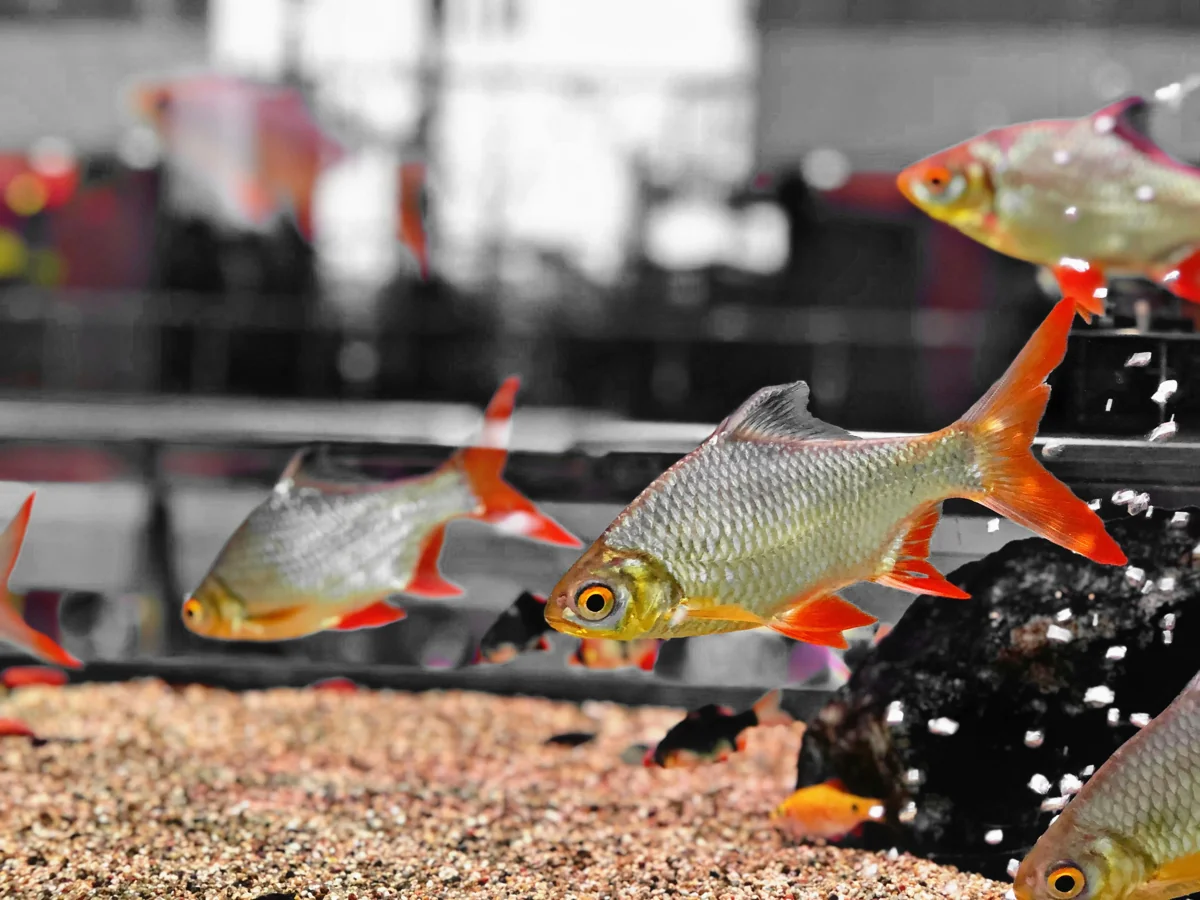
Black Ruby Barb (Pethia nigrofasciata) is a stunning cyprinid endemic to the shaded forest streams of southwestern Sri Lanka. It requires a minimum 30-gallon (113-liter) aquarium with a school of 8 to 12 individuals, a pH of 6.0 to 7.0, and a temperature range of 72°F to 79°F (22°C to 26°C). Males develop deep crimson red heads and forebodies with smoky-black fin edges during spawning condition, while females remain tan-to-silver with three vertical black bars. As an omnivore with genuinely peaceful temperament when kept in proper school size, it is an exceptional alternative to the fin-nipping Tiger Barb.
Quick Facts
| Scientific Name | Pethia nigrofasciata |
|---|---|
| Common Names | Black Ruby Barb |
| Family | Cyprinidae |
| Genus | Pethia |
| Type | Freshwater |
| Temperament | peaceful |
| Care Difficulty | intermediate |
| Lifespan | 5 years |
| Maximum Size | Up to 2.5 in (6 cm) |
| Diet | Omnivore |
| Temperature | 72–79°F (22–26°C) |
| pH | 6–7 |
| Hardness | 5–12 dGH |
| Minimum Size | 30 gallons |
Key Takeaways
- Maintain minimum school of 8 individuals, ideally 10 to 12, with 1 male to 2-3 female ratio.
- Males turn deep crimson red; females remain tan-to-silver with three vertical black bars.
- Requires dark substrate and subdued lighting for peak coloration - bright tanks wash out red.
- Carotenoid-rich diet (astaxanthin, spirulina) is essential for ruby color development.
- Soft, slightly acidic water at pH 6.0 to 7.0 produces deepest male crimson.
- Listed as Vulnerable on IUCN Red List; most trade stock is now captive-bred.
- Beware hormone-injected stock with unnaturally uniform, intense coloration.
- Fast one day per week to prevent constipation and bloat in this deep-bodied species.
Overview
Species Overview
The Black Ruby Barb (Pethia nigrofasciata) is one of the most visually striking and consistently underrated barbs in the aquarium hobby. Endemic to the shaded forest streams of southwestern Sri Lanka, primarily the Kelani and Nilwala river basins, this species has been a quiet staple of the community tank world for decades, mostly overshadowed by its flashier cousin the Tiger Barb. That is a mistake, because Black Ruby Barbs do everything Tiger Barbs do right, active schooling, bold color, and engaging behavior, without the relentless fin nipping that makes tigers a community tank gamble.
The Crimson-Headed Stream Dweller
A male Black Ruby Barb in spawning condition turns a deep, almost crimson red across the head, gill plate, and forebody that easily ranks among the best color displays in any peaceful freshwater species. Three bold vertical black bars run across the body, with the rear half shading toward near-black. The fins, particularly the anal and pelvic fins, develop smoky-black edges that frame the crimson body. Females are noticeably duller, a tan-to-silver base color with the same three vertical black bars but no red on the head and a more rounded, deeper belly. The contrast between a fully colored male and a healthy female is dramatic and is part of why the species is such a rewarding display fish.
The body is deeper and more compressed than slim species like Cherry Barbs or Tetras of equivalent length, so they occupy more visual space in the tank than their nominal size suggests. Plan for these deeper-body proportions when sizing the aquarium.
Natural Habitat and Behavior
Black Ruby Barbs inhabit slow-moving, shaded forest streams stained brown by tannins from leaf litter and decaying wood. Light reaches the water in dim, dappled patches rather than bright open sunlight. The substrate is fine sand mixed with leaf litter and silt. Water is soft, slightly acidic, and well-oxygenated by gentle current. These are not rapids fish; they are forest stream specialists that have evolved under dense canopy cover.
In the aquarium, this translates to a need for subdued lighting, dense planting, dark substrates, and stable soft water parameters. Bright tanks with bare bottoms and sparse decor produce stressed, pale fish that fail to display their signature coloration.
Diet
Diet and Feeding Strategy
Black Ruby Barbs are omnivores with a strong appetite and a preference for small live and frozen foods. They accept dry foods readily and are not picky in the home aquarium. The critical factor is carotenoid intake for color development.
Health
Health and Disease Management
Black Ruby Barbs are hardy by community-fish standards but get the same set of diseases as any tropical freshwater species. Catching problems early and addressing the root cause, almost always water quality or stress, clears most issues without aggressive medication.
Ich (White Spot Disease)
Parasitic infection caused by Ichthyophthirius multifiliis. Common in active schooling fish because constant movement masks early symptoms until white spots are obvious.
- White spots resembling grains of salt on body, fins, and gills. Flashing against decor and substrate. Rapid breathing, clamped fins, and lethargy in advanced cases.
Introduction via new fish, plants, or equipment without quarantine. Stress from poor water quality, temperature fluctuations, or inadequate school size weakens immune response.
Quarantine all new fish for 2 to 4 weeks. Maintain stable temperature between 74°F and 77°F (23°C to 25°C). Avoid temperature swings exceeding 3°F (2°C) per day. Use a UV sterilizer in high-risk setups.
Velvet (Oodinium)
More lethal and faster-moving than ich. Presents as a fine gold or dust-like coating on the body, often easier to see under a flashlight than under tank lighting.
- Fine gold or rust-colored dust on body and fins. Clamped fins, lethargy, rapid breathing, and loss of appetite. Fish may scratch against decor.
Introduction via new fish or plants. Stress from bright lighting (velvet parasites partially photosynthesize), poor water quality, or temperature instability.
Quarantine all new additions for 2 to 4 weeks. Maintain stable parameters. Keep the display tank dark during treatment if velvet is suspected. Use a UV sterilizer.
Fin Rot
Bacterial infection of the fins and tail caused by Aeromonas, Pseudomonas, or Vibrio species. Often secondary to poor water quality or fin-nipping from tank mates.
- Ragged, receding fin edges with white, red, or black discoloration. Fins may appear torn or eroded. Lethargy and reduced appetite in advanced cases.
Maintain nitrates below 20 ppm with weekly 25% to 30% water changes. Avoid sharp gravel and aggressive tank mates. Maintain school size of 8+ individuals. Feed fresh, high-quality food.
Internal Parasites
Nematode or tapeworm infections common in wild-caught specimens or fish fed live foods from untrusted sources.
- Weight loss despite normal or increased feeding. Stringy, white, or translucent feces. Bloated abdomen in some cases. Lethargy and reduced coloration.
Wild-caught specimens carrying endemic parasites. Feeding live foods from pet store tanks. Cross-contamination from new tank mates introduced without quarantine.
Quarantine all new fish for 2 to 4 weeks. Use praziquantel as a prophylactic dewormer. Avoid live foods from commercial feeder tanks. Source captive-bred stock from reputable suppliers.
Constipation and Bloat
Digestive blockage common in deep-bodied barbs fed excessive protein or dry foods without adequate fiber.
- Distended abdomen that does not slim down between feedings. Stringy or absent feces. Lethargy, loss of appetite, and floating at the surface or sinking to the bottom.
Overfeeding, excessive bloodworm consumption, lack of vegetable matter in the diet, and low water temperature slowing digestion.
Fast one day per week. Include blanched vegetables 2 to 3 times per week. Limit bloodworms to once weekly. Feed small portions consumed within 2 minutes.
Hormone-Induced Color Failure
Not a disease but a condition affecting fish that have been hormone-injected for enhanced coloration at the point of sale. These fish often die prematurely.
- Exceptionally intense color in all specimens at purchase, often all male. Color remains vivid even as the fish weakens. Shortened lifespan with gradual wasting despite normal feeding.
Hormone injection by suppliers to enhance male coloration for sale. Common in mass-produced Asian stock.
Source fish from reputable breeders or local fish stores with transparent supply chains. Avoid specimens with unnaturally uniform, intense coloration across all individuals. Ask your supplier about the source and whether hormones were used.
Breeding
Breeding Black Ruby Barbs
Black Ruby Barbs spawn readily in the home aquarium under the right conditions, making them a good intermediate-level breeding project for aquarists moving past livebearers.
Compatible Tank Mates
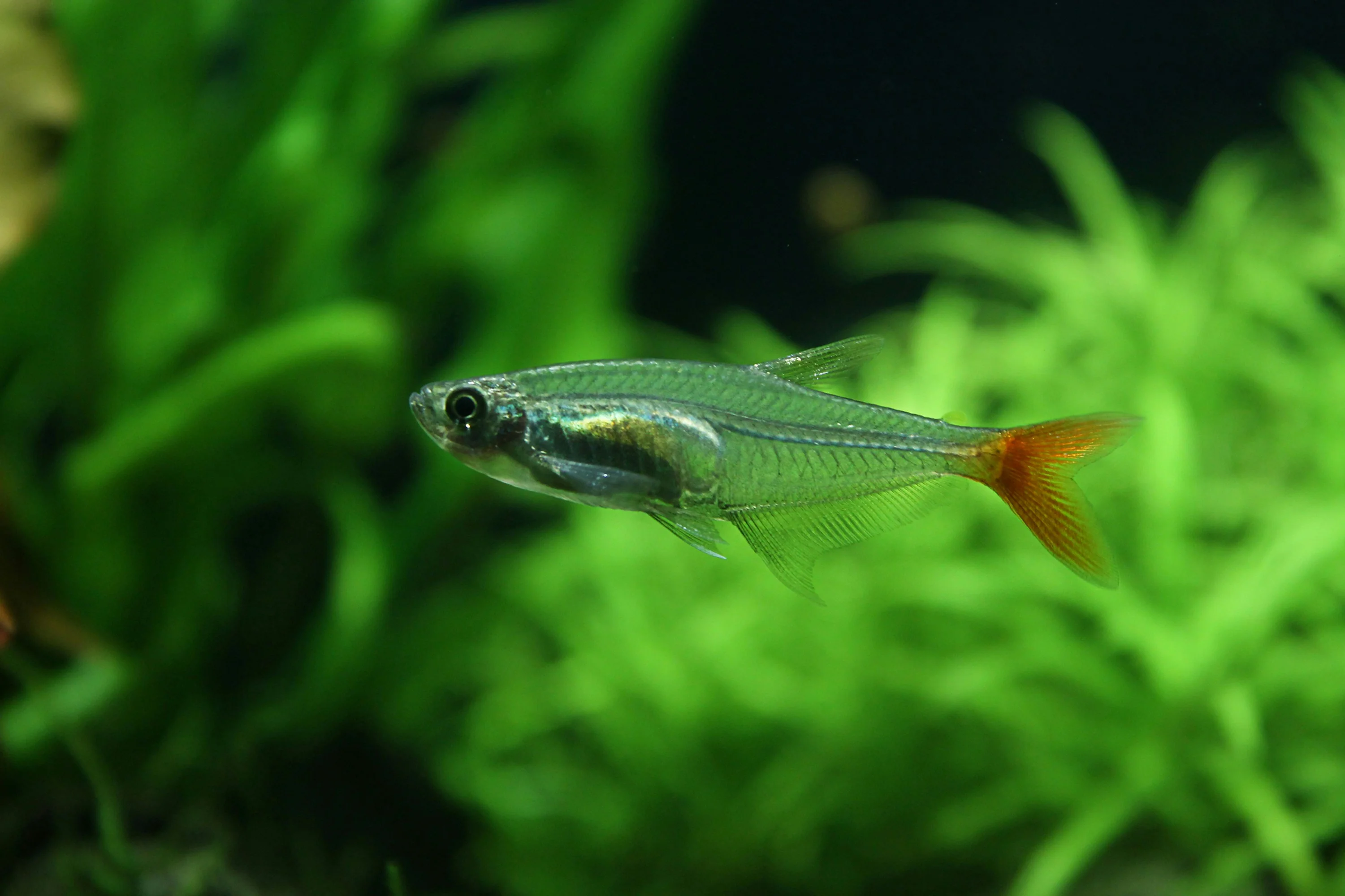
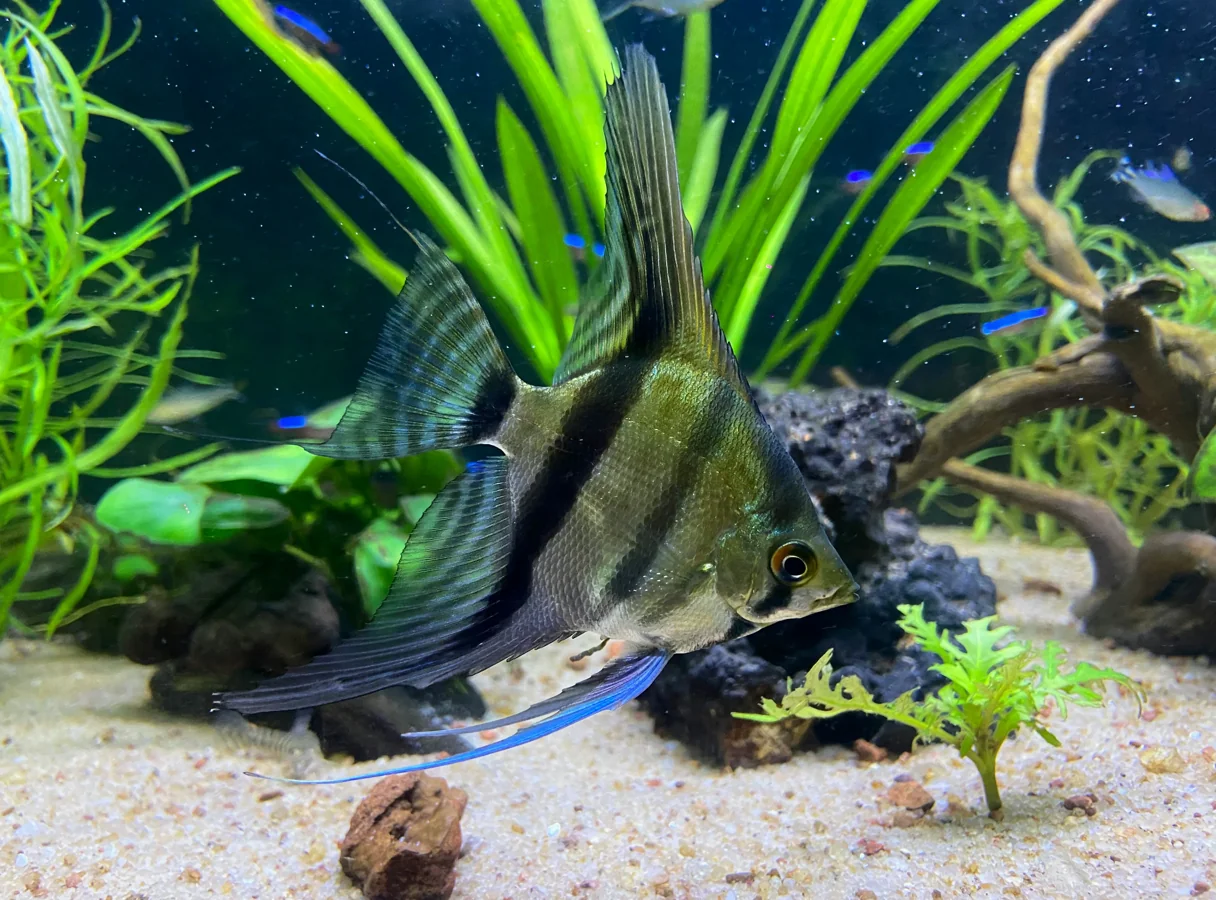
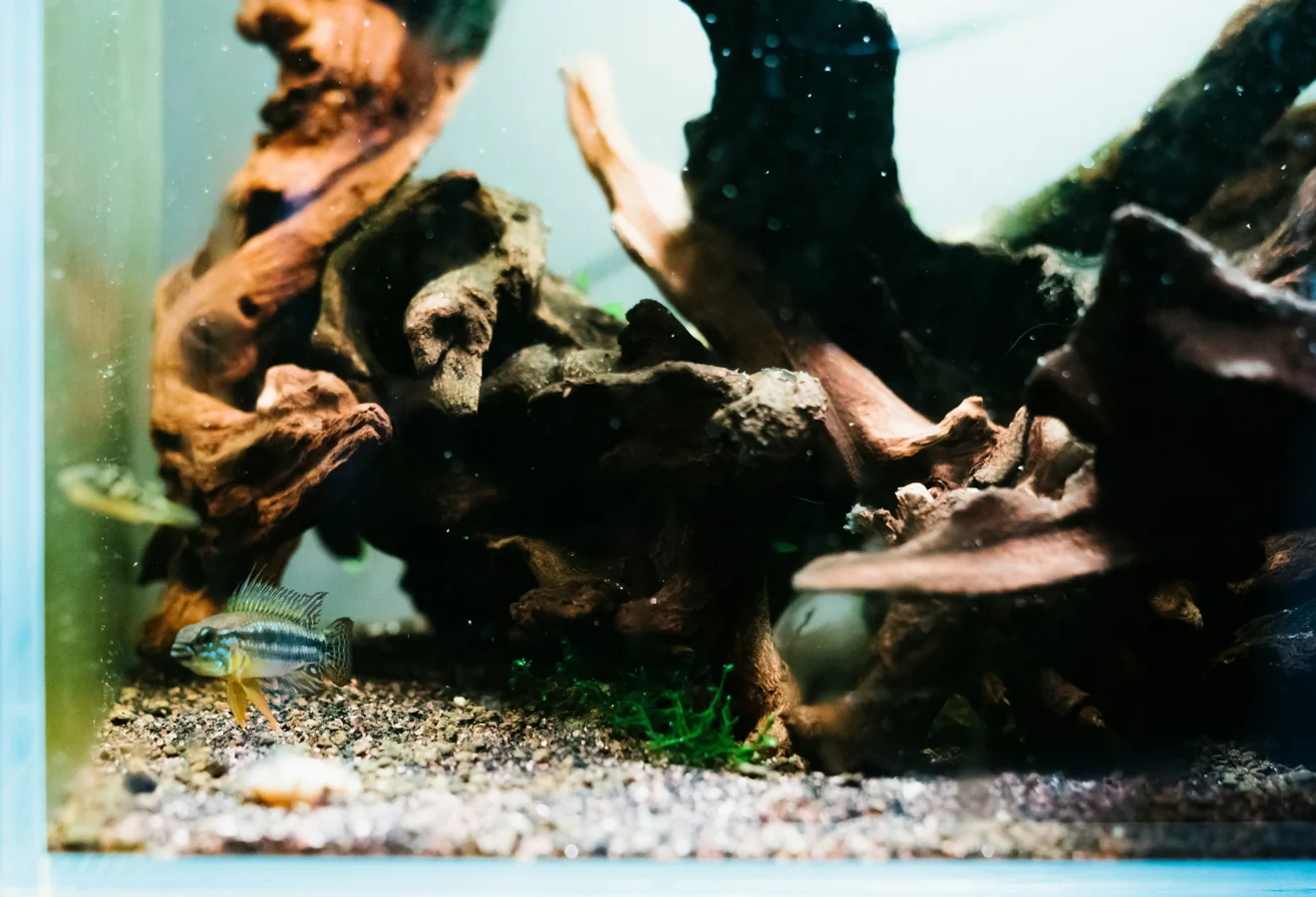
Species Comparison
| Feature | Black Ruby Barb | Tiger Barb | Cherry Barb | Rosy Barb |
|---|---|---|---|---|
| Maximum Size | 2.5 inches (6.4 cm) | 3 inches (7.6 cm) | 2 inches (5 cm) | 3 inches (7.6 cm) |
| Temperament | Peaceful when in school of 8+ | Semi-aggressive, notorious fin nipper | Genuinely peaceful community fish | Peaceful to semi-aggressive |
| Minimum Tank Size (School) | 30 gallons (113 L) for 8+ | 30 gallons (113 L) for 8+ | 15 gallons (57 L) for 8+ | 30 gallons (113 L) for 6+ |
| Male Coloration | Deep crimson head and forebody, black rear | Silver with 4 black vertical bars, red nose/fins | Deep red body with lateral stripe | Pink to red body, black spot near tail |
| Fin Nipping Tendency | Low - directs energy inward at school | High - relentless with long-finned tank mates | Very low - peaceful with all community fish | Moderate - may nip in small groups |
| pH Range | 6.0 to 7.0 (optimal for crimson color) | 6.0 to 7.5 | 6.0 to 8.0 | 6.0 to 8.0 |
| Diet Focus | Carotenoid-rich for color; daphnia, spirulina | Omnivore, accepts all standard foods | Omnivore, excellent in planted tanks | Omnivore, may graze soft plants |